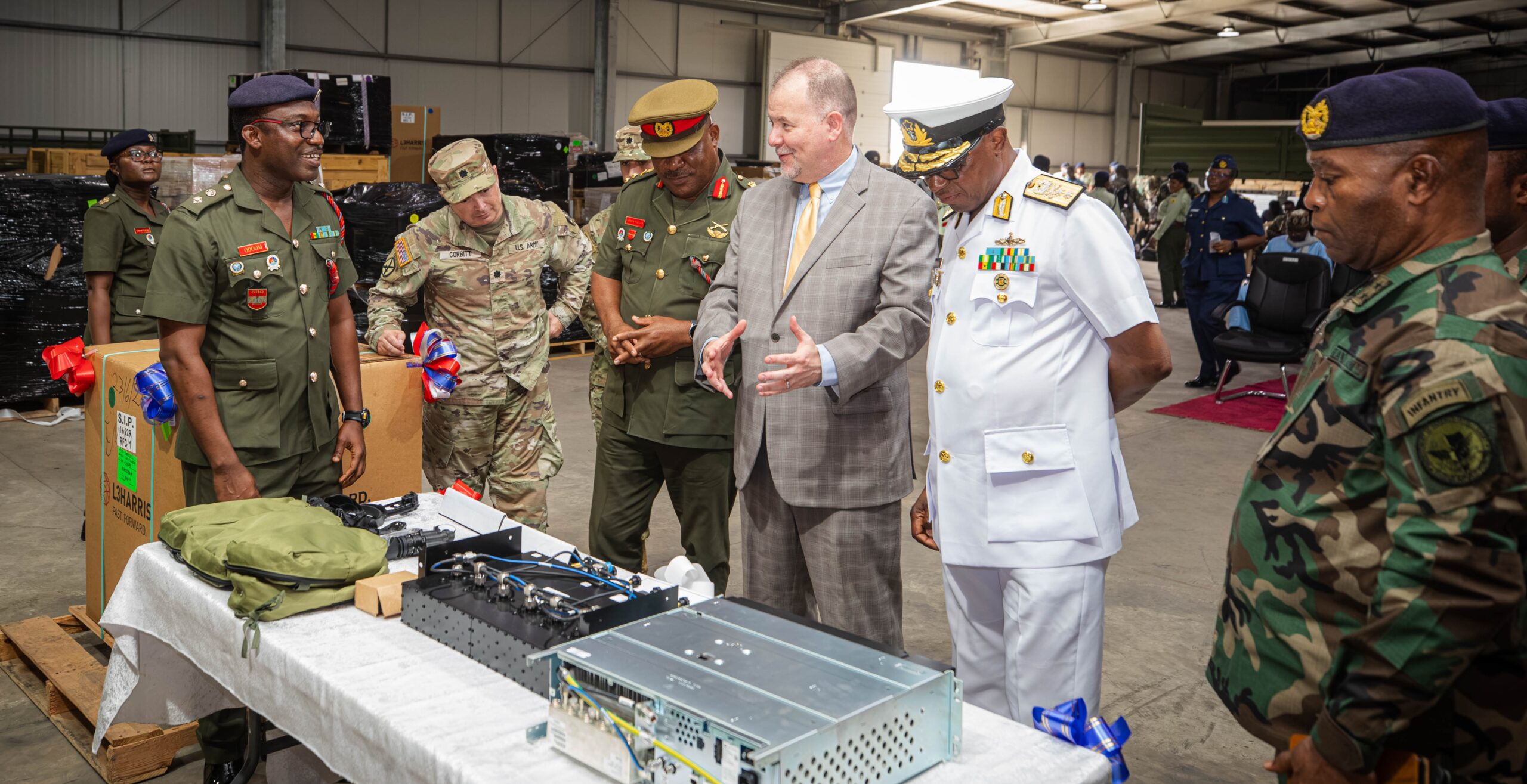
The United States has transferred military equipment valued at GHS 59.2 million ($4 million) to Ghana, significantly boosting the country's security operations. This substantial donation underscores the deepening security partnership between the two nations and their mutual commitment to fostering regional stability.
The comprehensive package includes vital medical supplies, advanced drones, sophisticated radar systems, and essential training materials. These resources are specifically allocated to support three critical branches of Ghana's defence establishment: the Ghana Army, the Ghana Navy, and the nation's intelligence services. The equipment aims to enhance Ghana's capacity to address threats ranging from transnational terrorism to maritime insecurity.
This initiative aligns with Ghana's broader economic and security strategy, which prioritises safeguarding its borders and maritime domains to ensure a stable environment for investment and development. The consistent support from international partners like the United States is crucial for Ghana as it navigates complex regional security challenges, including piracy in the Gulf of Guinea and extremist activities in neighbouring countries. Such partnerships contribute directly to maintaining investor confidence and protecting key economic assets.
Speaking at the handover ceremony in Accra, Rolf Olson, Chargé d'Affaires of the US Embassy in Ghana, emphasised the strategic importance of the donation. Mr. Olson stated, "This equipment is an investment in Ghana's sovereignty, in regional stability, and in a bilateral relationship that has spanned generations." He further commended Ghana for its long-standing role as a model of democratic governance and security cooperation across the African continent.
The immediate implication of this equipment transfer is an enhanced operational capability for Ghana's armed forces. The Ghana Army will receive medical equipment, GPS devices, night-vision goggles, and unmanned aerial systems, improving its ability to train, operate safely, and respond effectively to various missions. The Ghana Navy will benefit from radar systems, radios, and antennas, strengthening its capacity to monitor its waters, deter piracy, and combat illegal, unreported, and unregulated (IUU) fishing. Ghana's intelligence services will gain an intelligence library, tablets, and computers, fostering the development of future intelligence professionals.
This strengthened security apparatus is expected to have positive ripple effects on Ghana's economy. Improved maritime security, for instance, protects vital fishing industries and ensures safer shipping lanes, which are crucial for trade. Enhanced border security can deter illicit trade and maintain stability, encouraging foreign direct investment. Decision-makers and markets will closely watch how effectively this new equipment is integrated and deployed, as it could signal a more secure operating environment for businesses and a reduced risk profile for the nation.
Rear Admiral Gideon Livinus Bessing, Chief of the Naval Staff, acknowledged the United States as a dependable partner in building the Ghana Armed Forces' capacity. He affirmed that the equipment would boost capabilities in border security, intelligence gathering, training, reconnaissance, and maritime security. Rear Admiral Bessing assured that the items would be deployed responsibly to safeguard Ghana's territorial integrity and contribute to regional peace and global solidarity. This ongoing cooperation is vital for Ghana's long-term economic stability and its role as a regional security anchor.