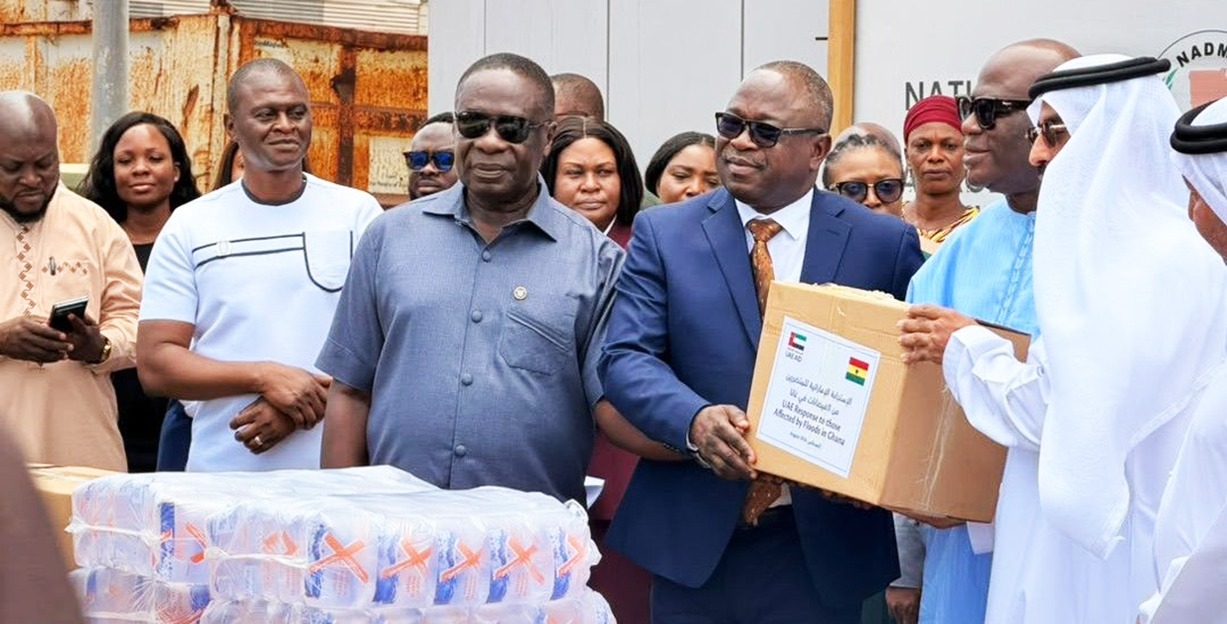
The United Arab Emirates (UAE) has injected approximately GHS 12 million (US$1 million) into Ghana's economy. This significant financial contribution comes from the local purchase of relief items intended for victims of the June floods.
Alhaji Baba Seidu Issifu, Ghana's Minister for Climate and Sustainability, commended the UAE government for this strategic decision. He emphasized that buying goods locally benefits Ghanaian retailers, wholesalers, and other businesses. The minister noted that the UAE brought raw cash into the country and used it to acquire necessary supplies from Ghanaian markets, rather than importing them.
This initiative aligns with Ghana's broader efforts to mobilize international support for disaster relief and economic development. President Mahama tasked Minister Issifu with soliciting aid from the global community following the devastating June floods. The minister reached out to 70 international bodies within a week through the Climate Emergency Resource Mobilisation Track, seeking assistance.
Rashid Salam Al Shamsi, Director of Logistics Support for the UAE Aid Agency, confirmed the decision to source items locally. He stated that this approach aimed to boost Ghana's economy while providing crucial support to flood victims. Deputy Minister for Foreign Affairs James Gyakie Quayson also highlighted that this gesture deepens the enduring friendship between Ghana and the UAE.
The US$1 million assistance includes essential food supplies and emergency shelter materials. These items, such as rice, cooking oil, and mattresses, are destined for families in areas like Sahara in the Klottey Korle Municipal Assembly. These communities suffered significant damage to their homes and livelihoods from the floods on June 29.
The local procurement strategy by the UAE sets a precedent for future international aid efforts in Ghana. It demonstrates a model where humanitarian assistance can simultaneously contribute to the local economy. This approach helps to stimulate demand for local products and services, providing a dual benefit to the affected nation.
Ghana's National Disaster Management Organisation (NADMO) Director expressed gratitude for the UAE's support, which increases the stock of available relief items. He also called for continued assistance from other international partners. The Minister for Climate and Sustainability plans to engage up to 100 capable institutions to support Ghana's climate resilience and disaster response efforts, underscoring that climate change requires collective action.
This local sourcing model could influence how other international donors structure their aid packages to Ghana. It encourages a shift from direct imports of relief goods to investments in local supply chains. Such a strategy can foster economic resilience and self-sufficiency in the long term, moving beyond immediate humanitarian needs.
The government will likely monitor the economic impact of this US$1 million injection. It could serve as a case study for advocating similar approaches from other development partners. This method ensures that foreign aid not only addresses immediate crises but also contributes to sustainable economic growth within Ghana.