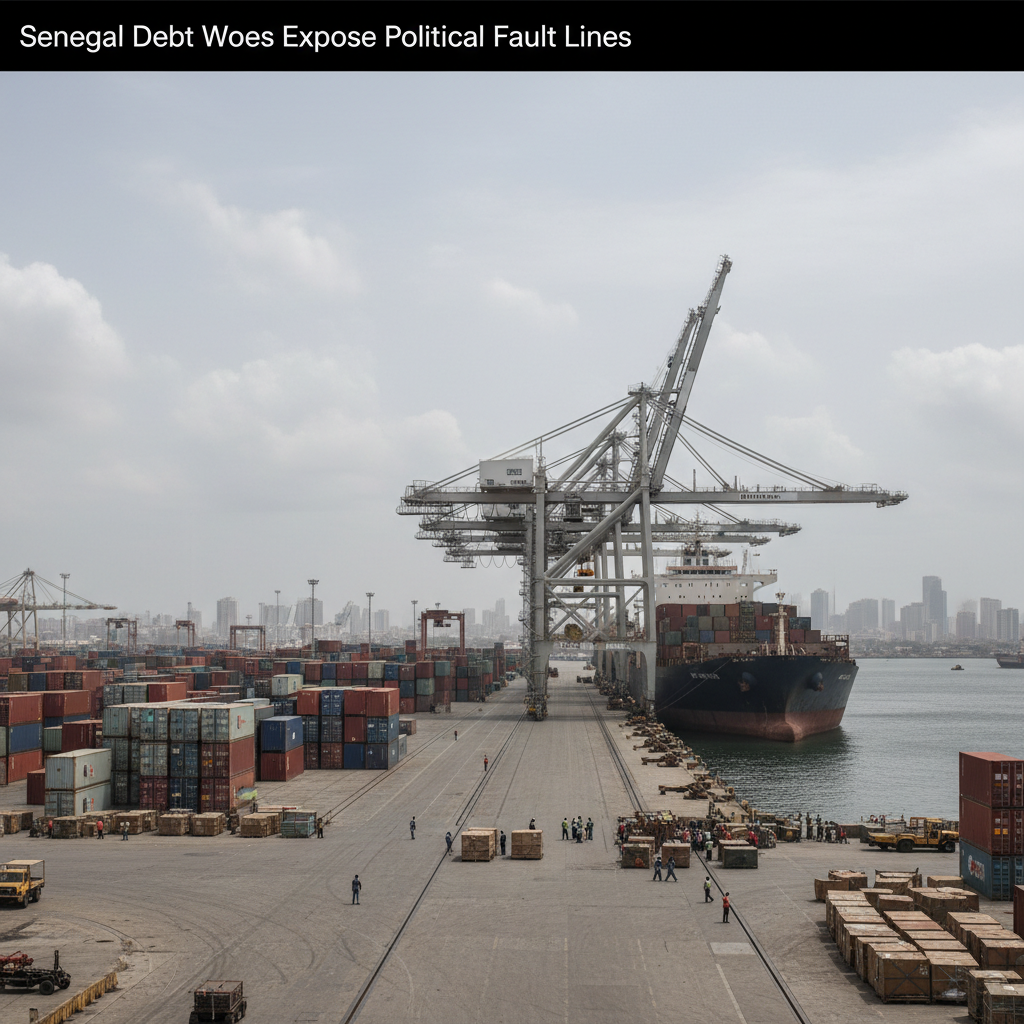
Senegal's new government grapples with significant economic challenges and growing political divisions. A disagreement has emerged between President Bassirou Diomaye Faye and his political sponsor, Ousmane Sonko. The core of this division centers on how to manage the country's unexpectedly large public debt. This situation tests the governing coalition's ability to implement its founding vision.
This political friction stems from uncovering an unexpectedly high public debt. The previous administration under Macky Sall reported lower figures. The current government must now restore macroeconomic credibility. It also needs to maintain engagement with international financial institutions. This debt situation severely limits President Faye's economic policy choices.
This development adds to a broader West African political narrative. Many new governments face balancing populist promises with economic realities. Ghana, for instance, has also engaged with international bodies like the International Monetary Fund. These engagements often come with strict fiscal conditions. The Senegalese situation reflects similar pressures on newly elected leaders. They must confront inherited economic difficulties while trying to fulfill ambitious reform agendas.
The Minister of Economy and Finance has reaffirmed the government's stance against debt restructuring. This position aims to reassure financial markets and development partners. Ousmane Sonko, however, advocates for economic sovereignty. He publicly opposes debt restructuring. Sonko instead seeks solutions that preserve national policy autonomy. This reflects the different approaches within the ruling party.
The unfolding events will shape Senegal's economic future and political stability. Observers will watch how President Faye balances fiscal prudence with political promises. His administration must navigate financial markets' demands against the public's expectations for change. The resolution of this internal disagreement will significantly influence investor confidence. It will also affect Senegal's relationship with international financial partners. This period will be a critical test for the country's democratic transition.
Ultimately, this internal political struggle risks diverting attention from essential reform initiatives. The focus could shift towards leadership battles rather than governance improvements. This challenges the very goal of strengthening democratic institutions that PASTEF campaigned on. The outcome will set a precedent for future political transitions in the region.
The current debates on policy implementation are increasingly interpreted through the lens of future political competition. This may overshadow the broader democratic and reform agenda. The resolution of these tensions is crucial for maintaining public trust and stability. It will also determine the long-term success of Senegal's economic reforms. The impact on Senegal's economy could be substantial. It will affect everything from investor sentiment to everyday citizens' livelihoods.
The initial optimism that followed President Faye's election now faces a harsh reality check. The ability of the government to manage its debt and maintain political unity is paramount. This will ensure that Senegal's democratic renewal remains on track. It is a defining moment for the country and a critical case study for African politics.