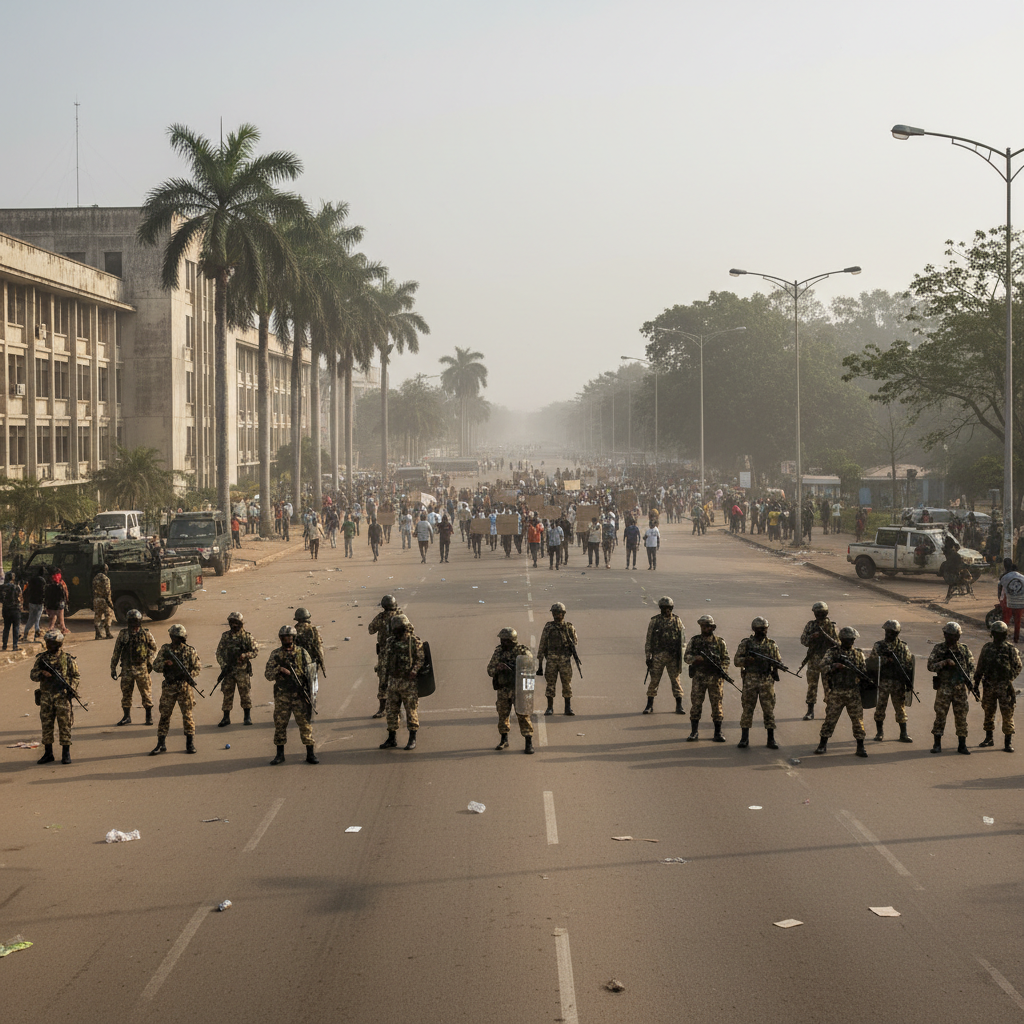
Security forces deployed to the Economic and Organised Crime Office (EOCO) headquarters on July 13, 2026, as supporters protested the arrest of Dennis Miracles Aboagye. Mr. Aboagye, former Executive Secretary of the Inter-Ministerial Coordinating Committee on Decentralisation (IMCCoD), faces allegations of financial irregularities involving approximately GHS 55 million in public funds.
This deployment followed protests by Mr. Aboagye's sympathisers who gathered to demand his release. Reports from the scene indicated about 10 military officers and National Security operatives took positions. They directed demonstrators to clear the streets for vehicle movement, with a police water cannon also deployed to maintain order.
This incident fits into Ghana's ongoing struggle against public sector corruption and financial mismanagement. Data from the Ghana Anti-Corruption Coalition consistently highlights the high perception of corruption among citizens. Such cases erode public trust and can deter foreign investment, impacting Ghana's economic growth prospects. Previous administrations have also faced similar challenges, underscoring the systemic nature of these issues.
EOCO stated that Mr. Aboagye, along with former IMCCoD Accountant Gerald Appiah and others, is under investigation. The alleged offences include conspiracy to steal, stealing, using public office for profit, and causing financial loss to the State. EOCO initiated this investigation following a petition regarding a forensic audit covering August 1, 2022, to February 2, 2025.
The agency also disclosed that Mr. Appiah has begun refunding funds linked to the alleged offences. Legal counsel for Mr. Aboagye continues negotiations with EOCO officials regarding his detention. The outcome of this high-profile case will be closely watched by the public and anti-corruption advocates. It could set a precedent for how allegations of financial malfeasance by public officials are handled. Investors and markets will monitor the transparency and efficiency of the legal process.
The alleged misappropriation of GHS 55 million represents a significant sum for public finance in Ghana. Such losses divert vital resources from development projects, impacting critical sectors like education and healthcare. The government's ability to recover these funds and prosecute those responsible is crucial. This case also highlights the increasing assertiveness of Ghanaian citizens in demanding accountability from public officials. Further protests could follow depending on the investigation's progress and any subsequent legal proceedings. The public's demand for justice will likely intensify as more details emerge from the ongoing investigation.