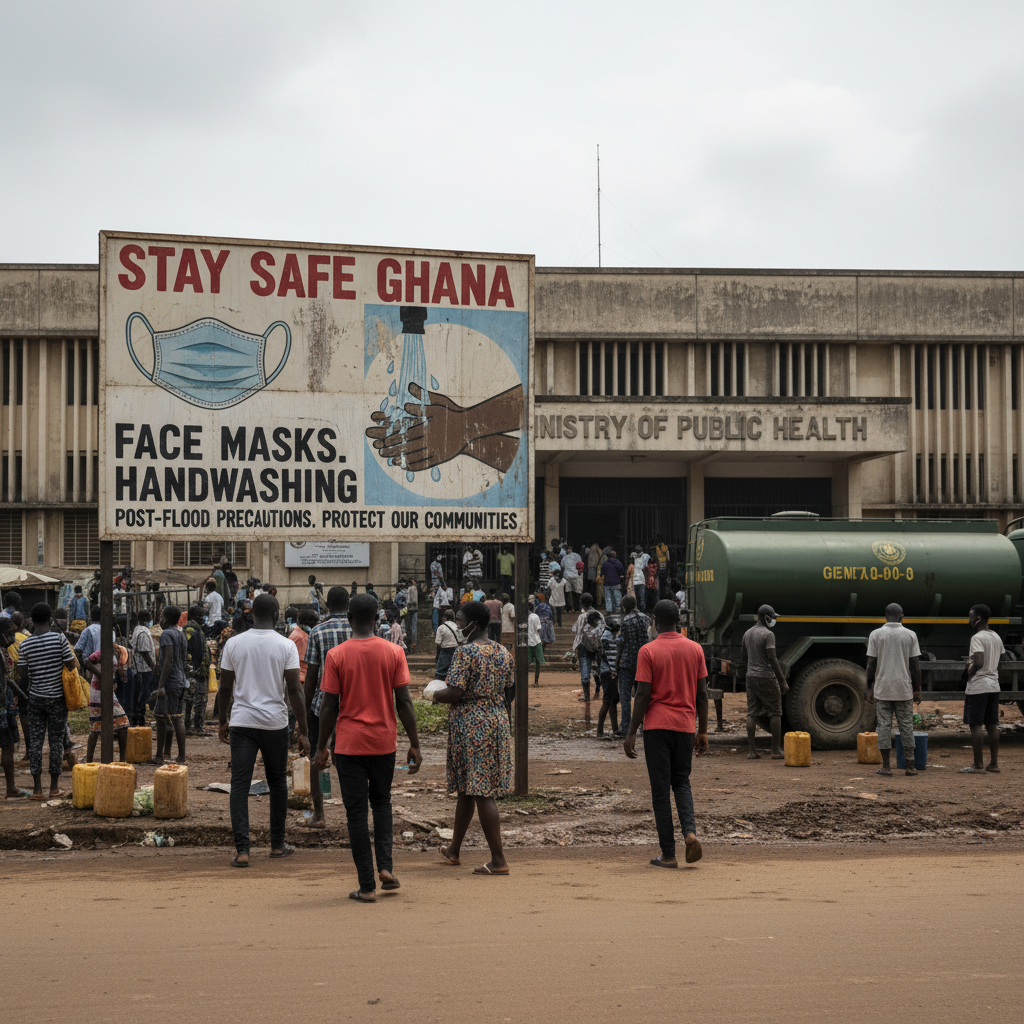
The Ghana Association of Public Health Technical Officers (GAPHTO) has called on the government to immediately reinstate public health safety measures. These measures include compulsory handwashing and the use of face masks. This push aims to reduce the risk of disease outbreaks in communities affected by recent floods.
Joseph Owusu Asante, the National President of GAPHTO, explained the reasoning. He stated that while emergency responses focused on rescue and relief, equal attention must now go to preventing secondary public health emergencies. Floodwaters often carry many disease-causing organisms. These can trigger outbreaks of cholera, typhoid fever, diarrhoeal diseases, and leptospirosis if proper measures are not in place.
This renewed focus on public health is crucial. Ghana's post-flood recovery efforts must consider the long-term health of its citizens. Previous flood events have shown a clear link between contaminated water and increased disease incidence. This call builds on existing public health guidelines and past responses to similar crises.
Mr. Owusu Asante spoke on JoyNews' The Pulse. He proposed temporarily reviving some public health measures from the COVID-19 pandemic. He highlighted handwashing and nose masks as major community barriers. These barriers can stop pathogens from thriving and causing outbreaks in flood-affected areas. He also warned residents against using floodwater for cleaning. He described this practice as highly dangerous due to heavy contamination.
Future actions should prioritise the provision of clean water and protective equipment. Authorities must supply adequate personal protective equipment (PPE) for sanitation workers. This also applies to volunteers involved in post-flood cleanup operations. Mr. Owusu Asante stressed that relying on contaminated floodwater for cleaning could lead to serious health issues for survivors. This applies even after they escape the initial effects of the disaster.
The health surveillance system has been intensified following Monday's devastating floods. These floods claimed lives and displaced hundreds across the Greater Accra Region. Public health experts consistently warn that the days immediately after flooding carry the highest risk for disease outbreaks. This is due to contaminated water, damaged sanitation, and increased exposure to infections.
The public should only drink safe water and practice good hand hygiene. They should avoid contact with contaminated floodwater whenever possible. Reporting symptoms of diarrhoea, vomiting, or fever to health facilities promptly is also important. These measures are critical for preventing a wider health crisis. This is particularly important as the country works to recover from the widespread damage.