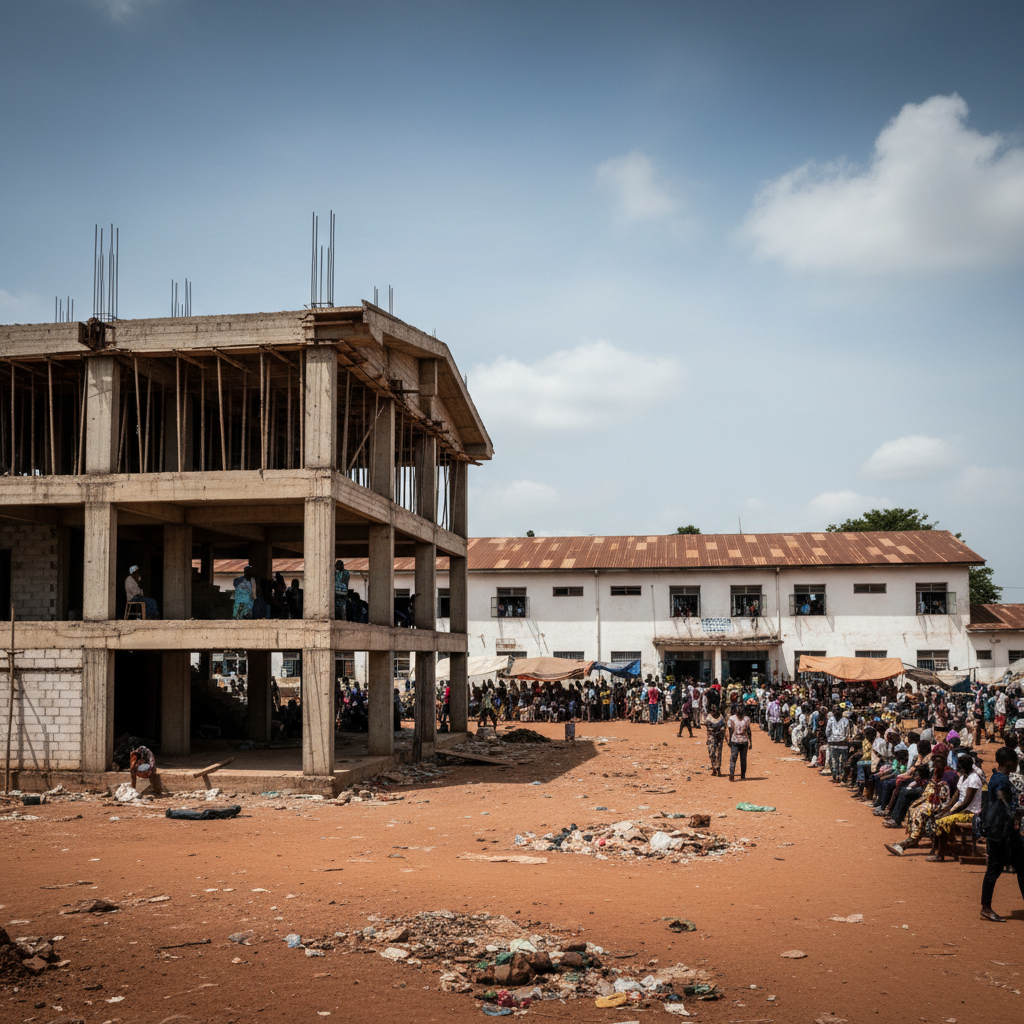
Ghana's previous government neglected the completion of the Afari Military Hospital and the Sewua Regional Hospital. This neglect occurred in favour of the multi-billion cedi Agenda 111 hospital project, according to Dr. Mark Kurt Nawaane. Dr. Nawaane chairs Parliament’s Health Committee.
Dr. Nawaane stated that the Afari Military Hospital was 75% complete when the previous government took office. It had medical equipment on-site. He claims this equipment was left exposed to the weather and risked deterioration due to project delays. The decision to prioritize new facilities over finishing existing ones has drawn criticism regarding resource management.
This issue highlights a broader challenge in Ghana's public finance and infrastructure development. Governments often face pressure to initiate new projects, potentially at the expense of completing inherited ones. The Agenda 111 project, launched to build 111 district hospitals, involved significant government spending. This spending occurred simultaneously with delays on other crucial health facilities. Efficient allocation of public funds is critical for Ghana's economic stability and service delivery.
Speaking on JoyNews' The Pulse, Dr. Nawaane questioned the decision to use COVID-19 funds for Agenda 111. He suggested these funds could have completed existing projects like Afari and Sewua. “What prevented them from using that money to complete uncompleted projects such as Afari and Sewua?” he asked. Dr. Nawaane served on the Health Committee while it was in the Minority.
The implications of this prioritization are significant for Ghana's healthcare system and public finances. Delaying functional hospitals means communities lack essential health services. It also means increased costs due to equipment damage and prolonged construction. Future governments must address the balance between starting new initiatives and finishing ongoing projects. This will ensure value for money and timely service to citizens. Ghana's healthcare sector desperately needs improved infrastructure. Citizens will closely watch how current and future administrations handle these projects.
The completion of these hospitals directly impacts healthcare accessibility, especially in underserved regions. The Afari and Sewua hospitals would significantly expand bed capacity and specialized medical services. Neglecting them represents a missed opportunity to strengthen the public health infrastructure. This situation also raises questions about accountability for public funds allocated to infrastructure projects. The efficient use of GHS for healthcare projects remains an important public concern.