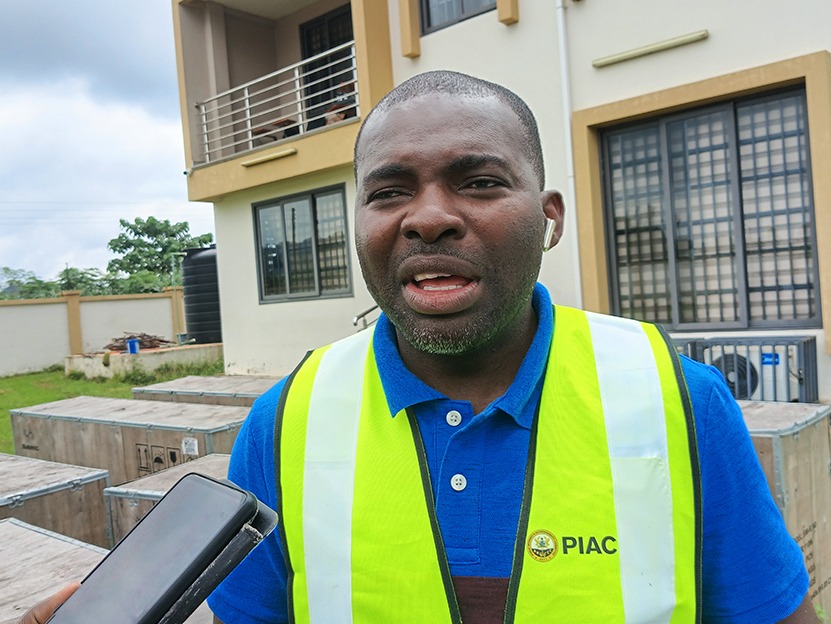
The Public Interest and Accountability Committee (PIAC) has urged the government to directly involve Metropolitan, Municipal, and District Assemblies (MMDAs) in oil and petroleum-funded projects. This involvement aims to ensure proper supervision, value for money, and holistic development across Ghana. The call follows recent project inspections by PIAC in the Adansi area of the Ashanti Region.
Christopher Opoku Nyarko, a PIAC member, stated the committee's role is to ensure oil revenues are used effectively. He highlighted that PIAC conducts working visits to districts to provide additional oversight on petroleum revenue management. These revenues are channeled through the Annual Budget Funding Amount (ABFA) via the Ministry of Finance to beneficiary communities. PIAC then follows up to verify project execution.
This initiative fits into Ghana's broader economic story of ensuring transparency and accountability in public finance. Ghana, as an oil-producing nation, relies on petroleum revenues to fund various development projects. Effective oversight of these funds is crucial for sustainable economic growth and public trust. Previous reports have often highlighted challenges in project implementation and resource allocation.
Mr. Nyarko identified the lack of local assembly involvement as a major challenge. He explained that many projects are decided in Accra and then implemented in districts without local input. This top-down approach often results in projects being mislabeled as 'MP's projects,' with local officials unaware of their funding source. He stressed that the Constitution envisages all citizens benefiting from oil extraction, regardless of location.
During their inspection in Adansi North District, PIAC found significant issues. A school building lacked furniture, washrooms, and electricity, essential facilities for students. The patching of potholes on the Adansi Asokwa to Obuasi road was deemed unsatisfactory, providing poor value for the oil money invested. A staff bungalow at Adansi Asokwa Health Centre was criticized for its small size, not representing good use of revenue.
The police station project, while completed, still required finishing works and relied on the district office for water connection. Mr. Nyarko noted that supervision for these projects is weak. Local assemblies often do not even record these projects in their reports, treating them as non-existent. This lack of local ownership and oversight contributes to poor project outcomes.
PIAC is advocating for stronger coordination between the Ministry of Finance and the Ministry of Local Government. This coordination aims to improve planning and oversight of petroleum-funded projects. The committee believes that involving MMDAs will lead to better project quality and ensure that oil revenue benefits the entire country. Reports on these projects must be submitted to Parliament transparently.
David Kunta, the Adansi Asokwa District Health Director, acknowledged the facility provided through petroleum funds in 2021. He noted that the health centre, initially built for a smaller population, now requires expansion due to increased demand. Mr. Kunta appealed for laboratory services and fencing to prevent encroachment, indicating further investment is needed by 2026 for full functionality. This highlights the ongoing need for effective project management and future planning.