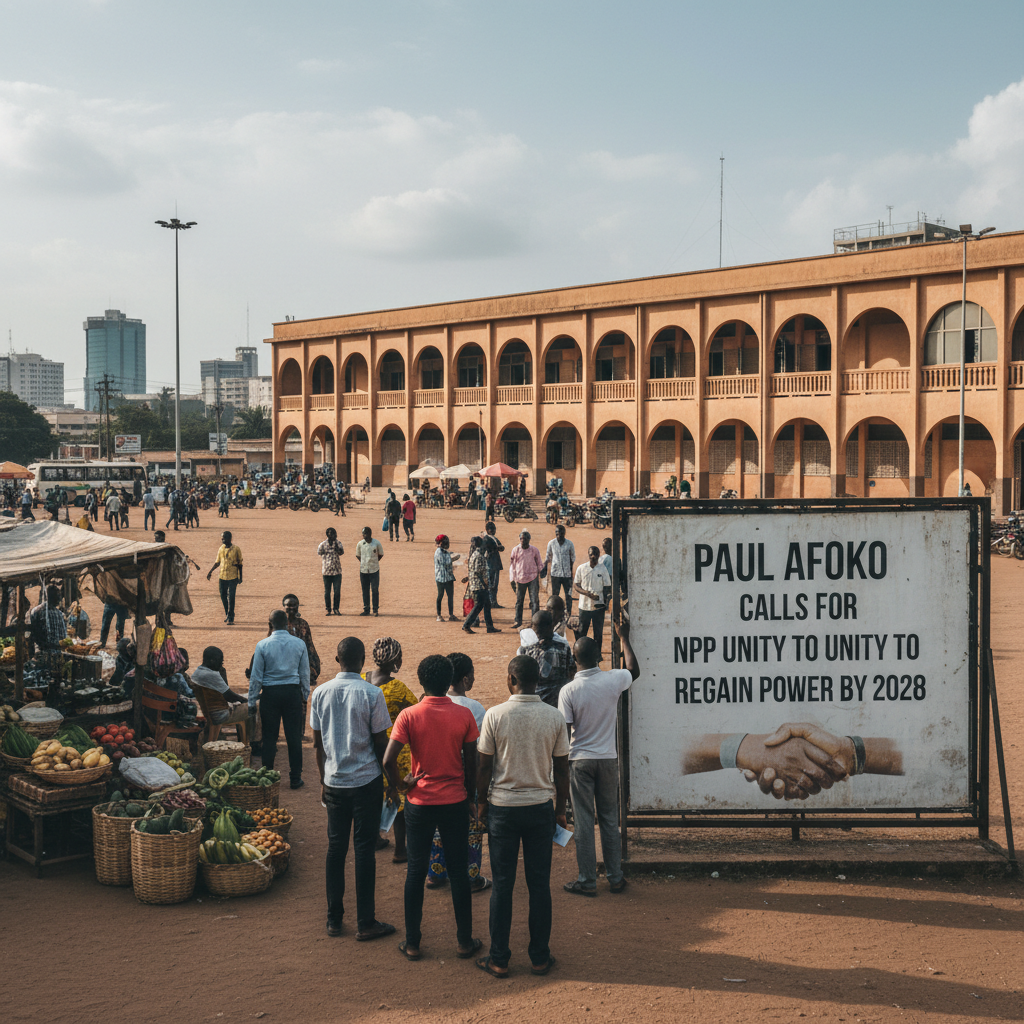
Paul Afoko, a former National Chairman of the New Patriotic Party (NPP), has called on party members to unite and rebuild effectively to reclaim power in the 2028 general election. He strongly attributes the NPP's poor performance in the 2024 elections to significant internal disunity and the unfortunate disqualification of several parliamentary aspirants. Afoko stated this during a campaign tour in Tamale while seeking a fresh mandate as National Chairman of the NPP.
Afoko emphasized that unity is essential for political success. He noted that without cohesion, the party cannot regain the trust and confidence of Ghanaian voters. His appeal came during a meeting with constituency executives and party delegates in Tamale. This meeting was part of his wider campaign tour across the Northern Region.
This push for unity comes after a period where the NPP, as the ruling party, has faced increasing public scrutiny regarding economic management and governance. Data from the Ghana Statistical Service shows fluctuations in key economic indicators, which often influence voter sentiment. The upcoming 2028 election is crucial for the NPP to demonstrate its capacity for internal reconciliation and renewed public appeal.
Mr. Afoko declared, "If we don't unite, there's no power. Power wants unity. Power doesn't like division." He committed to moving past the circumstances of his 2015 removal from office. He affirmed his dedication to party unity, stating, "In the name of God, everything that has happened to me, forget it. We must unite."
The NPP now faces the critical task of addressing these internal rifts and regaining public confidence ahead of 2028. Observers will closely watch how the party navigates these reconciliation efforts. The outcome will likely influence market perceptions and political stability in Ghana.
Afoko has initiated consultations with key party figures. These include the NPP’s flagbearer for 2028, Dr. Mahamudu Bawumia. He has also engaged former Presidents Nana Addo Dankwa Akufo-Addo and John Agyekum Kufuor. Other stakeholders include Kennedy Agyapong, Bryan Acheampong, members of the National Executive Committee, and the Council of Elders. These discussions aim to foster widespread reconciliation within the party.
His campaign focuses on bringing all factions together to rebuild confidence. This preparation is critical for the 2028 general election. Afoko highlighted that the disqualification of some parliamentary aspirants during previous internal elections led to significant party losses. Some aggrieved aspirants contested as independent candidates, or withheld their full support, causing the loss of many parliamentary seats.
He reiterated that "the people are the source of political power." They decide who represents them, therefore, imposing a candidate is unacceptable. This statement underscores a core democratic principle.
To reposition the party, Afoko unveiled a "Three Rs" agenda: Reunite, Rebuild, and Recapture. This strategy aims to reunite the party, strengthen its grassroots structures, and ultimately recapture political power. He believes the NPP holds a strategic advantage, having already selected its presidential candidate. This contrasts with the opposition National Democratic Congress, which has yet to make its selection.
Afoko expressed deep concern over the NPP’s declining electoral performance in Ghana's five northern regions. He called this decline evidence of an urgent need for reforms. The NPP has lost all parliamentary seats in the Upper East and Upper West regions. Representation in the Savannah Region has dropped to one seat. The party's seats in the North East Region decreased from four to three. Parliamentary representation in the Northern Region also fell from nine seats to six. He specifically cited the loss of the Yendi parliamentary seat, a former NPP stronghold, as a direct consequence of internal disunity.