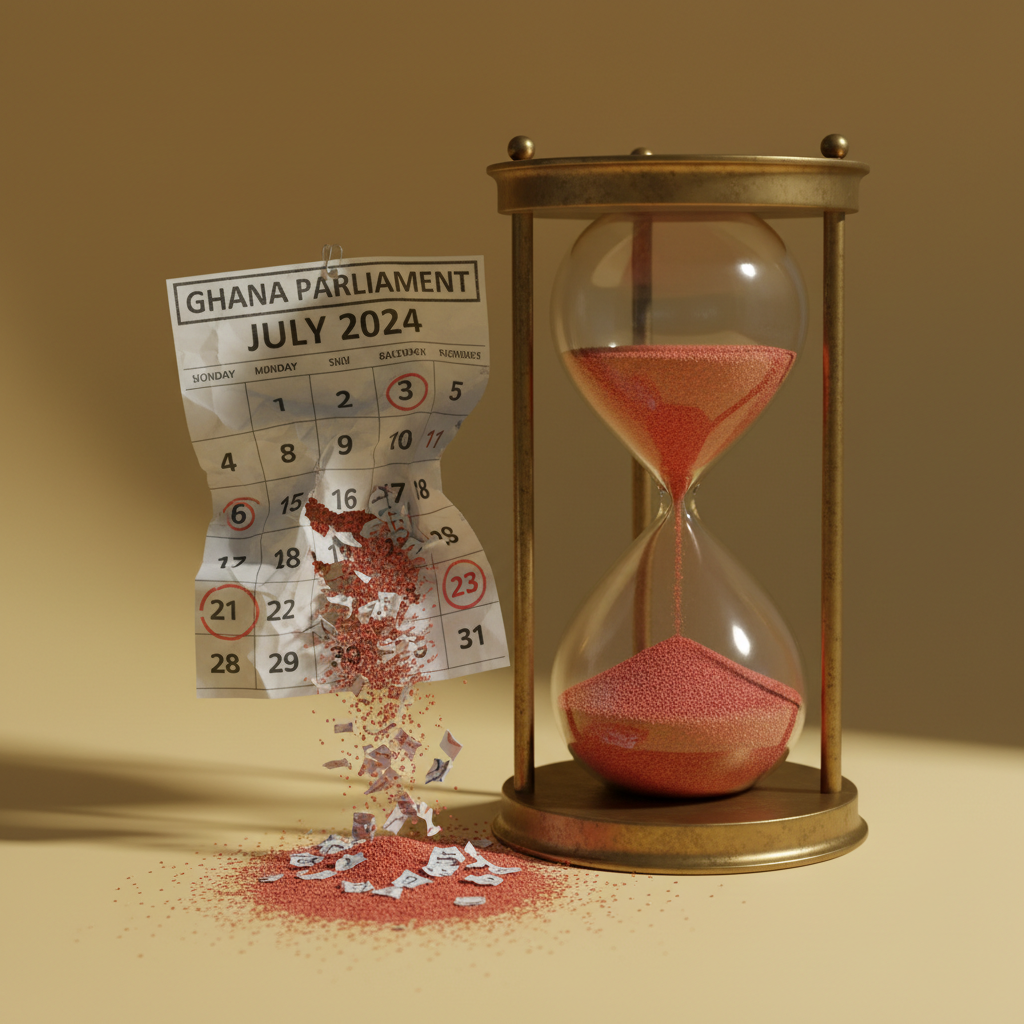
Ghana's Minority in Parliament has accused the government of wasting 75 percent of a five-day special recall session. This inefficiency has stalled critical legislative business, including the Depositors Protection Amendment Bill and the vetting of ministerial nominees.
The Minority Members of Parliament (MPs) stated that little progress occurred on urgent matters necessitating the recall. Walewale MP Dr. Kabiru Tiah Mahama led the accusation at a press briefing following an abrupt parliamentary adjournment. The recall aimed to address the Depositors Protection Amendment Bill, ministerial appointments, and Supreme Court nominees.
This situation highlights ongoing tensions between Ghana's legislative and executive branches. Delays in parliamentary proceedings can impact economic stability and investor confidence. For instance, the timely approval of ministerial nominees is crucial for preparing the 2027 national budget. Previous parliamentary stalemates have sometimes led to delays in budget approvals or key policy implementations, affecting economic planning.
Dr. Tiah Mahama stated, "Effectively, we have wasted about 75% of the time that we’re supposed to use and consider the urgent matters." He also questioned the absence of a strong government presence to explain the latest adjournment. The Minority argued that the Depositors Protection Amendment Bill had not even been laid before Parliament or referred to a committee.
The government's alleged inefficiency imposes unnecessary costs on Ghanaian taxpayers. Journalists and other stakeholders attend Parliament without sufficient business to cover. Such delays can also impact the government's ability to respond swiftly to economic challenges. For example, a delayed Depositors Protection Amendment Bill could affect financial sector stability.
The Majority, through Deputy Majority Whip Comfort Doyoe Cudjoe-Ghansah, rejected the Minority's claims. She insisted Parliament achieved its primary objective of facilitating the vetting and approval of ministerial nominees. Cudjoe-Ghansah explained that the approval of ministers is vital for the Finance Minister to present the 2027 national budget in November. The handover of ministries to designees depends on parliamentary approval.
This ongoing dispute underscores the challenges of parliamentary governance in Ghana. Observers will watch closely for progress on the Depositors Protection Amendment Bill and ministerial approvals. The timely completion of these tasks is essential for maintaining government functionality and economic planning. Delays could impact the upcoming budget cycle and public confidence in legislative processes.
The government's ability to navigate these parliamentary hurdles will be critical. It must demonstrate effective leadership to ensure essential legislative work proceeds without further delays. The cost of parliamentary inefficiency, both financial and in terms of policy implementation, remains a significant concern for the nation.