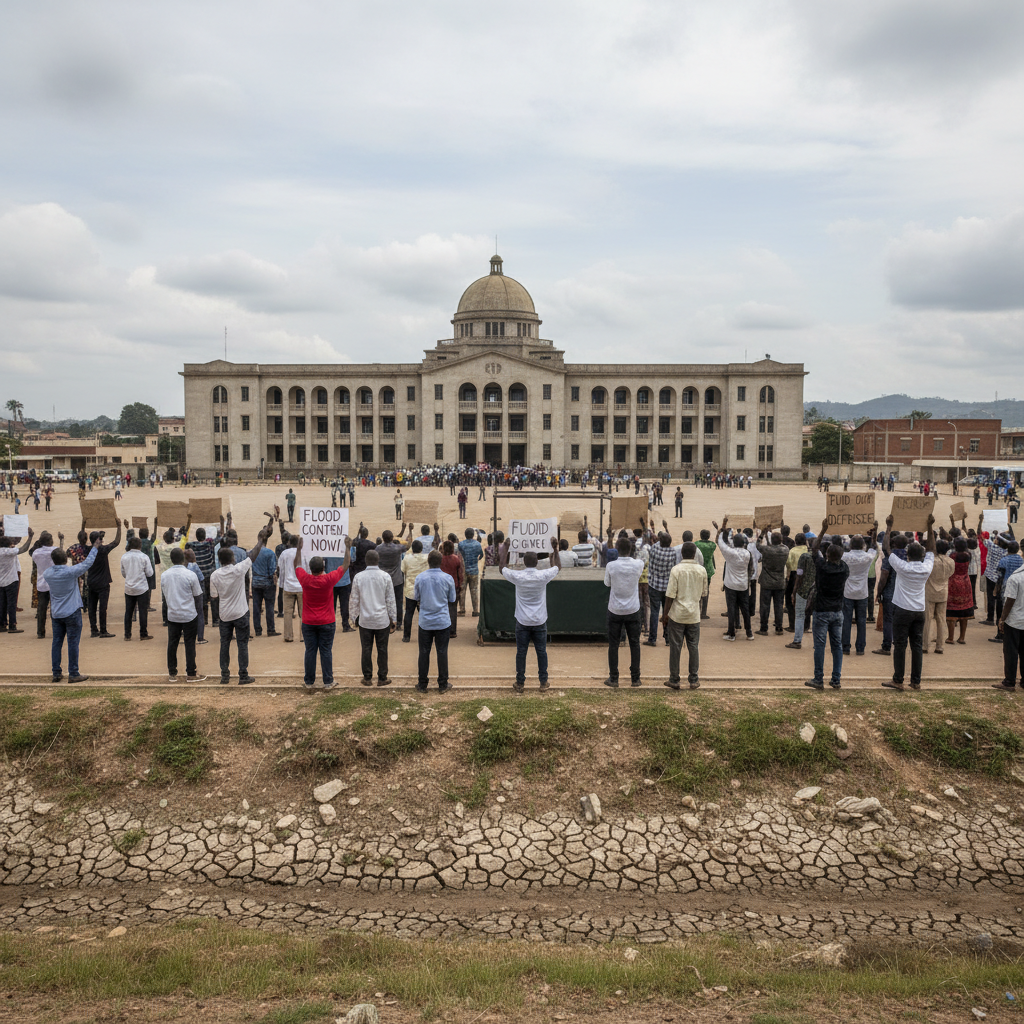
Education Minister Haruna Iddrisu has called on Parliament to allocate sufficient financial resources to the Ministry of Works, Housing and Water Resources. The Minister stated this would empower the Ministry to effectively manage Ghana's ongoing flooding problems. He made these remarks on the floor of Parliament on Wednesday, July 2, 2026.
Mr. Iddrisu, who also serves as the Member of Parliament for Tamale South, highlighted the recurrent nature of floods across Ghana. He stressed that Parliament's failure to provide adequate funding would mean failing its national duty. This call comes as heavy rains continue to expose weaknesses in the country's flood management infrastructure.
Ghana's urban centers, including Accra, Kumasi, and Tamale, consistently face severe flooding. This is primarily due to poor drainage systems, rapid urbanization, and inadequate existing infrastructure. Despite pledges from successive governments for interventions, limited funding and political disagreements have often prevented sustainable solutions.
Mr. Iddrisu referenced previous administrations, noting that the New Patriotic Party (NPP) government did not resolve the issue during its eight-year tenure. He questioned how the current National Democratic Congress (NDC) government, under President John Mahama, could be expected to solve it in just two years without proper resource allocation. He urged Members of Parliament to set aside partisan considerations for this critical national crisis.
The legislator emphasized that flooding is a national challenge requiring collective responsibility and substantial, long-term investment. His intervention aims to prompt a re-evaluation of national budget allocations for disaster prevention and mitigation. This parliamentary focus on flood control funding could lead to more robust infrastructure projects and better urban planning nationwide.
Decision-makers will be watching how Parliament responds to this urgent call for increased financial commitment. The allocation of GHS 4.2 billion, for example, towards flood mitigation could significantly impact urban development and public safety. Investors and citizens will monitor the government's readiness to invest heavily in resilient infrastructure to protect communities from future flood disasters.
This renewed debate on flood control funding reflects an ongoing challenge that affects economic stability and livelihoods. The effectiveness of future interventions will depend on sustained political will and consistent financial support. Addressing this requires a unified approach beyond political divides, ensuring Ghana can safeguard its citizens and infrastructure.