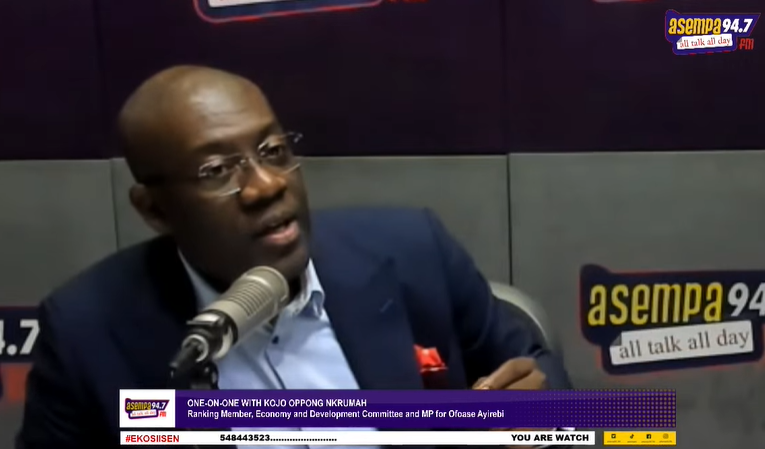
Kojo Oppong Nkrumah, the Ranking Member on Parliament's Economy and Development Committee, has urged Ghanaians to treat any new promises in the 2026 Mid-Year Budget Review with extreme caution. He stated that the government lacks the financial capacity to implement additional commitments. This direct warning highlights significant concerns about Ghana's current fiscal health.
Mr. Oppong Nkrumah, who also serves as the Member of Parliament for Ofoase Ayirebi, emphasized that the government's financial situation does not support new programs. He noted that the administration is already struggling to finance existing commitments. This suggests a deepening fiscal challenge for the nation, impacting various sectors.
This caution comes ahead of the Finance Minister's presentation of the 2026 Mid-Year Budget Review. The review will update Parliament on the economy's performance and outline the government's fiscal outlook for the rest of the year. Such warnings from a key opposition figure often precede intense parliamentary debate on economic policy.
Speaking on Asempa FM's Ekosii Sen, Mr. Oppong Nkrumah declared, "Any new promise made at the mid-year budget review is an unfounded promise. No one should take it seriously. There is no money to work with." This strong statement underscores his conviction regarding the government's financial limitations. His comments reflect a critical assessment of the nation's economic management.
The former Information Minister further argued that government revenue has fallen significantly below expectations. This shortfall makes it difficult to fund projects that have already received approval. Revenue has decreased by about 4.7%, indicating a substantial underperformance against targets. This revenue decline directly impacts the government's ability to meet its financial obligations and fund public services.
Mr. Oppong Nkrumah also alleged that the government has resorted to cutting expenditure to maintain a primary fiscal surplus. He claimed, "To create the impression that the economy is performing well, they have cut expenditure by about 13.8 per cent just to achieve a primary surplus." A primary fiscal surplus means government revenue exceeds non-interest spending, often seen as a sign of fiscal discipline, but can also indicate austerity measures.
These expenditure cuts, if confirmed, could have broad implications for public services and infrastructure development. Reduced spending might affect ongoing projects, social programs, and the overall pace of economic growth. The government's fiscal strategy is under scrutiny as it navigates these economic pressures.
The lawmaker's comments provide a critical perspective on the government's economic narrative. They suggest a disconnect between official pronouncements and the underlying financial realities. Investors and citizens will closely monitor the upcoming budget review for clarity on the government's true financial position and its plans to address these challenges.
The broader context of Ghana's economy includes ongoing efforts to stabilize public finances and manage debt. The government has been implementing various measures to boost revenue and control spending. However, Mr. Oppong Nkrumah's remarks indicate that these efforts may not be sufficient to create fiscal space for new initiatives. The economic outlook remains a key concern for policymakers and the public.
What happens next will depend on the details presented in the Mid-Year Budget Review and the government's response to these criticisms. Decision-makers and markets will be watching for concrete plans to address revenue shortfalls and manage expenditure. The credibility of any new promises will be heavily scrutinized in light of these warnings.