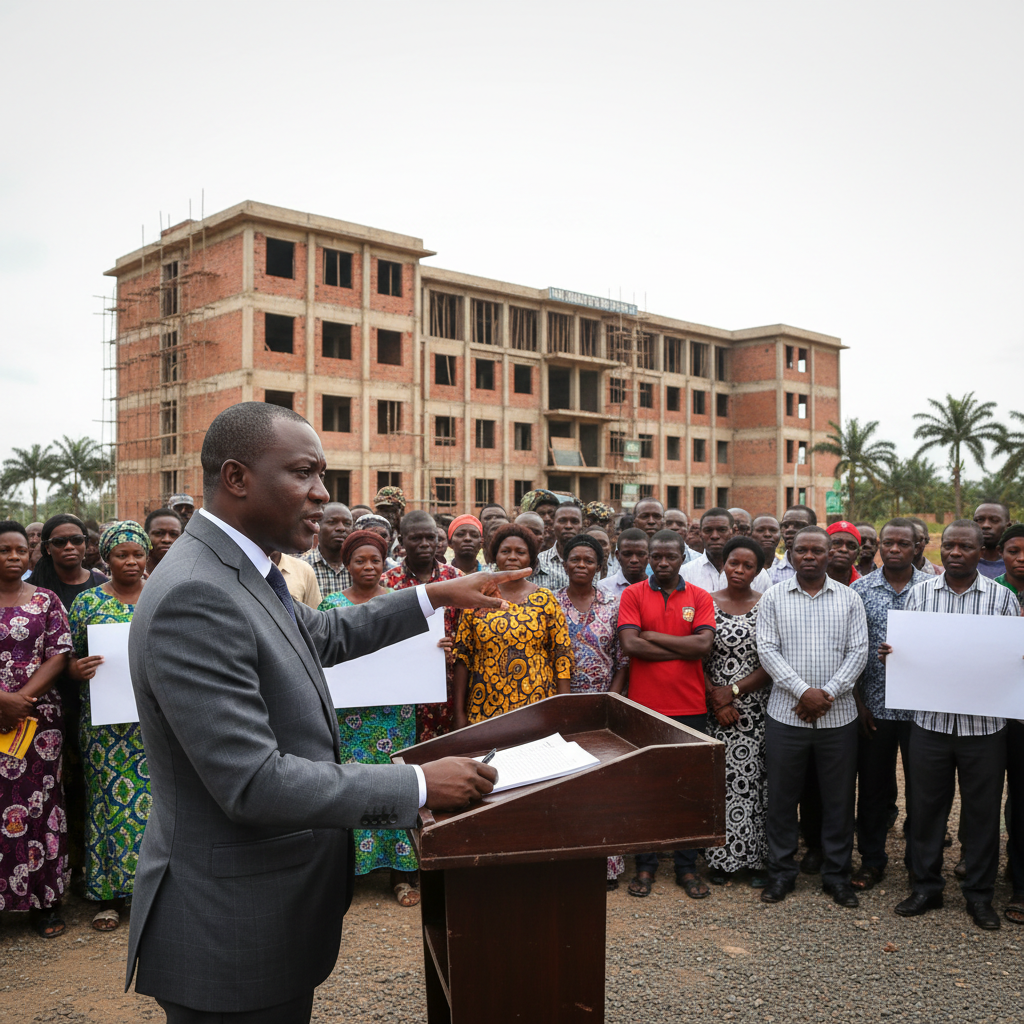
Obuasi East Member of Parliament, Patrick Boakye-Yiadom, publicly cleared overgrown grass at the Afari Military Hospital to highlight its non-operational status. This action occurred during a parliamentary health committee visit on June 10, demanding the facility's immediate activation.
The symbolic weeding by Mr. Boakye-Yiadom, who is also the Deputy Ranking Member on Parliament's Health Committee, drew attention to the hospital's neglected condition. It underscored growing concerns over Ghana's healthcare infrastructure and the escalating pressure on the Komfo Anokye Teaching Hospital (KATH).
This situation fits into a larger narrative of uncompleted or non-operational health projects across Ghana. The government has faced scrutiny over delays in commissioning facilities designed to expand healthcare access. The Afari Military Hospital, a major investment, sits idle while existing hospitals struggle with overcrowding and inadequate resources.
Mr. Boakye-Yiadom expressed deep disappointment, stating, "I am very sad and disappointed today to see this beautiful edifice overtaken by weeds and, of course, snakes." He added that his weeding exercise was a symbolic act to draw urgent attention to the hospital's plight. This highlights a critical resource allocation issue where completed facilities remain unused.
The MP emphasized the critical need for immediate activation of the Afari Military Hospital and other completed health facilities. Their operationalisation would significantly improve healthcare access and alleviate the severe burden on KATH. Decision-makers must now address the logistical and human resource gaps preventing these facilities from serving the public.
The Obuasi East MP stressed that the Afari Military Hospital was explicitly designed to ease the strain on KATH. He noted that KATH's Accident and Emergency Unit is severely overcrowded, with more patients lying on the floor than in beds. This unsustainable situation directly impacts patient care and outcomes in the Ashanti Region and surrounding areas.
Furthermore, Mr. Boakye-Yiadom highlighted the non-operational status of other completed facilities, like the Agenda 111 hospitals in Kokoben and Trede. These are modern 100-bed facilities equipped with essential departments, including emergency units. Their non-use represents a significant waste of public funds and a missed opportunity to strengthen the healthcare system.
He questioned why these facilities remain non-operational despite being completed and commissioned. The people of the Ashanti Region deserve access to the healthcare services that these hospitals were built to provide. Ignoring these functional structures undermines the government's commitment to public health.
Mr. Boakye-Yiadom called on President John Dramani Mahama and Health Minister Kwabena Mintah Akandoh to act swiftly. He urged them to operationalise these hospitals before they deteriorate further. The public will be watching closely for concrete steps to activate these vital healthcare assets. The economic impact of such facilities, once operational, will be substantial, creating jobs and improving public health outcomes.