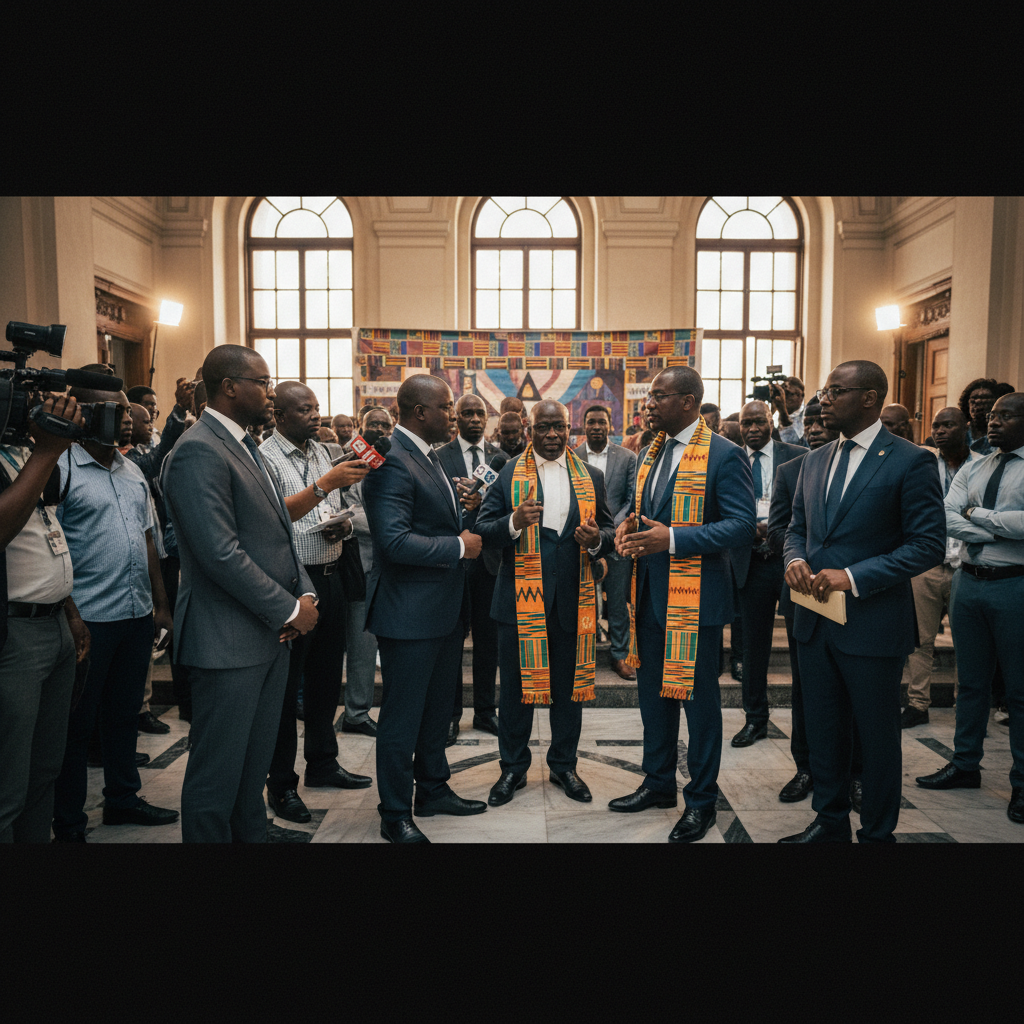
Richard Ahiagbah, Communications Director for the New Patriotic Party (NPP), states no celebration is warranted for the extradition of former Microfinance and Small Loans Centre (MASLOC) Chief Executive Sedina Tamakloe-Attionu. He described the development as a simple enforcement of accountability under the law. This emphasizes that fleeing justice will result in consequences, not cause for partisan triumph.
Mr. Ahiagbah explained that Ms. Tamakloe-Attionu's extradition reflects established legal principles. Her return follows a conviction in absentia related to causing financial loss to the state. The NPP official believes she should have remained in Ghana to face justice. Her departure necessitated the legal process that led to her extradition.
This event fits into Ghana's broader efforts to combat corruption and ensure public accountability. Previous cases have shown challenges in prosecuting individuals who leave the country after alleged public service misconduct. The effective use of international legal frameworks for such returns strengthens the rule of law. It signals that Ghana is serious about prosecuting those who mismanage public funds.
Speaking on JoyNews' The Pulse on Tuesday, June 9, Mr. Ahiagbah reiterated his stance. He said, “Public service is trust. Once that trust is questioned, the law must take its course. So there is nothing to jubilate about.” He highlighted that Ms. Tamakloe-Attionu absconded from justice. He also added, “She ought to be here and answer it, but somehow she ran away. I think that she ought to bow her head down in shame and just go and serve the sentence, so that we can move on.”
The successful extradition demonstrates the increasing effectiveness of international cooperation in legal matters. This will likely encourage government agencies to pursue similar cases more aggressively. It also sends a strong message to current and future public officials about the certainty of facing justice. Stakeholders will watch how this case proceeds through the Ghanaian legal system. It may set precedents for handling similar situations involving financial malfeasance.
This development comes amid ongoing public discourse regarding strategies to fight corruption in Ghana. The NPP's measured response suggests a desire to depoliticize the issue of enforcing justice. It seeks to present it as a routine function of government. Such extraditions can boost public confidence in the legal system's capacity to hold individuals accountable. This holds true regardless of their past political affiliations or attempts to evade prosecution. It underscores that crime has no borders and accountability mechanisms are robust.
Ghana’s legal system has pursued financial misconduct cases with varying degrees of success. This extradition marks a notable logistical and legal victory. It signals a strengthened commitment to fiscal discipline and probity in public office. The ongoing legal proceedings will reveal more about the implications for financial oversight. It will also show its impact on the management of state-owned entities such as MASLOC.