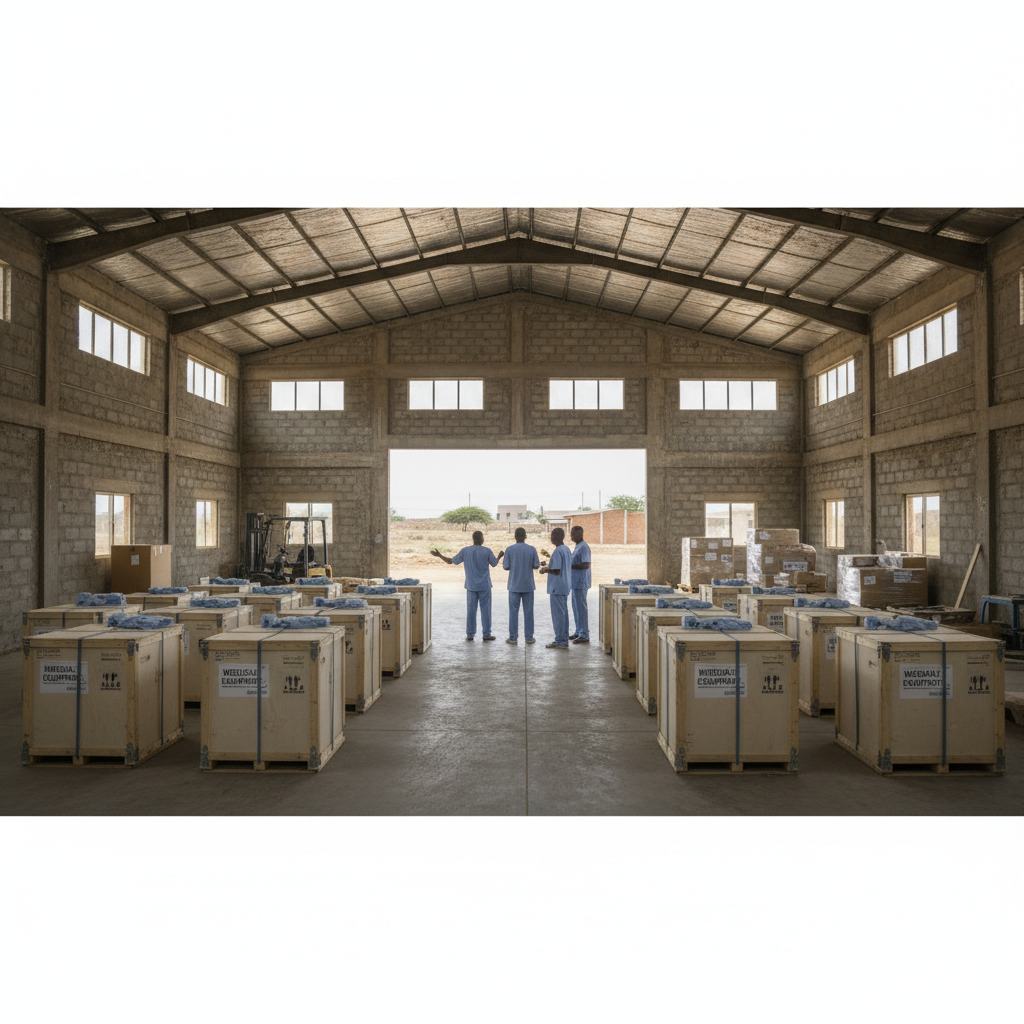
Northern Ghana has received 17 new dialysis machines, but faces a critical shortage of medical staff to operate them. The Canadian-Ghanaian charity, Ghana Medical Help (GMH), officially presented these machines and specialised imaging systems to hospitals in the Upper West and Upper East Regions. This substantial donation addresses a long-standing healthcare deficiency for kidney patients.
Hospital administrators warn that the new life-saving equipment risks remaining unused without an immediate increase in medical personnel and local funding. For years, kidney patients in the Nandom enclave, for example, travelled to Wa for dialysis. The intervention aims to drastically reduce the burden on these patients, including children, preventing chronic kidney disease from delayed treatment.
This initiative fits into Ghana’s broader push to improve regional healthcare infrastructure and reduce disparities. Data indicates that kidney disease is a growing concern nationwide. An estimated 10 out of every 100 people will develop some form of kidney disease in their lifetime. Acute kidney failure affects close to 21 percent of individuals. Before National Health Insurance Scheme coverage, many families lost all their assets to afford dialysis services.
Acting Medical Superintendent of St. Theresa’s Catholic Hospital, Dr. Mark Padmore Awudi, highlighted the dire situation before this donation. He noted that 40 percent of all dialysis patients travelling to the Regional Hospital in Wa came from the Nandom area. Dr. Awudi noted, "Apart from the financial burden they face, they have to wake up very early at dawn, sometimes at 1:00 AM, to catch the Metro Mass transit bus just to receive dialysis at Wa and then return."
The immediate implication is that without skilled personnel like clinicians, biomedical engineers, and specialised nurses, these GHS 4.2 billion machines will not fulfill their purpose. Decision-makers must address the staffing deficit in Northern Ghana. Healthcare authorities must also ensure proper maintenance to maximise the lifespan and utility of the new equipment.
Acting Medical Director of the Upper West Regional Hospital, Dr. Philip K.K. Baabiineh, urged medical professionals to accept postings in the region. He countered the perception that the North is a difficult place to work. Dr. Baabiineh cautioned, "If you have 10, 15, 20 machines, and you currently have only two biomedical engineers, we will not be able to service them and maintain them very well."
Ghana Medical Help's Country Director and Co-Founder, Dr. Dominic Akaateba, stressed the importance of local maintenance and responsible usage. He emphasised that sustainability goes beyond foreign aid. Dr. Akaateba stated, "There is donor fatigue because we don't use things for their intended purposes." He challenged local health authorities to focus on internal solutions rather than blaming national politicians.
Upper West Regional Director of Health Service, Dr. Josephat Nyuzaghl, underscored the equipment’s potential to attract medical specialists. These professionals previously cited a lack of working tools as a reason to decline rural postings. Dr. Nyuzaghl firmly reminded beneficiary hospitals of their responsibility to maintain the equipment. This ensures its long-term service to the community. He commanded, "We must take steps to immediately operationalize these centers, particularly for Nandom, to ensure that community members directly benefit from these items."