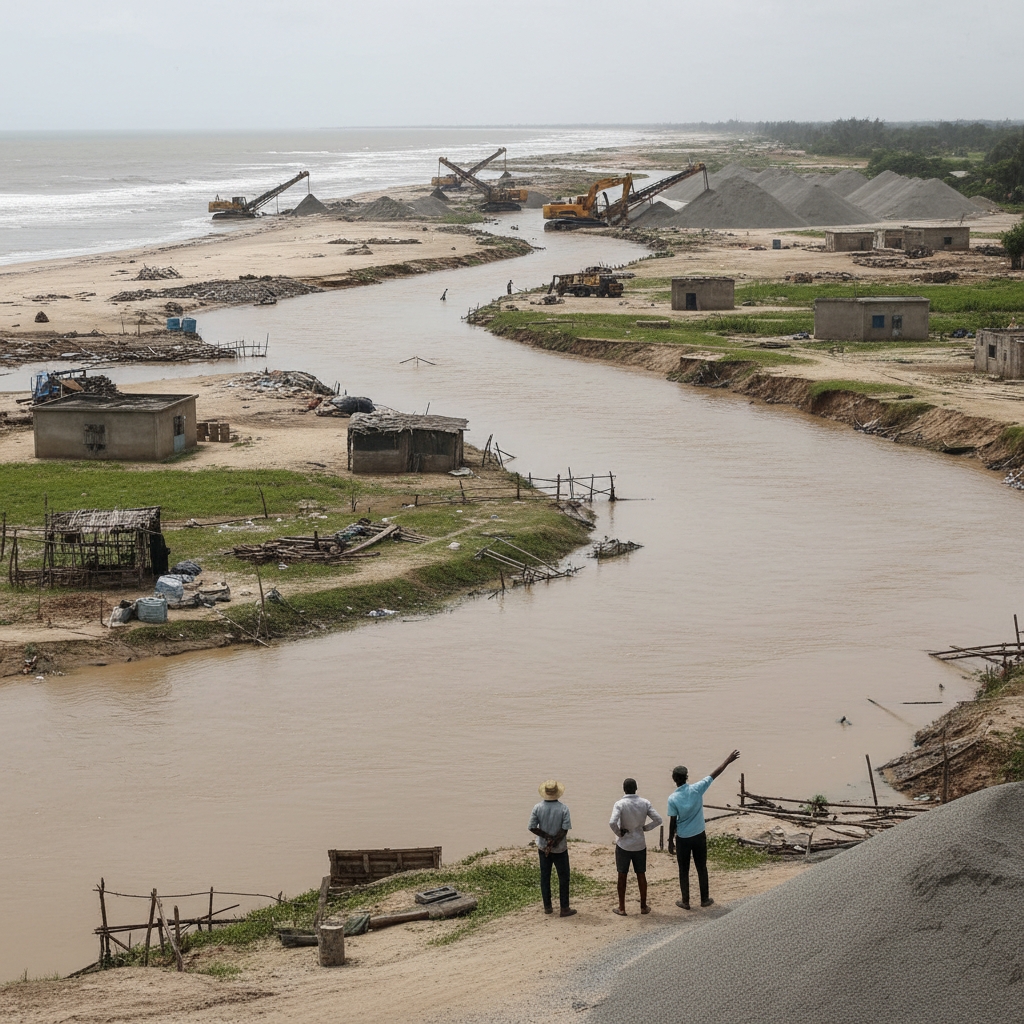
The Member of Parliament for Ningo-Prampram, Samuel Nartey George, has issued a direct warning to individuals involved in illegal sand winning. Offenders will now face the full force of the law if they do not stop these activities.
This warning follows recent severe flooding that damaged roads and other public infrastructure in the constituency. Mr. George attributes the increased impact of these floods directly to illegal sand winning. He describes the practice as a major cause of environmental damage and the destruction of natural drainage systems.
This situation highlights a recurring challenge in Ghana where unregulated resource extraction negatively impacts public finances and infrastructure. The re-routing of development funds towards emergency relief directly affects the government's ability to execute planned projects. Ghana faces persistent issues with environmental degradation due to illegal mining and logging, further exacerbating climate-related vulnerabilities.
Mr. George directly told residents not to protect those involved in illegal extraction. He emphasized that law enforcement agencies will arrest offenders without hesitation when necessary. The MP cautioned, "We are warning all constituents: no one should come to the council saying that we have begun arresting their children."
The immediate consequence of this environmental damage is a significant financial burden on the Ningo-Prampram constituency. Funds initially planned for development have been diverted to emergency relief efforts. Mr. George stated that the money spent on flood victims alone could have been used to build ten six-unit classroom blocks. This represents an estimated GHS 2 million opportunity cost, based on an average cost of GHS 200,000 per six-unit classroom block reported by the Ministry of Education in 2022.
Going forward, the actions of law enforcement agencies and community cooperation will be crucial. Decision-makers will closely monitor whether the threat of legal action will effectively deter illegal sand winning. The long-term implications involve safeguarding public infrastructure and ensuring that development funds are used as intended. The successful prosecution of offenders could serve as a precedent for environmental protection efforts across Ghana.
The impact on local development is substantial, with critical infrastructure projects put on hold. This also puts pressure on the national budget, as central government funds often support disaster relief efforts in constituencies. The diversion of resources away from education, for example, directly impacts human capital development in the affected areas. Protecting the environment and public infrastructure must take priority over the interests of those engaged in unlawful activities.