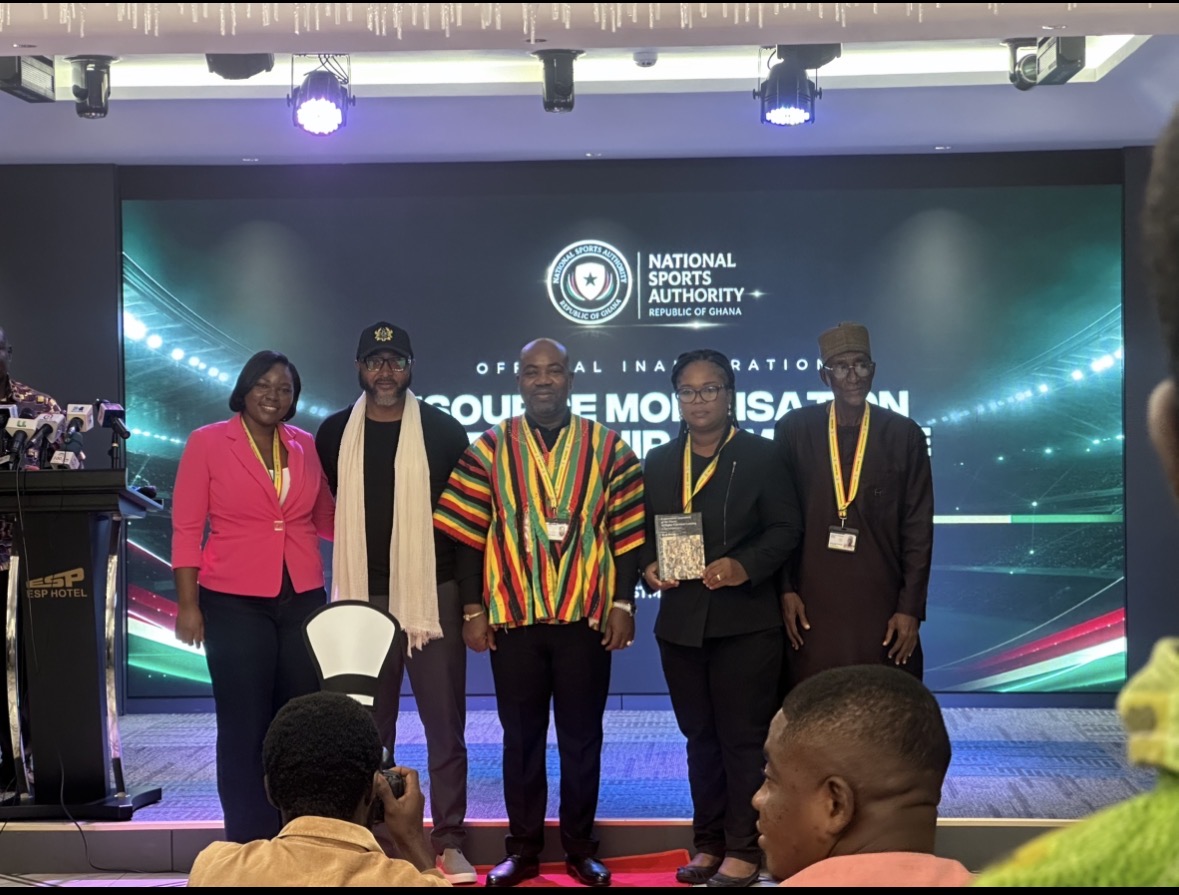
Ghana’s National Sports Authority (NSA) has inaugurated a new Resource Mobilisation and Partnership Committee. This committee aims to broaden the financial base of sports, shifting away from heavy reliance on public funds. Samson Deen, President of the African Paralympic Committee, chairs this crucial new body.
The committee’s formation addresses a critical weakness in Ghanaian sport: its over-dependence on government financing. Public resources alone are increasingly insufficient for infrastructure and athlete development. The new committee will focus on attracting corporate partnerships and alternative funding sources. This move seeks to make Ghanaian sport more financially stable and less reliant on annual budget allocations.
This initiative fits into a broader effort to position sport as an industry within Ghana’s economy. Historically, sport has been viewed primarily as a social activity. However, the NSA’s leadership has advocated for sport to generate jobs, attract investment, and contribute to national economic development. This strategic shift aims to unlock new revenue streams beyond traditional government support.
Mr. Deen’s appointment brings significant experience in building institutional partnerships. He previously helped Ghana’s Paralympic movement gain respect and attract support through structured organizations. He noted that sponsors prefer dealing with established bodies rather than individual athletes seeking assistance. This approach proved more effective than fragmented individual appeals.
The committee’s success hinges on making Ghanaian sport “investable” for corporate entities. Companies seek commercial partnerships, not charity, desiring brand visibility and measurable returns. Sports administrators must package competitions, athletes, and development programs into attractive propositions for businesses. This requires demonstrating credible governance, professional administration, and clear commercial value.
A properly functioning resource mobilisation structure could transform Ghana’s sports funding model. It can develop long-term partnerships with companies, development institutions, and foundations. This contrasts with the current cycle of emergency appeals often made just before international competitions. Such a change would provide more predictable resources for various sports disciplines.
The new approach also seeks to diversify funding beyond football, which often dominates commercial exposure. Disciplines like athletics, boxing, swimming, and para sport often receive less attention despite producing international athletes. Recent para-sport achievements, such as historic representation at the 2026 Commonwealth Games, highlight this potential. Para-athlete Zinabu Issah won silver in Glasgow, demonstrating what sustained effort can achieve.
These successes followed strengthened structures and support for athletes. The NSA now has an opportunity to link sporting performance more directly with sponsorship and investment. The committee must solve the challenge of securing funding for preparation and talent development, not just after medals are won. This proactive investment is crucial for sustained growth and success across all Ghanaian sports.