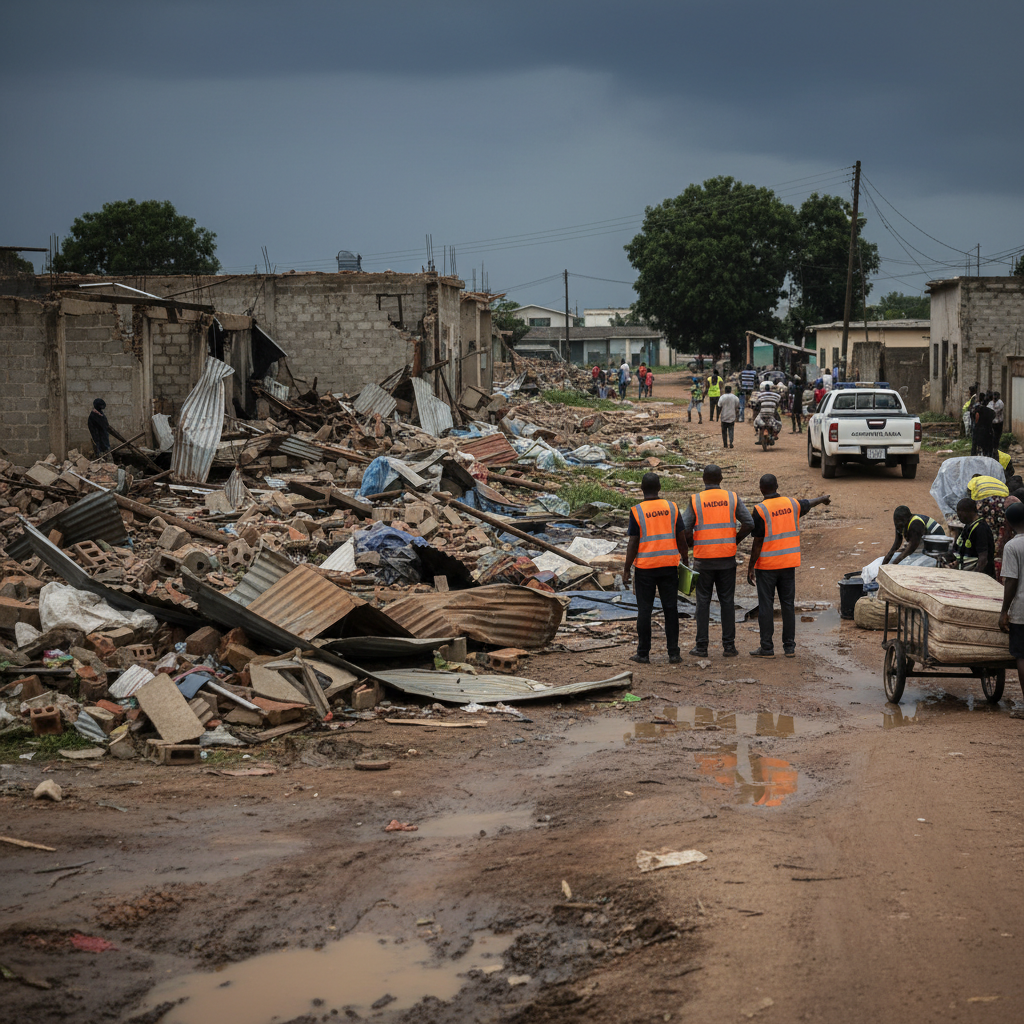
The National Disaster Management Organisation (NADMO) issued warnings about heavy rains and conducted pre-emptive demolition exercises in Accra to reduce flooding. These actions aimed to prepare the capital for the rainy season, despite some resistance from the public. NADMO’s efforts focused on clearing structures situated on waterways to improve drainage.
NADMO’s Director for Man-Made Disasters, Maxwell Emmanuel Niber, explained that these preparedness measures began early in the year. The organisation specifically targeted areas like Chado for demolitions, removing structures built in flood paths. These interventions were designed to allow water to flow freely, thereby reducing flood risks and protecting property.
This initiative fits into Ghana’s broader struggle with urban planning and disaster management, particularly in its capital city. Recurring floods in Accra cause significant economic disruption and displace thousands of people annually. Data from the World Bank indicates that inadequate drainage infrastructure and illegal constructions on waterways exacerbate flood impacts across many Ghanaian cities. Prior events, such as the devastating June 3rd disaster in 2015, underscore the critical need for effective flood mitigation strategies and public compliance.
Mr. Niber confirmed the early warnings given by NADMO, stating, "We had an estimate that there were going to be rains this year." He also noted the public's negative reaction to the demolitions. "Of course, you know the Ghanaian attitude, they thought our Director-General was inhuman with these actions," Niber explained. He suggested that greater public support would have made the flood situation less severe.
The intensity of the rainfall, particularly in June, also played a significant role. Mr. Niber highlighted that June recorded constant rainfall on 22 out of 30 days. He stated that the rainfall volume, exceeding 140 millimetres, was exceptionally high. Such volumes are rarely seen and were not fully anticipated, amplifying the flood's severity after recent downpours.
Moving forward, the public and local authorities must collaborate more closely on urban planning and infrastructure development. Continuous public awareness campaigns could educate citizens on the dangers of building on waterways. Stricter enforcement of building codes and urban planning regulations will be crucial to prevent future flood disasters. The government may also need to invest further in modern drainage systems capable of handling increased rainfall volumes due to climate change. This improved synergy will be essential to mitigate future economic losses and safeguard lives in Accra.