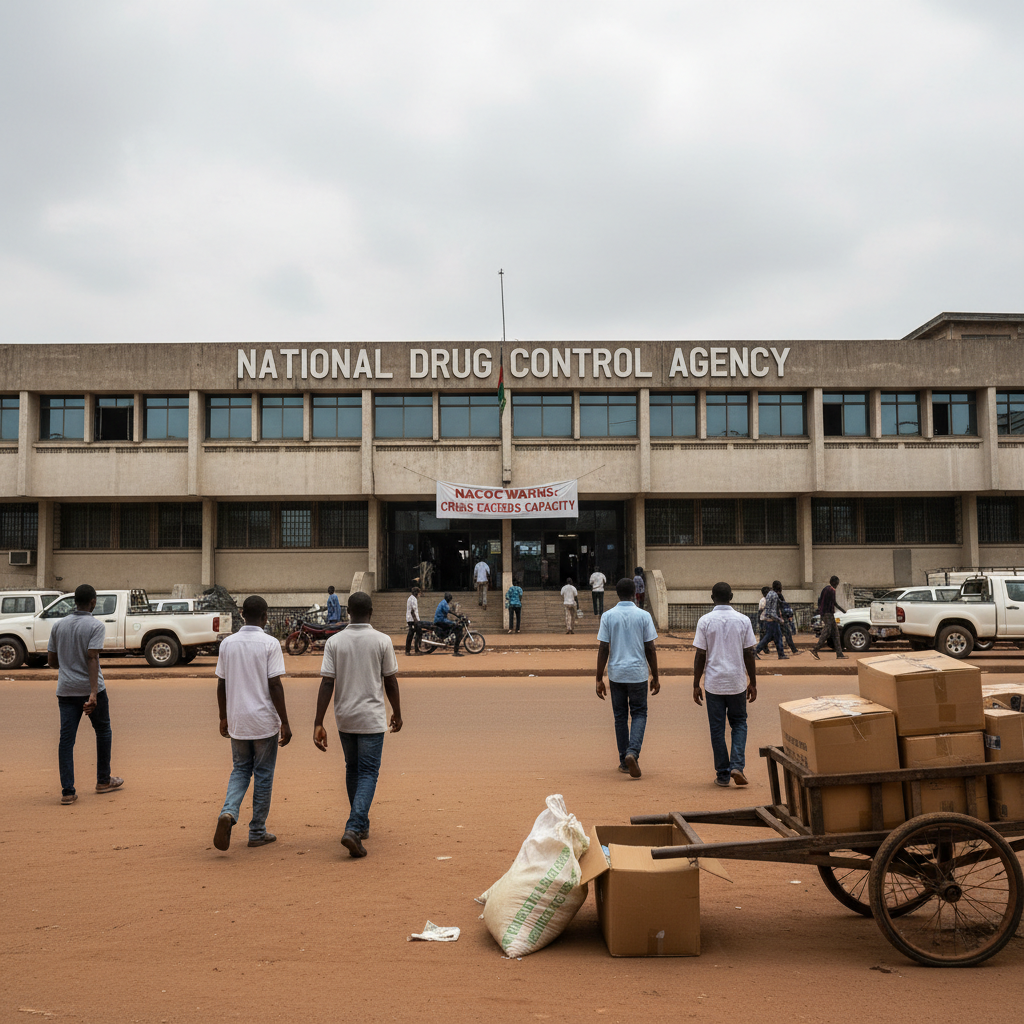
Ghana's Narcotics Control Commission (NACOC) has declared that the nation's drug abuse crisis has surpassed its current capacity to manage. Deputy Director-General Alexander Twum-Barimah called for a collective national effort, involving schools, churches, and the public, to prevent substance use, especially among young people.
Mr. Twum-Barimah stated that NACOC's limited manpower means the fight against drugs cannot be left solely to the Commission. He highlighted the need for stronger collaboration from educational institutions, religious organizations, and the general public to reduce drug abuse across the country. The Commission believes that a unified approach is essential to effectively tackle the escalating problem.
This urgent call reflects a growing concern about public health and safety in Ghana. The increasing prevalence of drug abuse poses significant social and economic challenges, impacting productivity and placing a strain on healthcare systems. Previous reports have indicated a rise in substance use among youth, making this a critical national issue that requires immediate and coordinated intervention.
Speaking on Joy FM's Super Morning Show on Thursday, July 30, Mr. Twum-Barimah emphasized the broad impact of drug abuse. He warned that drug use affects not only individuals but also innocent members of the public, citing instances where impaired individuals could pose a danger to others. "This fight cannot just be left for NACOC. We are just a handful compared to the population of the country," he stated.
NACOC has initiated several programs to address the crisis. This year, for the first time, the Commission organized a nationwide engagement with guidance and counseling coordinators from senior high schools across all 16 regions. This initiative aims to equip school personnel with better tools to assist students struggling with substance abuse. The 16 regional commands also held similar programs in June to mark World Drug Day, an effort that will become a regular feature.
The Deputy Director-General also urged the public to report suspected drug-related activities, assuring whistleblowers of confidentiality. He noted that information received from citizens has been invaluable to the Commission's work. "There have been numerous instances where referrals have been brought to me through our emails," he explained, demonstrating the importance of public participation.
Furthermore, Mr. Twum-Barimah called on churches to integrate drug education into their youth programs. He argued that religious institutions have a critical role in preventing substance abuse, given their reach and influence over young people. NACOC plans to engage the Christian Council to build stronger partnerships and ensure drug education becomes a regular part of youth activities.
NACOC is also advocating for new legislation to grant the Commission stronger legal authority for drug testing across various sectors. This proposed legal backing would enable more comprehensive screening efforts, potentially expanding to include mandatory testing for certain populations or professions. Such measures could significantly enhance the Commission's ability to identify and address drug use early.
The Commission's plea underscores the need for a multi-faceted approach involving government agencies, educational bodies, religious organizations, and the general public. Without a concerted national effort, the drug abuse crisis could continue to escalate, leading to more severe social and economic consequences for Ghana. Decision-makers and communities must respond to this call for action to safeguard the nation's future.