Ghana's Minority Leader, Alexander Afenyo-Markin, has confirmed the opposition's intent to vigorously pursue accountability for a $1.7 billion loss. This deficit, equivalent to 1.5% of Ghana's Gross Domestic Product (GDP), is linked to the Domestic Gold Purchase Programme (DGPP). The issue will dominate an emergency parliamentary sitting, with the Minority vowing to scrutinize the government's role.
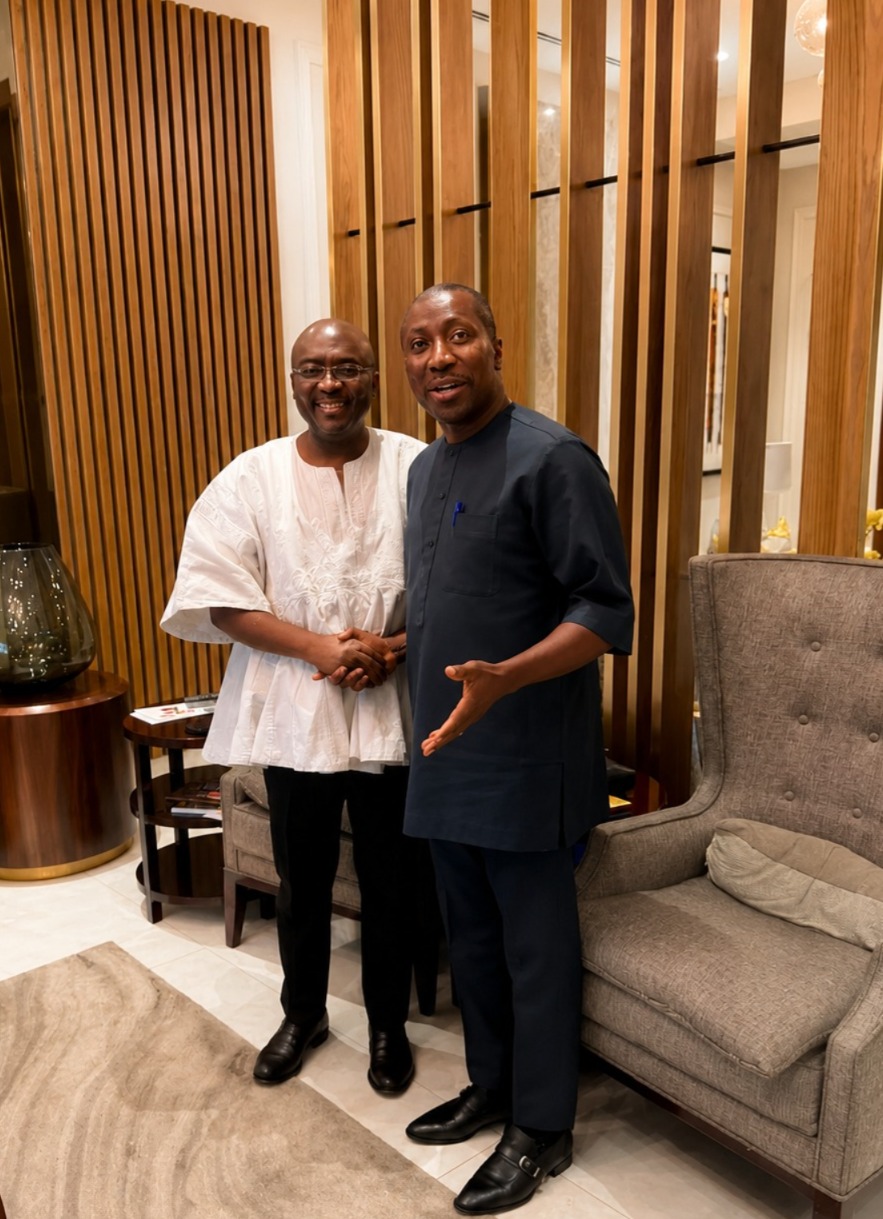
Afenyo-Markin met with New Patriotic Party (NPP) Flagbearer Dr. Mahamudu Bawumia to discuss the Minority's agenda. Dr. Bawumia urged the Minority to focus on the substantial loss arising from GoldBod and Bank of Ghana operations. This financial shortfall was highlighted in the International Monetary Fund's (IMF) August 2026 Article IV report, which referenced the significant scale-up of the DGPP in 2025.
This development unfolds amidst Ghana's ongoing efforts to stabilize its economy and manage public finances. The country has been grappling with high inflation and currency depreciation, making the prudent management of state resources critical. Previous economic challenges have often led to increased scrutiny of government expenditure and revenue generation, with the central bank's operations frequently coming under public review. The current debate echoes past concerns about financial transparency and accountability within state-owned enterprises and regulatory bodies.
Dr. Bawumia referenced the IMF's August 2026 Article IV report, which explicitly states the DGPP's significant scale-up in 2025 led to losses exceeding $1.7 billion. He cautioned against any attempts to divert public attention from this critical financial matter. Afenyo-Markin assured Dr. Bawumia that the Minority would prosecute the matter fully, ensuring the Mahama government is held accountable.
The parliamentary emergency sitting is expected to be contentious, with the Minority demanding full accountability for the DGPP losses. This push for transparency could lead to intense debates and potentially new investigations into the programme's implementation and oversight. Decision-makers and financial markets will closely watch the proceedings for any implications on Ghana's economic stability and investor confidence. The outcome may influence future policy decisions regarding state-backed financial programmes and central bank operations.
The $1.7 billion figure has recently dominated political discourse. The Minority, at an August 18 press conference, cited Paragraph 13 of the IMF Selected Issues Paper No. 26/213. This document attributes the DGPP losses to several factors. These include service and assay fees paid to GoldBod. Discounts on gold sold to off-takers also contributed to the deficit. Most importantly, exchange rate losses from the spread between the Forex Bureau rate for gold purchases and the Cedi reference rate for Bank of Ghana accounting played a significant role.
Government and GoldBod officials have challenged these claims. GoldBod CEO Sammy Gyamfi insists the IMF did not accuse GoldBod of causing the loss. He describes it as a Bank of Ghana operational cost. Gyamfi highlights GoldBod’s Auditor-General-certified 2025 accounts, which show an operational surplus of GHS 907 million and an overall surplus of GHS 5.4 billion. This suggests GoldBod itself was profitable.
Economists, including Professor Ebo Turkson from the University of Ghana, have further clarified the situation. They explain that the loss primarily sits on the central bank's books. It represents a translation and operational cost associated with building gold reserves. This is distinct from a direct cash loss incurred by GoldBod. The distinction between operational costs for reserve building and direct losses is crucial for understanding the financial impact.
The Minority remains resolute in its commitment to obtaining answers for the Ghanaian people. They have vowed not to relent until full accountability is achieved. This stance indicates a prolonged period of political scrutiny over the DGPP. The emergency sitting will provide the first major platform for this confrontation. The public expects clear explanations regarding the management of such a significant national asset and programme.