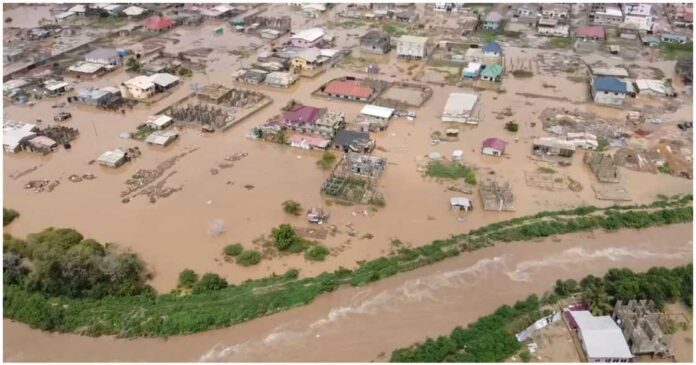
Ghana's parliamentary Minority has rejected the Finance Minister's claim that a court order froze the GHS 350 million constitutional contingency fund. This fund, according to the Minister, was therefore inaccessible for recent flood relief efforts in Accra. The opposition's stance emerged during reactions to the 2026 Mid-Year Budget Review.
Martin Adjei Mensah Korsah, the Ranking Member on Parliament's Works and Housing Committee, questioned the Finance Minister's explanation. He stated that the claim raised serious concerns about coordination within the government. Mr. Mensah Korsah found it surprising that Cabinet would approve emergency flood response measures without knowing the country's only constitutionally mandated emergency fund was unavailable.
This dispute highlights ongoing challenges in public finance management and inter-ministerial coordination in Ghana. The effective deployment of emergency funds is crucial for disaster response, especially in a country prone to seasonal flooding. Previous incidents have often exposed weaknesses in the government's ability to react swiftly to humanitarian crises, impacting public trust and economic stability.
Mr. Mensah Korsah argued that if Cabinet had discussed and approved interventions, the Attorney-General, as the government's chief legal adviser and a Cabinet member, should have informed ministers about any legal restrictions on the fund. He said, "If the Cabinet of Ghana could convene and brainstorm on measures to mitigate subsequent floods and decided to assess money from the contingency fund and it never occurred to Cabinet, of which the chief legal advisor to the President, Attorney-General, is a member, and they did not know that the contingency fund had a garnishee order, then it's quite strange."
The implications of this disagreement are significant for future disaster preparedness and government accountability. A lack of clarity on the accessibility of emergency funds could delay critical responses to natural disasters, leading to increased economic losses and human suffering. Decision-makers will need to address these coordination gaps to ensure that Ghana can effectively manage future crises and maintain public confidence in its financial management systems.
The MP also dismissed allegations by the Finance Minister that the previous Akufo-Addo administration mismanaged the Greater Accra Resilient and Integrated Development (GARID) Project. He described these claims as "heavy untruths and complete falsehoods." Citing World Bank implementation reports, Mr. Mensah Korsah maintained there was no evidence of misuse of project funds. He argued that the reports instead pointed to delays by the Finance Ministry in releasing funds for the flood mitigation project. He urged the government to address implementation challenges rather than engage in political blame.
This ongoing political back-and-forth could further complicate efforts to secure funding and implement crucial infrastructure projects. Investors and international partners often look for stability and clear governance structures. The perceived lack of coordination could deter future investment in critical sectors. The public will be watching closely to see how these claims are resolved and what measures are put in place to prevent similar issues in the future. Ensuring transparency and accountability in public finance remains paramount for Ghana's economic development.