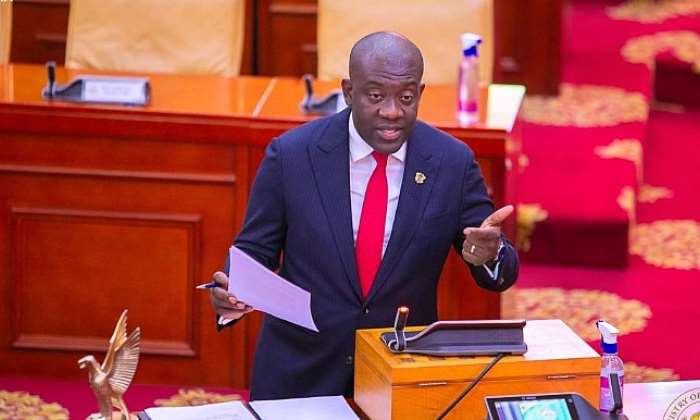
Ghana's Minority in Parliament has formally requested an ad hoc committee to investigate the Gold-for-Reserve Scheme. This parliamentary motion aims to scrutinize alleged foreign exchange losses sustained by the Bank of Ghana (BoG) under the program. It represents the second such attempt by the opposition to initiate a comprehensive inquiry into the scheme's operations.
The proposed investigation will delve into several critical aspects of the Gold-for-Reserve Scheme. These include its overall design, implementation processes, and governance structures. The Minority also seeks to examine the scheme's financial performance, environmental and public health implications, and any related matters. Concerns about the integrity of supply-chain due diligence and the risk of acquiring illegally sourced gold are central to their demands.
This move by the Minority aligns with broader public and political scrutiny over Ghana's economic management. The nation has faced significant economic challenges, including high inflation and currency depreciation. The Gold-for-Reserve Scheme, designed to bolster Ghana's foreign exchange reserves, has been a key policy initiative. However, the Minority's allegations of losses suggest potential inefficiencies or mismanagement within a program critical for economic stability. The Bank of Ghana's financial health is paramount for market confidence and the cedi's stability.
The motion, filed under Article 103 of the 1992 Constitution and specific Standing Orders, seeks to establish a committee with broad powers. It aims to inquire into the roles of relevant state institutions and issues of accountability. While the source text does not provide direct quotes from Bank of Ghana officials or government representatives, the Minority's action underscores a demand for transparency. Such parliamentary oversight is a vital component of democratic governance, ensuring public funds and national assets are managed responsibly.
The establishment of this ad hoc committee, if approved by the Speaker of Parliament, could lead to significant revelations. It might expose weaknesses in the scheme's operational framework or financial oversight. The findings could influence future policy decisions regarding Ghana's gold resources and foreign exchange management. Investors and international financial institutions will closely watch the proceedings, as the integrity of such schemes impacts Ghana's economic credibility. The outcome will also shape public perception of the government's economic stewardship and the Bank of Ghana's autonomy.
The Minority's press conference preceding this motion highlighted their concerns about Ghana's losses in the gold trade. They specifically referenced the GoldBod, an entity presumably involved in the scheme. The proposed committee would also investigate the reported foreign exchange losses. These losses, if confirmed, could have substantial implications for the Bank of Ghana's balance sheet. Such financial setbacks could further strain Ghana's already challenged public finances. The inquiry seeks to clarify the exact nature and scale of these alleged losses.
The motion was submitted by several prominent Minority Members of Parliament. These include Hon. Kojo Oppong Nkrumah, Ranking Member of the Committee on Economy, and Hon. Tweneboa Kodua Fokou. Other applicants are Hon. Jerry Ahmed Shaib, Second Deputy Minority Whip, Hon. Vincent Ekow Assafuah, and Dr. Fred Kyei Asamoah. Their collective action signals a unified front from the opposition. This highlights the seriousness with which they view the alleged irregularities within the Gold-for-Reserve Scheme. The parliamentary process will now determine the motion's fate and the potential for a full-scale investigation.