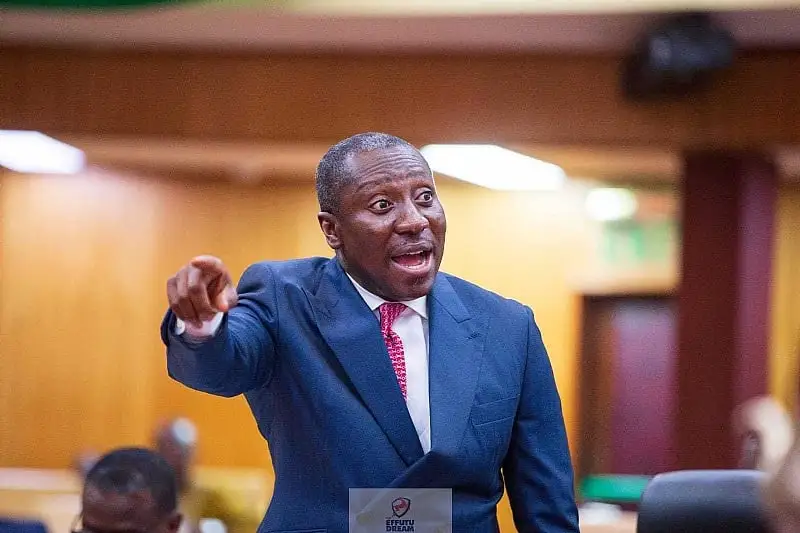
Ghana's Minority in Parliament has called for a fresh parliamentary investigation into alleged $1.7 billion (GHS 22.1 billion) losses linked to GoldBod’s gold purchasing and trading operations. The Minority insists GoldBod cannot retain transaction benefits while shifting associated losses to the Bank of Ghana (BoG).
Minority Leader Alexander Afenyo-Markin rejected GoldBod’s reliance on its audited accounts, which show a profit. He argued that underlying transactions and costs must also be examined. An International Monetary Fund (IMF) report identified these losses, generated through GoldBod’s operations, on the central bank's books. The government has not publicly objected to these findings.
This demand for a probe comes amidst broader concerns about public finance management and accountability in Ghana. The country has been navigating economic challenges, including high debt levels and currency depreciation. Scrutiny of state-owned entities like GoldBod and their financial interactions with the central bank is crucial for maintaining economic stability. Previous reports have highlighted the need for greater transparency in public sector operations.
Alexander Afenyo-Markin stated, "GoldBod cannot claim the credit that comes with the revenue while pushing every loss into Bank of Ghana’s balance sheets." He emphasized that the $1.7 billion losses should not be buried in footnotes but brought into the open. The Minority Leader questioned why GoldBod should keep fees from transactions while the BoG bears the losses.
The parliamentary probe will investigate the transactions involving GoldBod, the identity of off-takers, and financial arrangements between GoldBod and the Bank of Ghana. This could lead to policy changes regarding how state entities manage their finances and interact with the central bank. Increased transparency might also restore public confidence in financial governance. Investors and international partners will closely watch the outcome for signs of improved accountability.
The alleged losses, amounting to $1.7 billion, are attributed to several factors. These include service and assay fees paid to GoldBod, discounts on gold sold to off-takers, and exchange-rate losses. The exchange-rate losses stem from differences between rates used to purchase gold and those applied for BoG accounting. This complex financial arrangement raises questions about the true cost of gold purchasing for the state.
Afenyo-Markin highlighted that the IMF report, specifically paragraph 13, details these loss components. He questioned the logic of GoldBod retaining fees while disowning the costs bundled with earning them. The Minority also seeks information on the companies or entities that purchased discounted gold from GoldBod. This information is vital for understanding the full scope of the transactions.
The Minority's position is that GoldBod's reported profit should not end the discussion. Parliament must examine the transactions and cost structures behind that profit. They argue that substance must always be judged over form in financial reporting. This means looking beyond headline figures to the operational details that generate them. The call for an investigation underscores the importance of robust oversight.
The Bank of Ghana's financial health is critical for Ghana's overall economic stability. Any significant losses absorbed by the central bank can impact its ability to manage monetary policy effectively. This situation could also affect the cedi's stability and inflation control efforts. Therefore, understanding the full implications of these alleged losses is paramount for policymakers.
The Minority is preparing another motion for Parliament to initiate this investigation. This move signals a determined effort to ensure accountability and transparency in public financial management. The outcome of such an investigation could have far-reaching consequences for GoldBod, the Bank of Ghana, and Ghana's economic governance framework. It will also test the government's commitment to addressing financial irregularities.