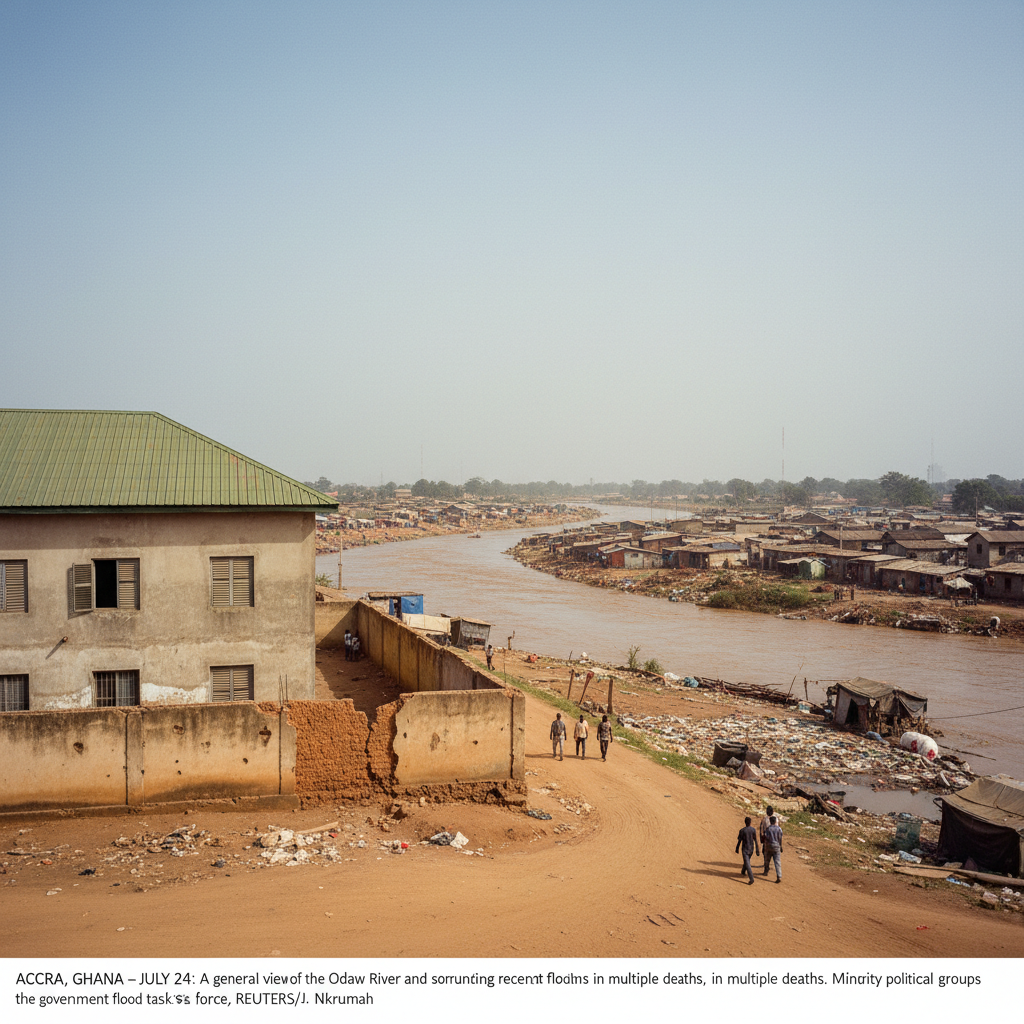
Ghana's Minority in Parliament has called for the immediate dissolution of the seven-member presidential task force addressing perennial flooding in Accra. The opposition caucus also demanded a full parliamentary investigation into the committee’s activities following recent devastating floods. These floods, which occurred on Monday, June 29, 2026, claimed at least 12 lives.
Minority Leader Alexander Afenyo-Markin stated the floods proved the committee failed to deliver meaningful interventions. The task force, chaired by Deputy Chief of Staff Stan Dogbe, has operated for over a year. The Minority also urged an urgent public health response to prevent disease outbreaks after the floods.
President John Dramani Mahama inaugurated the task force in March 2025. Its mandate included assessing flood-prone areas, coordinating government interventions, and recommending long-term solutions. Accra faces recurring flooding challenges, which negatively impact its GHS 128 billion economy. The city's GDP contributes roughly 40% to Ghana's national output, making flood resilience crucial. Prior data from the National Disaster Management Organization (NADMO) shows annual flood damages exceed GHS 500 million.
During a press conference on Tuesday, June 30, Mr. Afenyo-Markin questioned the task force's effectiveness. He noted a lack of evidence regarding work undertaken or recommendations produced after 15 months. He stated the destruction from Monday’s torrential rains exposed a gap between government assurances and actual flood preparedness.
Mr. Afenyo-Markin declared, “Yesterday's flooding is the clearest evidence that this task force produced no meaningful intervention on the ground.” He added that serious drainage works or flood mitigation infrastructure would have reduced the impact. Instead, entire neighborhoods went underwater, revealing a disconnect between government rhetoric and delivery.
The Minority Leader urged Parliament to establish a special committee to investigate the task force's conduct. This investigation should also include all ministries, departments, and agencies responsible for flood prevention and disaster management. The inquiry must determine the extent of work undertaken and if public resources allocated to the task force were effectively used. Any officials found responsible for negligence must be held accountable.
The Minority insists that all members of the presidential task force step aside immediately. This action would ensure an impartial inquiry into their operations. This demand aims to safeguard the investigation’s integrity, not to prejudge those involved. It represents a basic standard of accountability for institutions facing serious questions.
Beyond accountability, the Minority raised concerns about increased disease risks after the floods. They called on the Minister of Health to outline emergency public health measures. These measures should prevent outbreaks of cholera, typhoid, and diarrhoeal diseases. Health professionals, including the Pharmaceutical Society of Ghana, warn that stagnant floodwaters and contaminated drinking water could trigger public health emergencies without swift action.
Monday's torrential rains caused extensive flooding across Greater Accra, submerging communities like Alajo and Adabraka. Thousands of residents were displaced, and vehicles stranded. The Interior Ministry confirmed 12 deaths and thousands of affected households. This disaster renews calls for comprehensive drainage improvements and stricter enforcement of planning regulations.