Ghana's parliamentary Minority has criticized the government's 2026 budget review, citing a GHS 30 billion under-execution of planned projects and a significant revenue shortfall. This critique emerged during a parliamentary debate on Tuesday, July 28, 2026, following the Minister for Finance's budget review presentation last week.
The Minority caucus argued that the government's promises from the 2026 budget statement and economic policy, presented in 2025, do not align with their implementation. They contend that the economy is being stifled, and job creation targets remain unmet, directly impacting the livelihoods of many Ghanaians. This under-execution of the budget means vital projects are not progressing, and economic activity is constrained.
This situation fits into a broader narrative of fiscal challenges in Ghana, where revenue generation often struggles to meet expenditure targets. The country has previously faced difficulties in balancing its budget, leading to increased borrowing and pressure on public finances. The Minority's claims suggest a continuation of these challenges, potentially exacerbating economic hardship for citizens and businesses.
Abena Osei-Asare, the Member of Parliament for Atiwa East, who initiated the debate, highlighted a nearly GHS 2 billion shortfall in total revenue and grants for the fiscal year. She specifically noted deficiencies in domestic goods and services taxes, including Value Added Tax (VAT). Osei-Asare stated, "people are not buying, businesses are not flourishing and that is how come you see a fall in VAT and excise duty tax." She also recalled a GHS 5 billion revenue shortfall in the previous year, despite the introduction of eight new taxes in 2025.
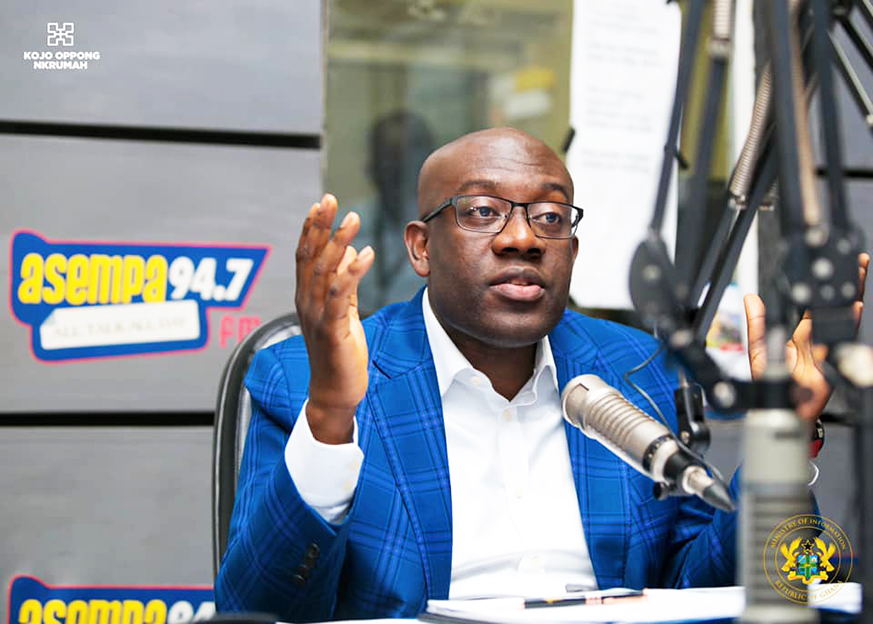
Kojo Oppong Nkrumah, the Minority Spokesperson on Economy and MP for Ofoase-Ayirebi, further elaborated on the under-execution. He pointed to Appendix 2A of the review document, indicating that the government had promised projects, jobs, and programs worth GHS 30 billion that remain unexecuted. Nkrumah argued that this failure to spend on planned projects has dire consequences, citing the tragic loss of 34 lives and 6 missing persons during recent floods, which he linked to unspent funds for flood control programs. He also mentioned that various ministries, including agriculture, health, and education, are awaiting funds for critical initiatives and recruitment.
Nana Asafo-Adjei Ayeh, MP for Bosome-Freho, focused on job creation, recalling the government's promise of 800,000 jobs in the 2026 budget. This included 490,000 jobs from the 'big push,' 20,000 from three new garment factories, 700,000 from seven new agro-plant processing factories, and 250,000 from the oil pump. He expressed disappointment that the budget review provided no data on the number of jobs actually created. Ayeh also noted that projects like the 'Adwumawura Project' and the national apprenticeship program have received only 21% and 26% of their allocated funds, respectively.
The Majority, however, countered these claims, arguing that the government is spending prudently in the right sectors. An MP for Lambussie asserted that if spending were not reckless, then the finance minister is not spending, and if spending were prudent, then the minister is spending effectively. They cited expenditures in health and education, including the 'no-fees stress policy,' as examples of responsible financial management. Another MP, Kofi Arko Nokoe from Evalue Ajomoro-Gwira, claimed that falling food prices in his hometown of Axim reflected the finance minister's effective work.
The implications of this debate are significant for Ghana's economic outlook. The persistent under-execution of the budget could lead to slower economic growth, increased unemployment, and a decline in public services. Investors and citizens will closely watch how the government addresses these fiscal discrepancies and whether it can accelerate project implementation and job creation in the coming months. The ability to meet revenue targets and effectively deploy allocated funds will be crucial for maintaining economic stability and public confidence.