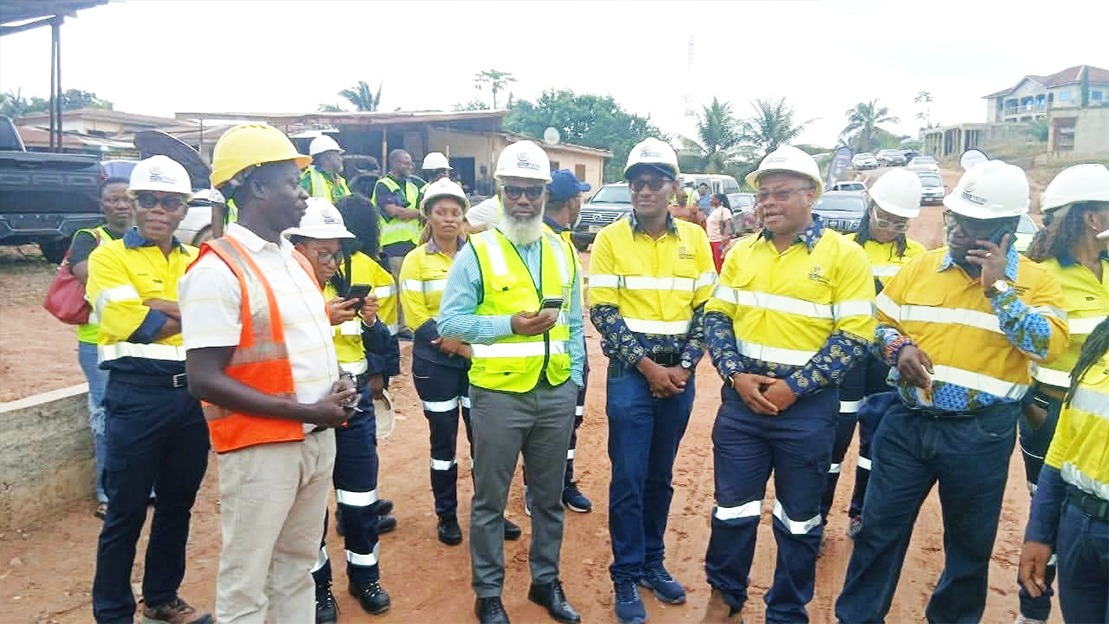
Ghana's mining communities are demanding a substantial increase in their share of mineral royalties. They want their allocation to rise from the current 8 percent to at least 30 percent. This renewed call follows a joint inspection of two major road projects funded by the Gold Fields Ghana Foundation.
The Ghana Chamber of Mines, through its Chief Executive Officer, Ing. Ken Asigbey, stated that the current 8 percent allocation is insufficient. This amount goes to traditional authorities and Metropolitan, Municipal, and District Assemblies (MMDAs). He argues that a 30 percent share would better address the development needs of communities hosting mining operations.
This push for a larger share fits into Ghana's ongoing discussion about equitable resource distribution. The nation relies heavily on mineral exports, particularly gold, for foreign exchange earnings. However, communities directly affected by mining often feel they do not receive adequate benefits from these resources. This sentiment has led to past social unrest and calls for greater local participation in resource management.
Ing. Ken Asigbey emphasized that increasing the allocation to 30 percent would accelerate development. He believes this would ensure communities directly affected by mining derive greater benefits. He also proposed that royalties transferred to local authorities should be ring-fenced. This means funds would be used exclusively for development projects, not for recurrent expenses.
Mr. Asigbey suggested the government prioritize infrastructure, industrialization, education, and healthcare. He also encouraged mining companies to align their corporate social investments with these same sectors. This coordinated approach, he believes, would maximize development impact and deliver lasting benefits.
The Senior Vice President and Managing Director of Gold Fields Ghana Limited, Mr. Elliot Twum, affirmed his company's commitment. He stated that the inspection reaffirmed their dedication to sustainable community development. This includes strategic infrastructure investments. He noted that corporate social responsibility has evolved beyond simple philanthropy. It now focuses on sustainable community development.
The Municipal Chief Executive for Prestea Hunni-Valley, Dr. Matthew Kofi Ayeh, praised the road reconstruction. He described the Samahu-Pepesa Road project as a major relief for the Assembly and six beneficiary communities. He commended Gold Fields Ghana Limited for financing the project, saving the Assembly significant financial resources. The road will improve market access for farmers and reduce transport costs.
Ing. Asigbey also renewed calls for a Minerals Revenue Management Act. This act would be similar to the Petroleum Revenue Management Act. It would ensure transparent and prudent management of mineral revenues. The proposed legislation would establish stabilization and heritage funds. These funds would manage windfall revenues during high mineral prices and safeguard resources for future generations.
The Samahu-Pepesa Road project, valued at GHS 60.69 million, is 35.84 percent complete. It is expected to finish in October 2027. The Budo City Junction-Bogoso Junction Road, estimated at GHS 14.35 million, is 76.84 percent complete. Its completion is scheduled for June 2027. Both projects aim to improve access to essential services and stimulate local economic activities.