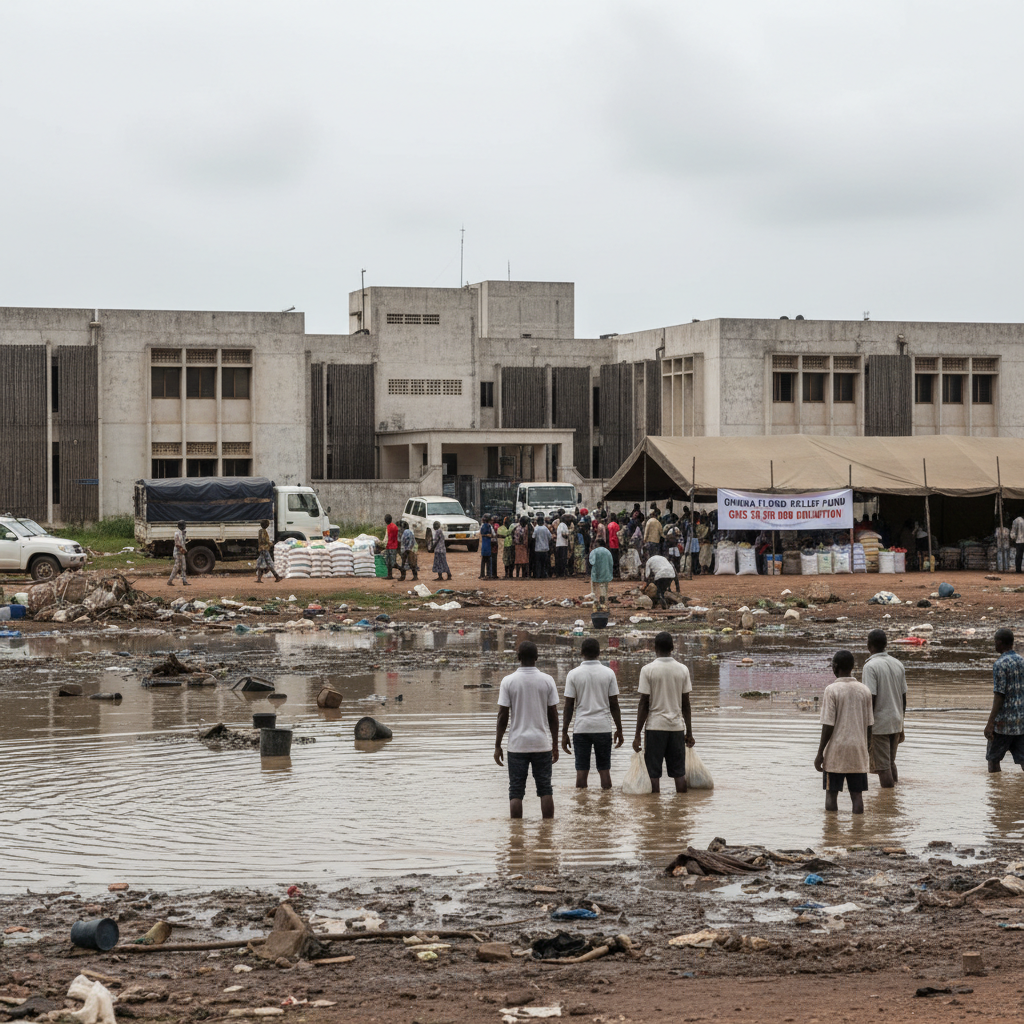
President John Dramani Mahama has directed the Minister of Finance to immediately release funds from the government's Contingency Fund. This release aims to support thousands of residents affected by devastating floods in the Greater Accra Region. The floods destroyed homes, businesses, and public infrastructure on June 29, 2026.
This directive followed President Mahama's aerial assessment of flood-ravaged communities. Torrential rains had submerged parts of the capital. The disaster resulted in at least nine deaths, displaced families, and caused extensive property damage. The emergency funding will provide immediate relief to those impacted by the disaster.
Accra's persistent flooding problem poses a significant economic burden on Ghana. Recurring floods disrupt economic activity. They damage infrastructure and strain public finances through emergency responses. Data consistently shows that Accra's vulnerability to flooding is due to poor drainage and uncontrolled development. This issue annually costs the nation considerable resources and hinders urban development.
President Mahama expressed sympathy to the victims after inspecting affected areas. He stated, "Loss of property has been very extensive." He also confirmed he has instructed the Finance Minister to release emergency funding without delay. The National Disaster Management Organisation (NADMO) will manage the distribution of this emergency assistance.
The emergency package will support displaced families. It will provide temporary shelter, food, and essential household items. Humanitarian assistance will continue while damage assessments are underway. Authorities will also intensify long-term interventions. These include improving drainage infrastructure and enforcing planning regulations.
These measures aim to reduce the city's vulnerability to future flood disasters. Addressing Accra's flood cycle is crucial for sustained economic stability. It will also protect lives and property. Decision-makers and markets will closely monitor the effective implementation of both relief and preventative measures. The government intends to break the cycle of recurring flood disasters permanently.
The June 29, 2026 floods impacted communities like Alajo, Kaneshie, Circle, and Adabraka. This brought traffic to a standstill and forced many to evacuate. Urban planners consistently highlight poor drainage and indiscriminate refuse dumping as primary causes. Rapid urbanisation and building on waterways also contribute to the problem. These factors exacerbate the flood risk. The government's actions signal a commitment to tackling these root causes.
President Mahama stressed the need for a permanent solution beyond emergency responses. He urged a change in attitude from citizens and public authorities regarding flood prevention. The President emphasized the need to move from reactive measures to proactive solutions. This shift is essential to safeguard Accra's future and its economic prospects. The ongoing response will shape public confidence in disaster management. It will also influence future policy decisions on urban planning and infrastructure.