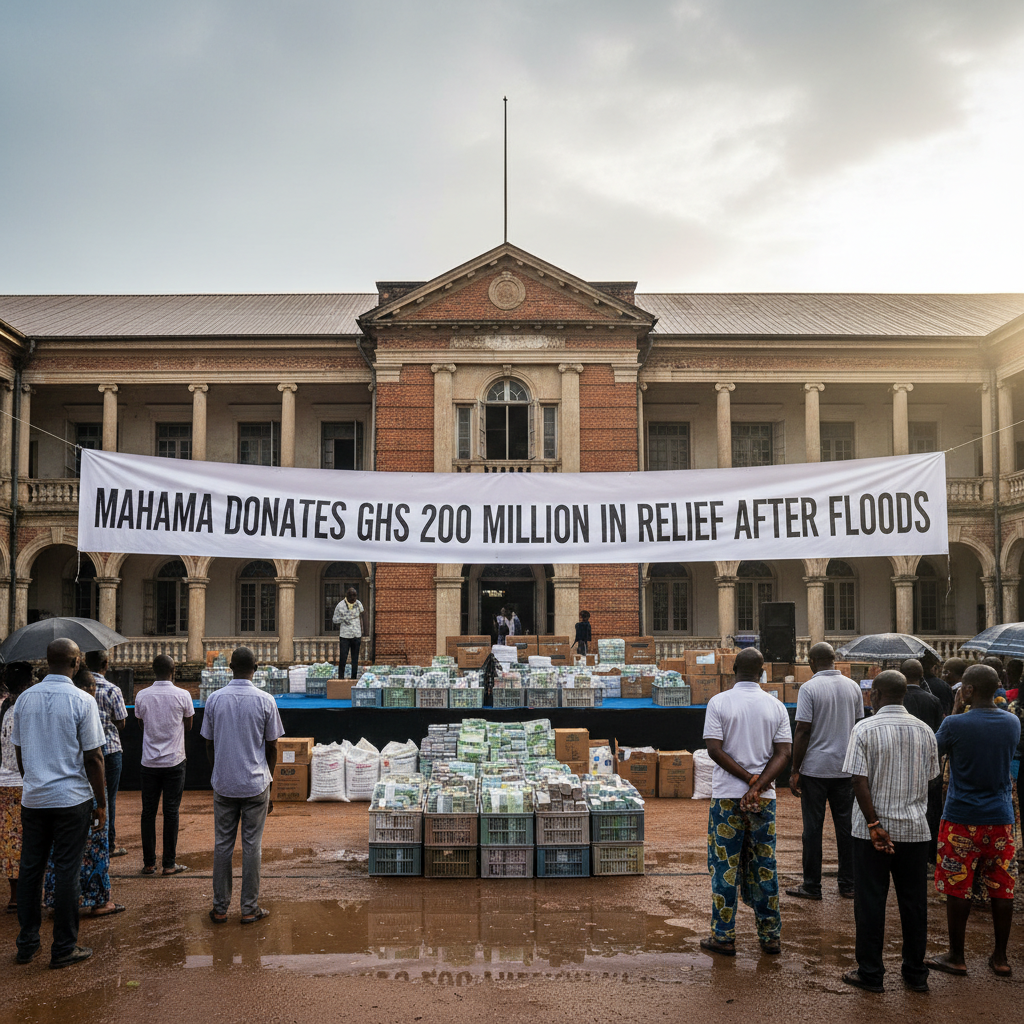
Former President John Mahama has donated relief items to Mamobi General Hospital and 37 Military Hospital in Accra. This follows the severe flood disaster on June 29 that impacted the Greater Accra Region and other coastal areas. The Minister for Finance has released GHS 200 million to the National Disaster Management Organisation (NADMO) for flood relief. This financial allocation aims to support those affected by the disaster.
The floods caused significant damage, resulting in 13 reported deaths and leaving approximately six people still missing. Assessments by NADMO confirm that about 58,000 individuals were temporarily displaced. Many of these displaced people have sought refuge with family members, while others require ongoing support. The disaster also led to widespread property destruction across the affected communities.
This event highlights Ghana's ongoing challenges with urban flooding and disaster preparedness. Seasonal rains often lead to displacement and economic losses, straining public resources. The government has previously faced criticism over its long-term strategies for flood control and drainage infrastructure. This latest incident underscores the need for robust environmental planning and resource allocation to mitigate future impacts.
President Mahama, speaking at the 37 Military Hospital, noted the floods' devastating impact. He stated the government set aside relief supplies to support the hospital, recognizing its role as a national emergency and trauma centre. "We recognize that the 37 Military Hospital is the country’s number one national emergency and trauma centre, and because of the role you play in saving lives, we cannot distribute these items and leave you out," President Mahama said.
NADMO has already begun distributing relief items in response to the disaster. Distributions concluded in the Central, Western, and Volta regions and are nearing completion in Accra. These items include essential supplies such as food, rice, mattresses, and buckets. Ghanaian philanthropic businesses have also contributed significantly, donating various products like diapers, detergents, and food items. This collective effort aims to help affected families and communities recover and restore their environments.
The current relief efforts will address immediate needs, but the long-term economic implications remain. The displacement of thousands of people disrupts livelihoods and puts pressure on public services. Market observers will watch how quickly communities recover and whether this event prompts further investment in critical infrastructure. Decision-makers must now consider sustainable solutions to prevent future flood disasters.