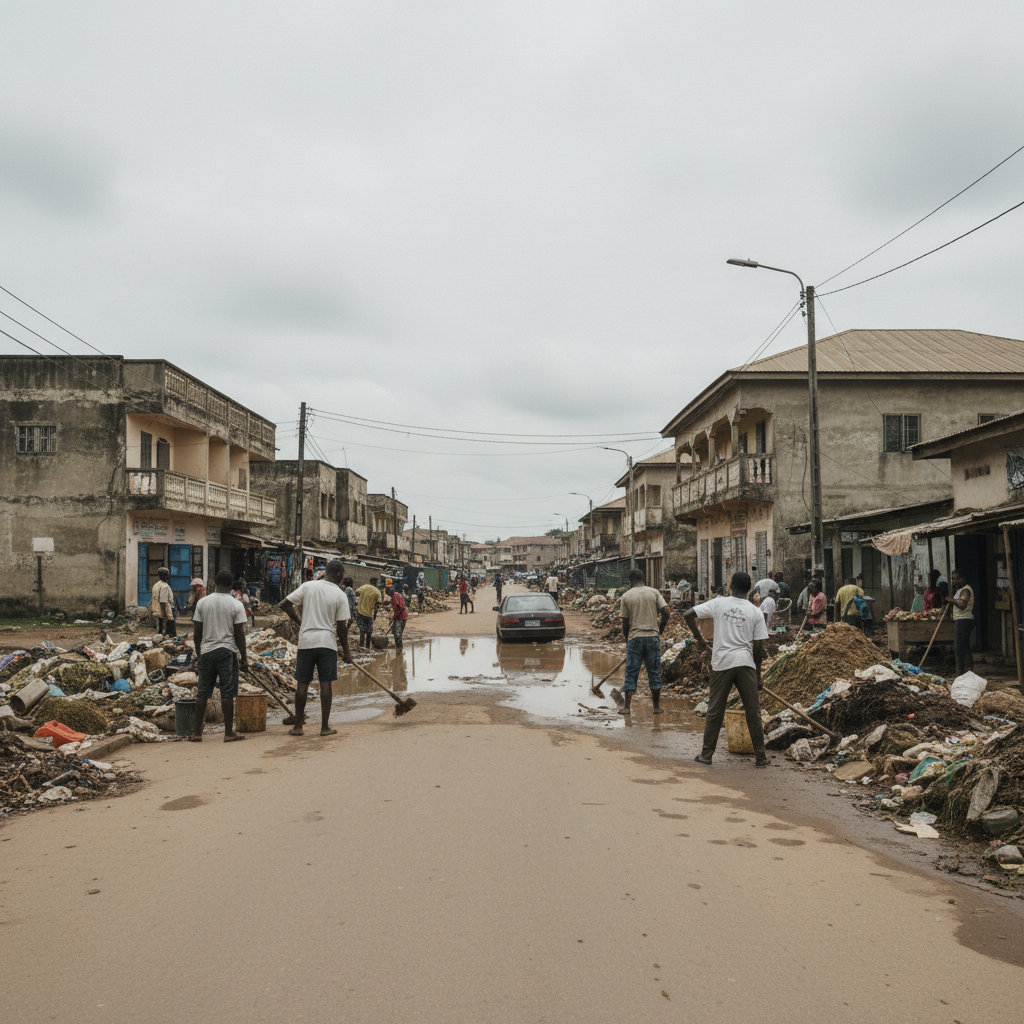
President John Dramani Mahama has declared Friday, July 10, 2026, and Saturday, July 11, 2026, as National General Cleaning Days. These days will focus on seven regions of Ghana heavily affected by recent floods. The initiative aims to mobilize citizens for extensive clean-up efforts in their communities.
The Post-Flood Mitigation Committee is organizing this exercise. Its primary goal is to immediately reduce the risk of further flooding. The theme for the initiative is, “Our Actions, Our Future: Cleaning Ghana after the floods.” This public health measure follows widespread damage and disruption caused by the recent heavy rainfall.
This initiative fits into Ghana’s broader struggle with urban flooding. Poor sanitation and choked drainage systems frequently exacerbate flood impacts. The government views this exercise as both an urgent response and a step towards lasting behavioral change. Official data consistently links indiscriminate waste disposal to the severity of flood events across the country. Previous reports from bodies like ISSER have urged increased sanitation investment to tackle this issue.
Felix Kwakye Ofosu, Spokesperson to the President and Minister for Government Communications, signed the official statement. He said the exercise is a critical intervention to protect lives and the environment. All government appointees, including Ministers and Members of Parliament, received directives to personally lead clean-up activities. Security agencies, local assemblies, and waste management companies will begin on July 10. The general public will join on July 11 to scale up the efforts.
The clean-up activities will focus on critical tasks like desilting choked drains. Workers will also sweep and clear sand, weeds, and debris from roads and highways. Public spaces such as markets, lorry parks, and recreational areas will also receive attention. Metropolitan, Municipal, and District Assemblies (MMDAs) must collaborate closely with waste management companies. They must provide essential logistics like waste trucks, gloves, and shovels. Ensuring immediate evacuation of collected refuse and silt is also a key directive.
The government emphasized that indiscriminate littering and plastic pollution have clogged drainage systems for too long. These practices contribute significantly to preventable floods. Floods destroy livelihoods and claim precious Ghanaian lives. This national cleaning drive aims to address these root causes. It fosters a sense of collective responsibility among citizens.
Protecting communities from future disasters requires national unity. The President issued a call for strong community spirit, discipline, and unity. Citizens must protect their homes and neighbors. This approach seeks to ensure long-term public safety and environmental health. The success of this clean-up could reduce significant economic losses from future floods. Furthermore, it could improve public health by mitigating waterborne diseases.