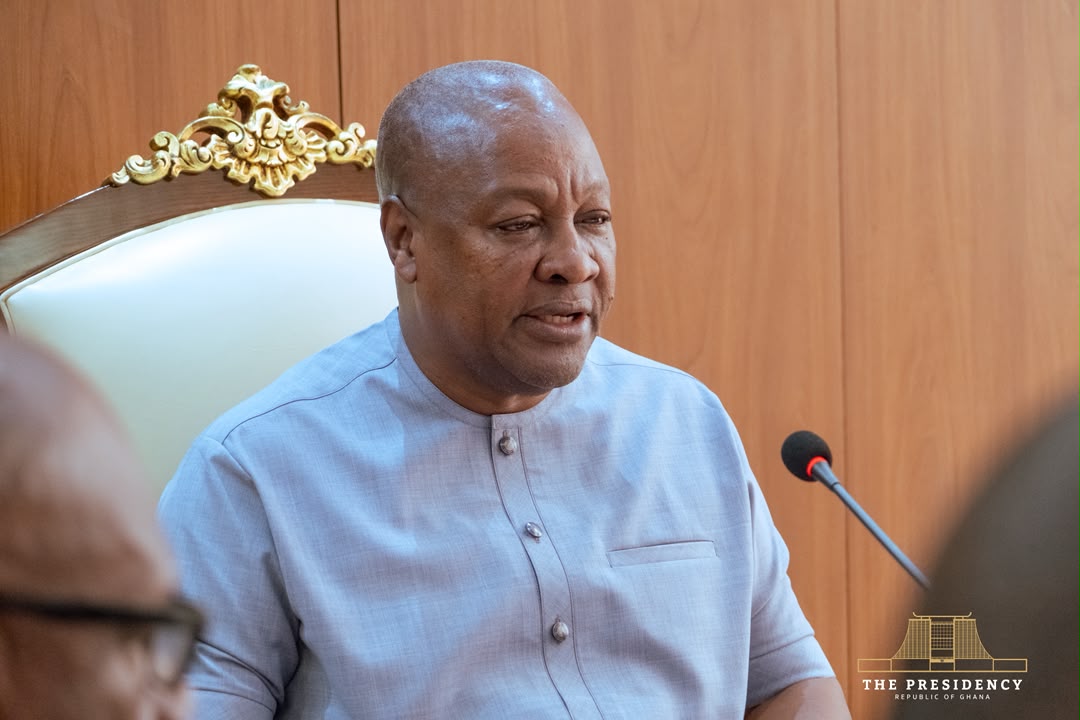
President John Dramani Mahama stated his government will use artificial intelligence (AI) to enhance tax collection. This efficiency drive could lead to future reductions in corporate income tax and other taxes. He made these remarks during a meeting with the Kwahu Business Advocacy Group at Jubilee House.
The President highlighted a shift in focus from introducing new taxes to improving revenue mobilisation. The administration believes better tax compliance and collection systems can generate sufficient revenue. This avoids placing extra burdens on businesses and citizens. This approach replaces previous strategies that sometimes involved new tax burdens.
This initiative aligns with Ghana's broader economic reform agenda. The government aims to foster a more business-friendly environment. It also seeks to strengthen investor confidence and support private sector growth. Previous efforts included abolishing the COVID-19 Levy and the Electronic Transfer Levy (E-Levy), and reducing the overall Value Added Tax (VAT) burden. These measures indicated a commitment to easing financial pressure on businesses and individuals.
President Mahama explained the government's approach. He said, "We're concentrating on efficiency in collecting the taxes because we believe that if we collect the taxes more efficiently, we don't need to introduce new taxes." This statement underscores the administration's belief that smarter collection, not higher rates, is the path forward. The President further clarified that future tax reductions are contingent on successful revenue increases. He cautioned against interpreting his comments as an immediate policy announcement for tax cuts. "I don't want you to say government will reduce VAT and taxes soon," he said. He added, "I said if, in future, we collect more efficiently, then we can give the benefits to businesses by reducing the taxes."
The adoption of AI in tax administration signals a modern approach to public finance. This strategy could improve Ghana's economic outlook. It could also make the nation more attractive for both local and foreign investment. Businesses should monitor the implementation of AI tax systems and their impact on government revenue. Any significant improvements could trigger policy discussions around tax relief. This includes potential changes to the corporate income tax rate and the VAT rate, affecting profitability and consumer spending. Increased efficiency could also lead to a more stable fiscal environment, benefiting all economic actors.
The government's commitment to using technology for improved revenue management is a key development. This initiative could improve public finances significantly. Future policy decisions on taxation will depend on its success. Therefore, the business community and the public will closely watch the rollout and performance of these AI-driven systems. This move could reshape Ghana's tax landscape for years to come.