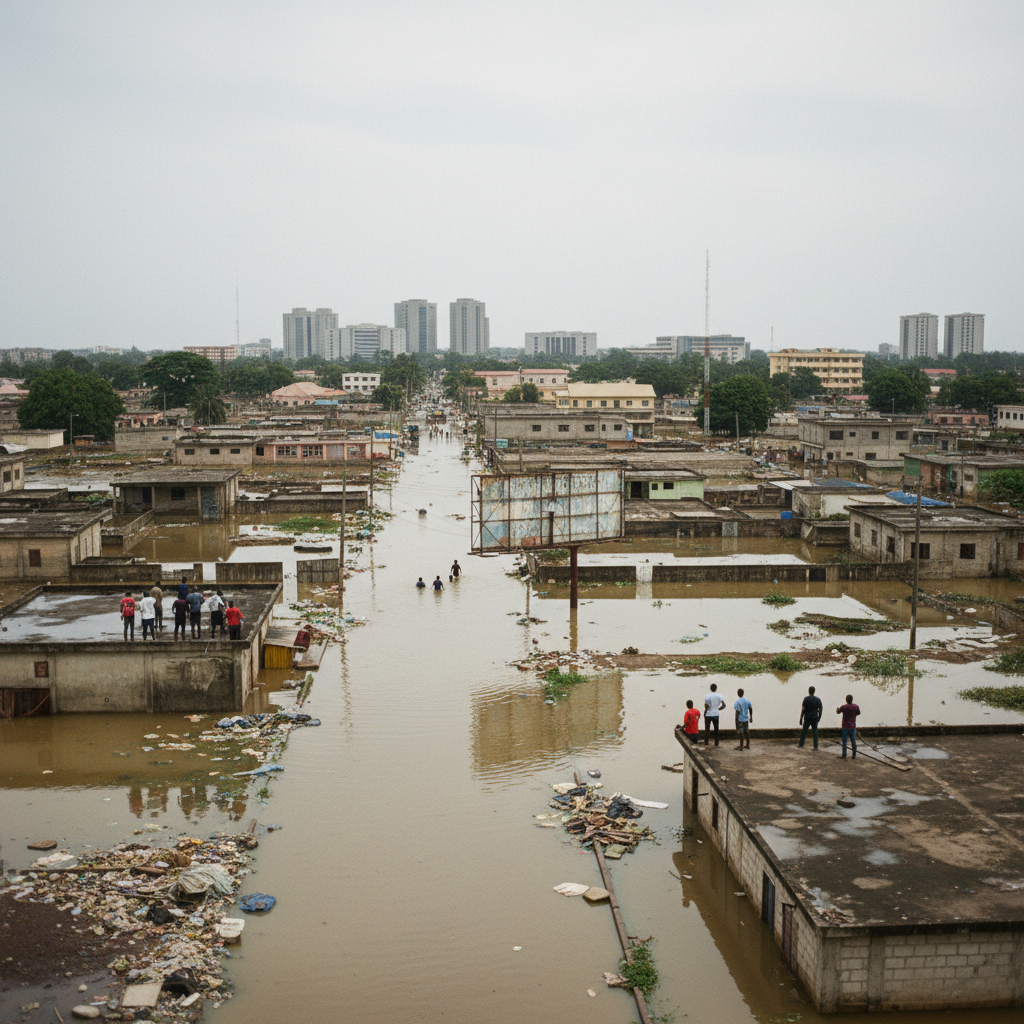
Kojo Oppong Nkrumah, the Ranking Member on Parliament's Economy and Development Committee, has strongly criticised the Mahama administration. He blames the government for its poor handling of recent flood disasters. These floods have caused at least 37 deaths across the country.
Mr. Oppong Nkrumah, also the Ofoase-Ayirebi MP, stated that the government cannot use fiscal discipline as an excuse for these deaths. He explained that claims of withholding spending to stabilise the economy are unacceptable. The World Bank has also raised concerns about funding being withheld from critical flood control programmes. This practice, he argues, has devastating human and economic consequences.
This criticism comes as Ghana grapples with renewed public debate on flood management. Severe rains have submerged many communities, destroyed homes, and claimed dozens of lives. These events have highlighted long-standing delays in flood-control projects. Experts, development partners, and previous governments have repeatedly warned about the need for sustained investment in drainage infrastructure and climate resilience. The government's decision to prioritise expenditure controls over life-saving initiatives remains a significant point of contention.
Speaking on JoyNews, Mr. Oppong Nkrumah rejected government's attempts to shift blame from policy decisions. He said officials have wrongly accused institutions like the Ghana Meteorological Agency and the National Disaster Management Organisation (NADMO). He insisted that government should acknowledge its role instead of creating false narratives. He deemed the argument for strict expenditure controls as insensitive given the human cost.
Mr. Oppong Nkrumah maintained that no economic stability can replace the lives lost. He argued that government should differentiate between ordinary spending and critical life-saving investments. He noted that many flood control projects are internationally funded, not directly from the national budget. Government only needs to approve and release funds promptly for these projects to proceed. Administrative delays, not a lack of money, often hinder these vital initiatives.
The former Minister for Works and Housing questioned the rationale behind delaying flood mitigation projects. He highlighted that contractors for donor-funded projects often await only administrative approvals for payment. This makes delays due to 'expenditure control' illogical. The consequences extend beyond fatalities, with thousands losing homes, businesses, and livelihoods because essential prevention projects were not finished.
Mr. Oppong Nkrumah urged the government to accept responsibility and address the problem directly. He called for critical flood control projects to be free from bureaucratic delays. He also commented on the government's announcement of GHS 300 million for flood interventions. He cautioned that parliamentary approval alone does not guarantee project completion. He drew on his experience, stating that funds often get stuck due to slow disbursement even after approval.
He referenced an accident at El-Wak where increased security recruitment was promised but never fully happened. This illustrates a pattern of unfulfilled promises after tragedies. Mr. Oppong Nkrumah backed the Minority Caucus's call for continuous monitoring of the GHS 300 million fund. This oversight will ensure prompt release and proper use of the money. He also accused the government of politicising flood management programs, including the World Bank-supported Greater Accra Resilient and Integrated Development (GARID) Programme.