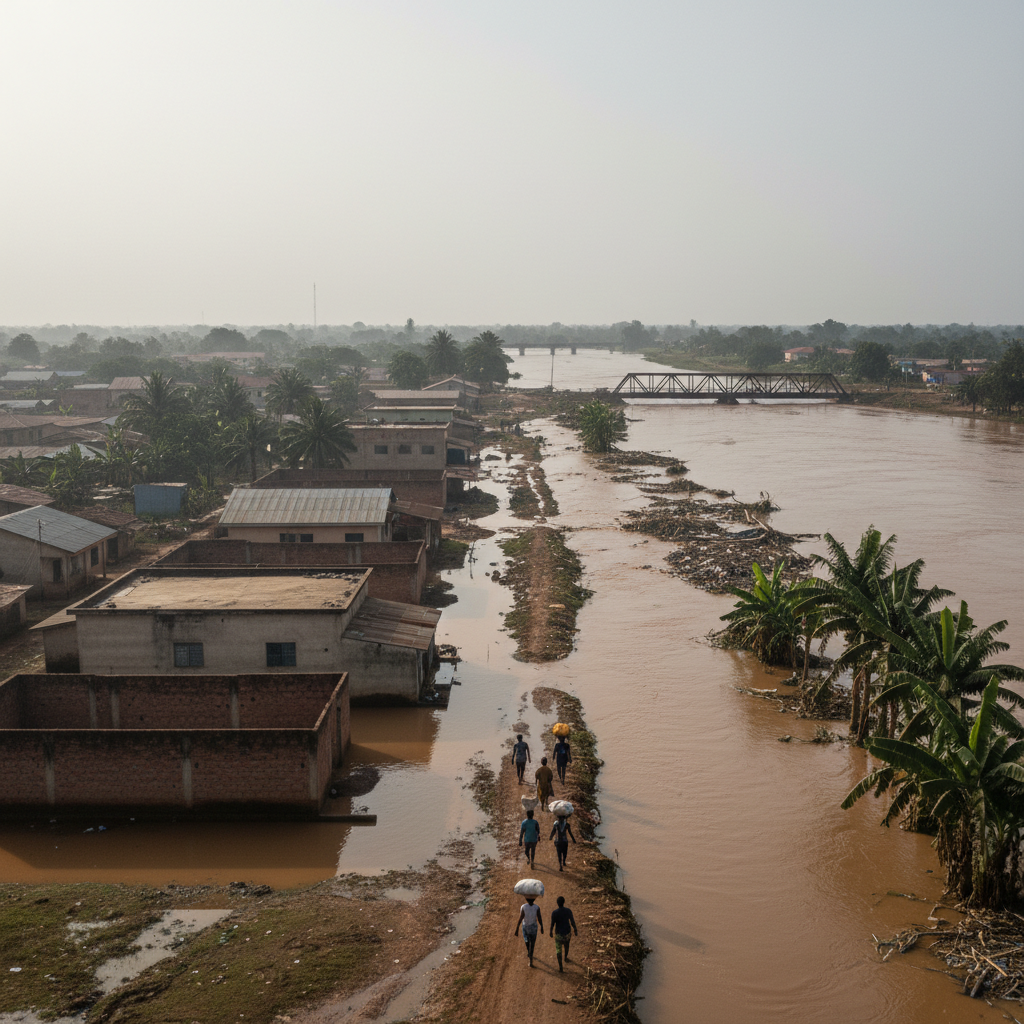
Floods on June 29, 2026, killed 39 people and affected 91,989 others across Ghana. Interior Minister Muntaka Mohammed-Mubarak disclosed these figures.
The disaster impacted 18,398 households across 77 districts in seven regions. One four-month-old baby in Ga East Municipality remains missing. The Greater Accra Region recorded the highest number of affected persons, with 56,022 people impacted and 17 deaths.
These widespread floods highlight Ghana's ongoing vulnerability to extreme weather events. Rapid urbanisation and inadequate drainage systems often exacerbate flood risks, particularly in major cities like Accra. The economic cost of such disasters includes damaged infrastructure, lost livelihoods, and increased public health challenges. Data from the National Disaster Management Organisation (NADMO) consistently shows flooding as a major annual concern.
Minister Mohammed-Mubarak praised emergency response agencies for their efforts. He specifically commended NADMO, the Ghana Police Service, and the Ghana National Fire Service. “I want to thank NADMO, the police, the Ghana National Fire Service and all those who came to our aid,” he stated.
The government will likely face increased pressure to implement long-term flood mitigation strategies. This includes investing in robust drainage infrastructure and enforcing stricter building codes. Businesses and communities in flood-prone areas must also adapt to these recurring challenges. The economic recovery for affected households and districts will require significant support.
The Central Region reported 18 deaths and 21,882 affected residents across 16 districts. The Volta Region saw four deaths and 9,466 people affected in seven districts. Western North Region had 937 affected persons across six districts, with no deaths. The Western Region recorded 2,031 affected persons in two districts. The Eastern Region had 190 people affected in one district. The Ashanti Region reported 1,461 people affected across 16 districts. Neither the Eastern nor Ashanti regions recorded any deaths from these specific floods.
NADMO has responded to 912 emergencies and supported over 713,000 disaster victims during a broader review period. This demonstrates the constant demand on Ghana's disaster management resources. The financial implications for the state budget, including relief efforts and reconstruction, are substantial. These events often divert funds from other critical development projects. The long-term economic impact on affected communities can hinder regional growth and stability.