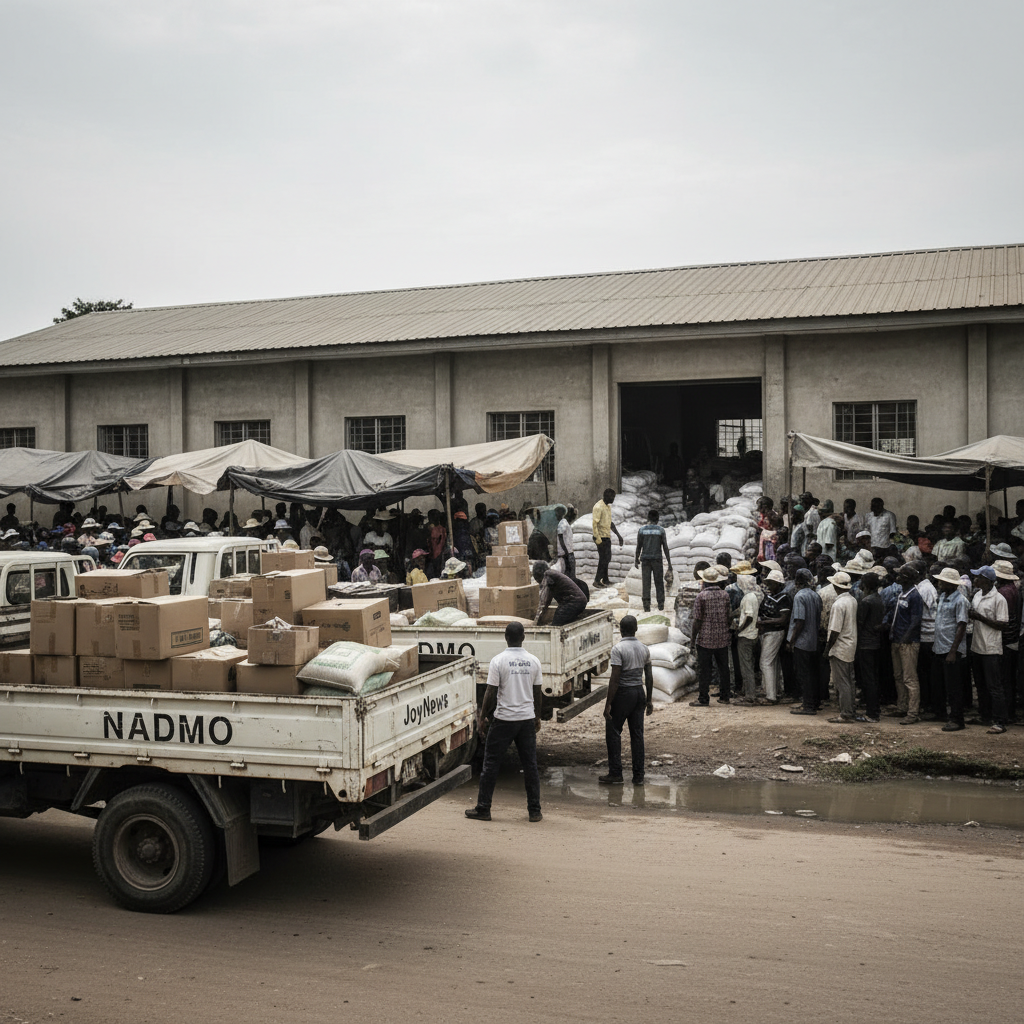
JoyNews has partnered with the National Disaster Management Organisation (NADMO) to mobilise relief support for victims of devastating floods. This collaboration aims to provide immediate assistance to thousands of people displaced by the recent heavy rains.
The initiative seeks donations of essential items including clothes, medicine, water, foodstuff, blankets, and money. Both organisations appeal to individuals, corporate bodies, and development partners for their contributions. These items should be delivered to the JoyNews premises at Kokomlemle for distribution to affected beneficiaries.
This partnership comes after severe floods across parts of Accra and other regions on Monday. The Director for Man-Made Disasters at NADMO, Maxwell Emmanuel Niber, stated that the disaster has overwhelmed existing resources. Mr. Niber spoke on the Super Morning Show on July 2, confirming that current agency operations are insufficient. This situation underscores the critical need for broad public support to manage the scale of displacement and damage.
NADMO, along with other emergency agencies like the Ghana Armed Forces and Ghana National Fire Service, continues search and rescue operations. Mr. Niber acknowledged that government has started providing relief, but the crisis demands a wider national response. He emphasised that public support is vital, stating, “Resources are never enough in situations like this.” The disaster's magnitude highlights vulnerabilities in urban planning and emergency preparedness, which have been points of public debate. The Finance Ministry previously credited GHS 350 million to flood relief and mitigation accounts, yet challenges remain.
The partnership aims to rally nationwide support for families who lost homes, belongings, and livelihoods. Cash donations can be made to the Multimedia Foundation bank account: UBA Ghana, Tema Industrial Area branch, Account Name: Multimedia Foundation, Account Number: 02514278803503. These contributions are crucial for long-term recovery and rebuilding efforts in communities severely impacted. The scale of the floods could strain local economic activity and necessitate increased public spending on reconstruction. This joint effort is a key development in addressing the immediate humanitarian crisis caused by the floods.
This collaboration reflects ongoing efforts to mitigate the effects of natural disasters which frequently impact Ghana's economy. The immediate economic implications include potential damage to property and infrastructure. There is also a significant disruption to daily life and commercial activities. Such events often exacerbate existing social and economic disparities across the affected regions. Decision-makers and markets will closely watch the effectiveness of these relief efforts. They will also observe any long-term strategies implemented to prevent future recurrences.
The situation highlights the persistent challenge of urban flooding in Ghana. It calls for improved infrastructure and more robust disaster management protocols. Local businesses and households face significant financial burdens due to property loss and disrupted income. The collective response from media, government, and citizens is critical to soften the economic blow for thousands of affected Ghanaians. Such collaborations demonstrate civil society's role in addressing national crises. The relief efforts will focus on restoring stability and supporting recovery for the most vulnerable populations.