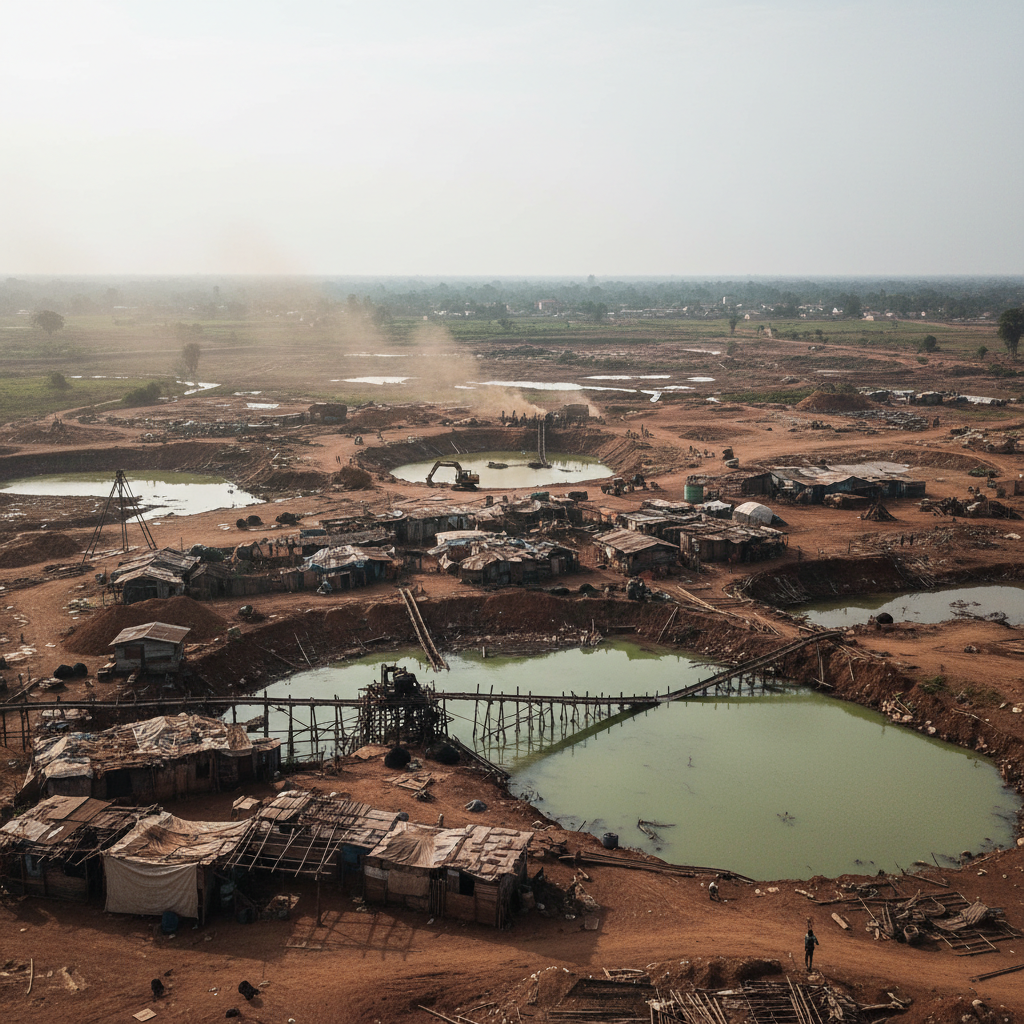
Medical and public health experts warn that illegal mining, locally known as galamsey, could trigger a major public health crisis in Ghana within the next five years. They state that urgent action is necessary to prevent severe environmental and health consequences. The effects of galamsey extend beyond polluted water bodies and destroyed farmlands, posing significant risks to human health.
Prolonged exposure to toxic chemicals used in illegal mining could contribute to cancers, kidney disease, and developmental disorders. Dr. Floret Maame Owusu, a Medical Doctor and Public Health Researcher, highlighted these dangers at the 10th edition of the Loud and Green X Space event. She explained that chemicals released from galamsey operations cause mutations that can eventually lead to cancer. Dr. Owusu emphasized that these health consequences may take years to fully emerge, making early intervention crucial.
This warning comes amid ongoing concerns about galamsey's broader impact on Ghana's economy and environment. Illegal mining has severely polluted major rivers, including the Pra and Ankobra, affecting water supply for millions. The destruction of farmlands also threatens agricultural output and food security. The potential health crisis adds another layer of economic burden, diverting resources from other critical development areas. Ghana's healthcare system, already facing resource constraints, would struggle to manage a widespread health emergency.
Dr. Owusu expressed particular concern about the impact on pregnant women and children. She stated that pregnant women exposed to galamsey pollutants could give birth to children with developmental problems. "For pregnant women who are exposed to these chemicals, they end up having children who have some developmental issues," she noted. She warned that continued exposure could create a generation of children born with significant developmental issues in mining communities. The danger is compounded because some effects of toxic substance exposure may not appear immediately. Dr. Owusu identified mercury, cyanide, lead, and arsenic as key chemicals of concern, noting that even small amounts can cause serious health problems.
The long-term health consequences could place additional pressure on Ghana's healthcare system. Communities in mining areas often lack the financial resources to access specialized treatment. PhD Lecturer and Researcher, Forgive Awo Norvivor, questioned the country's preparedness for these potential health impacts. She suggested some impacts could emerge sooner than five years, stating, "So we are not even looking at five years. We are looking at less. And are we even ready?" Dr. Norvivor also pointed out that rural communities are particularly vulnerable due to their reliance on surface and groundwater sources. Approximately 60 percent of rural populations still lack access to clean water, exacerbating their risk.
The experts urge the government and other stakeholders to treat illegal mining as an immediate public health concern. They advocate for action now, rather than waiting for the full effects of prolonged exposure to manifest. Addressing the crisis must go beyond environmental protection to include measures for preventing, monitoring, and responding to potential health consequences. This comprehensive approach is vital for safeguarding public health and ensuring the long-term well-being of Ghana's population. The economic cost of inaction, including healthcare expenditures and lost productivity, could be substantial.