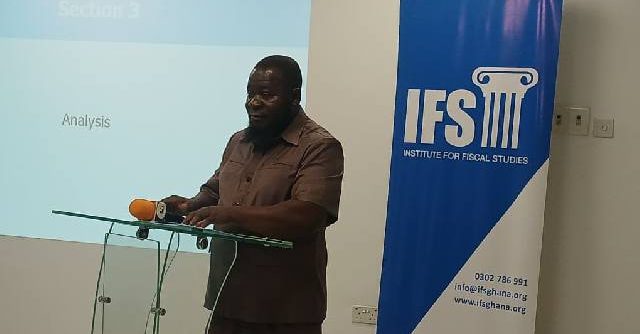
The Institute for Fiscal Studies (IFS) has raised significant concerns regarding Ghana's 2026 Mid-Year Budget implementation, highlighting a GHS 35.6 billion shortfall in planned expenditure. This represents a 20.6% deviation from the government's spending targets for the first half of the year. The IFS also pointed to weak budget execution, unrealistic economic targets, and inconsistencies within the government’s fiscal data.
Dr. Said Boakye, Senior Research Fellow and Acting Executive Director of the IFS, presented these findings during a review of the Mid-Year Budget. He noted that the government had planned to spend GHS 172.5 billion, including arrears payments, during the first six months of 2026. However, actual expenditure fell short by GHS 35.6 billion. This substantial spending gap, particularly in capital expenditure and arrears payments, could slow down economic activity and growth across the country.
This fiscal performance comes despite some positive economic developments in early 2026. Ghana recorded a decline in inflation to 5.3% by June and a significant reduction in interest rates. However, the government's inability to spend as planned risks undermining these gains. The IFS report fits into a broader narrative of Ghana's ongoing efforts to stabilize its economy and manage public finances effectively, often under the scrutiny of international bodies and local watchdogs.
Dr. Boakye attributed much of the spending shortfall to domestic financing, which was 67.2% below expectations. He also questioned the allocation of GHS 15.6 billion into a sinking fund, noting this was not included in the original budget. The IFS further criticized the government’s revenue and economic growth projections, stating that the 16.8% revenue-to-GDP target is difficult to achieve, given that the ratio has remained below 16% since 2015. Similarly, the 4.8% real GDP growth target was deemed too low, considering stronger growth figures in 2025 and early 2026.
The IFS identified inconsistencies in budget figures, specifically in revenue and tax refund calculations. These discrepancies undermine the credibility of the government's financial reporting. The institute has called for improved budget execution, more realistic forecasting, and stronger data validation processes. It also recommended an independent review of government projections to ensure accuracy and transparency. Furthermore, the IFS urged the government to develop a strategy for generating royalties from the small-scale mining sector, which significantly contributes to Ghana’s gold exports without providing adequate state revenue.
Moving forward, decision-makers and financial markets will closely monitor the government's response to these concerns. The ability to address budget execution weaknesses and improve fiscal transparency will be crucial for maintaining economic stability and investor confidence. Ghana's commitment to fiscal discipline, especially in the context of its economic recovery, remains a key area of focus for both domestic and international observers. The recommendations from the IFS provide a clear roadmap for enhancing the country's fiscal management practices.