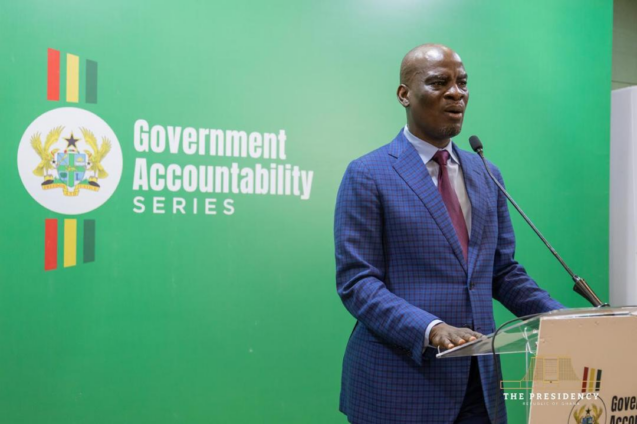
Haruna Iddrisu, Ghana's Minister for Education, has urged the government to implement a phased increase in the District Assemblies Common Fund (DACF) allocation. He proposes raising the fund from its current 5% to 7.5% of the country's total projected revenues, starting in 2027.
This significant adjustment aims to bolster decentralisation and grant Metropolitan, Municipal, and District Assemblies (MMDAs) greater financial autonomy. The increased funding would enable local authorities to deliver essential services more effectively. Mr. Iddrisu suggested a one percentage point increase in 2027, followed by another one percentage point rise in 2028.
This proposal aligns with a manifesto commitment to enhance local governance and financial independence. The move seeks to return the DACF allocation to levels seen under the administration of former President John Evans Atta Mills, which stood at 7.5%. Strengthening MMDAs' financial capacity is crucial for their operational efficiency and accountability.
Speaking at the second National Dialogue on Decentralisation and Responsive Governance on August 10, Mr. Iddrisu highlighted the importance of this increase. He stated that the additional allocation would support the government's broader decentralisation agenda. This includes plans to deepen the responsibilities of local authorities in delivering critical health and education services.
Mr. Iddrisu specifically proposed dedicating one percentage point of the increase to healthcare. This would empower metropolitan and other assemblies to directly recruit health professionals based on local needs. He noted that President Mahama's vision for democratic decentralisation includes this focus on health and devolution.
Furthermore, the Education Minister suggested allocating another percentage point to education. This would support the devolution and democratisation of education services at the local level. Such targeted funding would allow MMDAs to address specific local requirements in these vital sectors.
Mr. Iddrisu stressed that these proposals represent agreed-upon principles by the government. He argued against abandoning them, emphasising that stronger financial autonomy for MMDAs is vital for meaningful decentralisation. This autonomy is also key to improving accountability within local governance structures.
The Minister also cautioned against excessive dependence by local assemblies on central government releases. He warned that such reliance could undermine their ability to perform their functions effectively. Decentralisation, he maintained, cannot work without predictable and adequate funding through the DACF.
He drew a parallel with his own ministry, stating that the Education Ministry would not function well without the GETFund. Therefore, increasing the DACF is critical for empowering MMDAs to take greater responsibility for local development. This ensures that decentralisation translates into improved services for Ghanaian citizens.