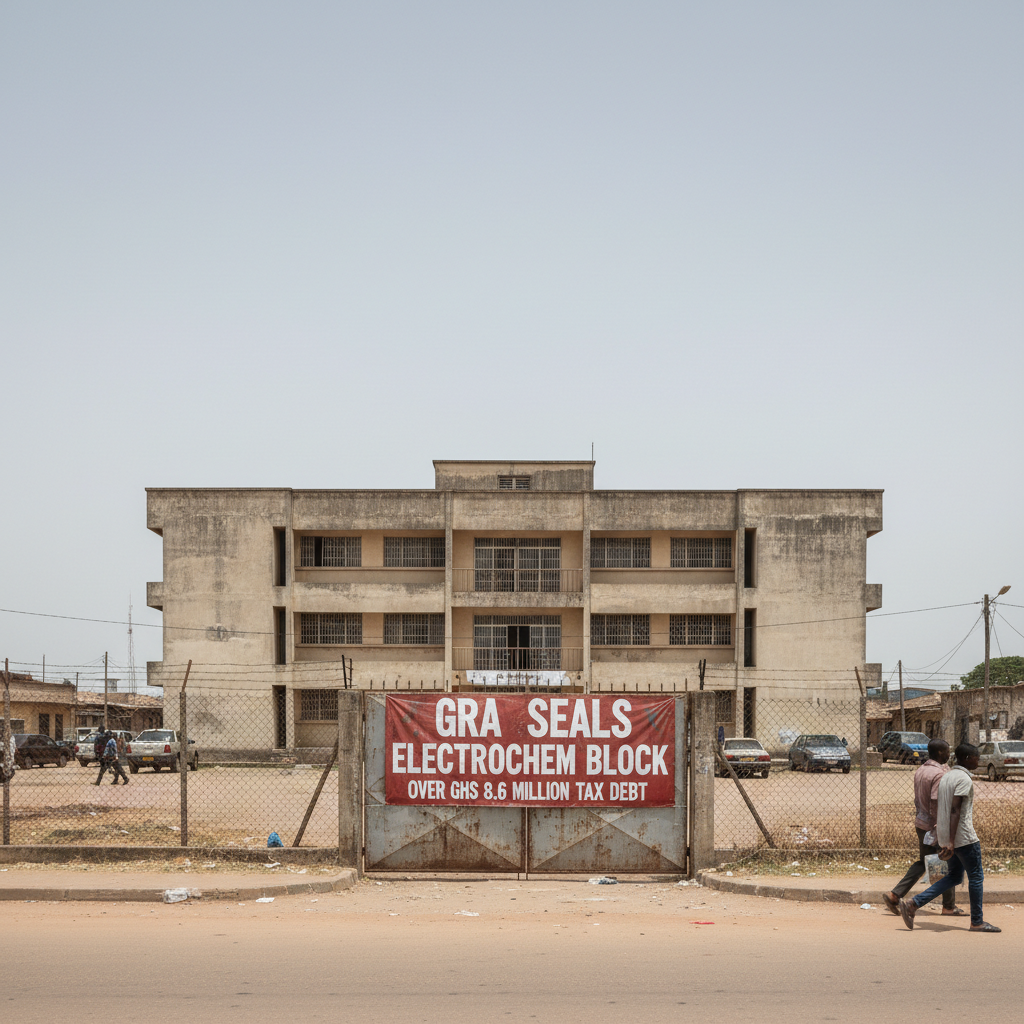
The Ghana Revenue Authority (GRA) sealed the administration block of Electrochem Ghana Limited due to an outstanding GHS 8.6 million tax liability. This action is a clear signal that the state plans to move from negotiations to direct enforcement in its efforts to collect revenue.
Electrochem Ghana Limited, an Ada-based salt producer and part of the McDan Group, must settle this debt within seven days. The GRA stated that the tax arrears date back to 2021. This enforcement followed multiple unsuccessful attempts to recover the amount through demand notices and discussions with the company.
This aggressive enforcement fits into Ghana's broader economic narrative of increasing domestic revenue. After recent debt restructuring, tax compliance has become a central part of the government's fiscal policy. Ghana needs to fund public services, infrastructure, and debt without borrowing heavily, making tax collection critical.
Joseph Annan, the GRA's Accra Area Enforcement Manager, warned of tougher action if the remaining balance is not paid. He stated that the GRA would escalate its measures, possibly restricting access to the entire mining facility. During Wednesday's operation, Electrochem made an immediate payment of GHS 200,000, but this covers only 2.33% of the total debt.
The GRA's strategy carefully balances pressure with allowing continued operations. By sealing only the administration block, the authority aims to compel payment without completely shutting down the company. A full shutdown could harm Electrochem's ability to pay and impact its employees and the local economy.
This case highlights Ghana’s long-standing struggle with tax compliance. The country has faced issues like a narrow tax base, weak enforcement, under-declaration of income, and accumulated arrears. Governments have often set ambitious revenue targets, but collection success depends on consistent and fair enforcement by the tax authority.
The GRA's action against Electrochem sends a strong message to other businesses that delay tax payments. The previous approach of prolonged negotiations appears to be ending. Companies that ignore demand notices may now face direct actions like premises sealing or asset restrictions.
This shift will be challenging for some businesses, which already face high operating costs, expensive credit, and currency pressures. However, the state argues that tax arrears are mandatory obligations. Businesses benefit from public infrastructure and market access, and the fiscal system requires consistent revenue collection from large taxpayers.
The central challenge for Ghana remains how to enforce tax compliance effectively without undermining productive businesses. The enforcement must be fair, predictable, and firm enough to change taxpayer behaviour. This will build fiscal credibility and ensure the state can meet its financial obligations.