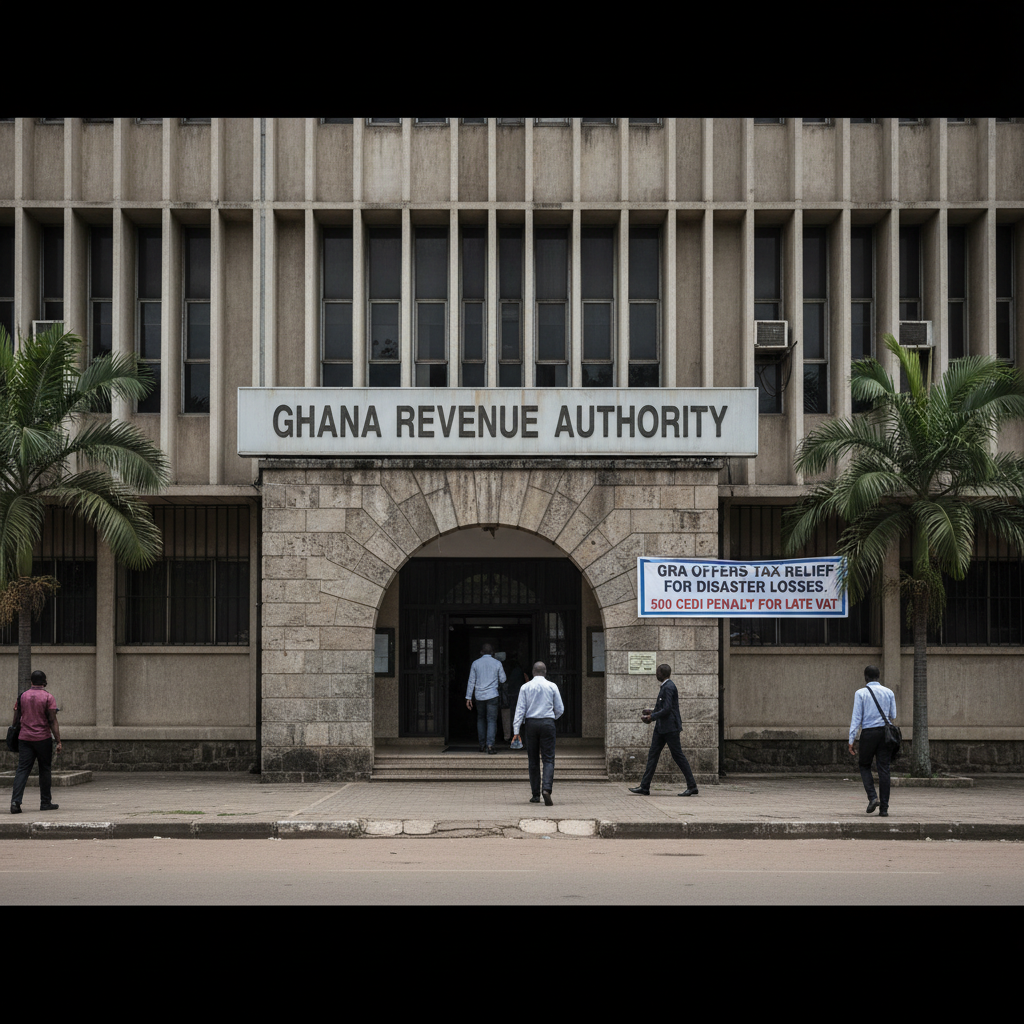
The Ghana Revenue Authority (GRA) has offered tax relief for businesses that incur losses from disasters such as fire. Affected businesses can claim the value of destroyed or lost goods as allowable tax deductions after official verification by the GRA.
Victor Yao Akogo, a Chief Revenue Officer at the GRA, stated that these deductions help businesses reduce their taxable income. This measure allows companies to retain more resources, supporting their continued operation and recovery after unexpected incidents. Businesses must notify the GRA to allow for investigation and confirmation of losses before deductions can be granted.
This initiative aligns with Ghana's broader economic strategy to foster resilience within its business sector, especially for small and medium-sized enterprises (SMEs). Such tax reliefs are crucial for maintaining business continuity in a country susceptible to various natural and man-made disasters. Data from the National Disaster Management Organization (NADMO) often show significant economic impacts from such events on local businesses.
Mr. Akogo emphasized that the cost incurred in acquiring goods that are subsequently destroyed is a legitimate expense. He clarified, "That expense ought to be deducted against the income they earn. We are saying that expense is an allowable deduction, so they should notify the GRA for us to investigate, confirm it and grant it as an allowable deduction."
Businesses seeking this relief must be registered with the GRA. Sole proprietors can use their Ghana Card for registration. Companies need a Tax Identification Number (TIN), which the GRA issues. The TIN is mandatory for all tax transactions, including filing returns and paying taxes. This requirement ensures that all businesses are part of the formal tax system.
The GRA also reminded corporate entities of their ongoing tax obligations. June 30 is the deadline for filing monthly Value Added Tax (VAT) returns and accounting for VAT collected. Failure to file by the due date incurs a penalty of GHS 500, with an additional GHS 10 for each day the default continues. This highlights the GRA's commitment to strict enforcement of tax compliance, which is vital for government revenue collection.
All tax returns are now filed electronically through the GRA's Taxpayer Portal. This digital transformation aims to simplify tax compliance for both individuals and businesses. Even businesses that did not earn income must file a NIL return, informing the GRA they are not liable for tax. This ensures full transparency and avoids penalties for non-declaration.
The push for tax compliance and relief measures reflects the GRA's efforts to balance revenue mobilization with support for the business community. This balance is critical for Ghana's fiscal stability and economic growth. Businesses are encouraged to utilize these provisions to mitigate financial risks from unforeseen events.