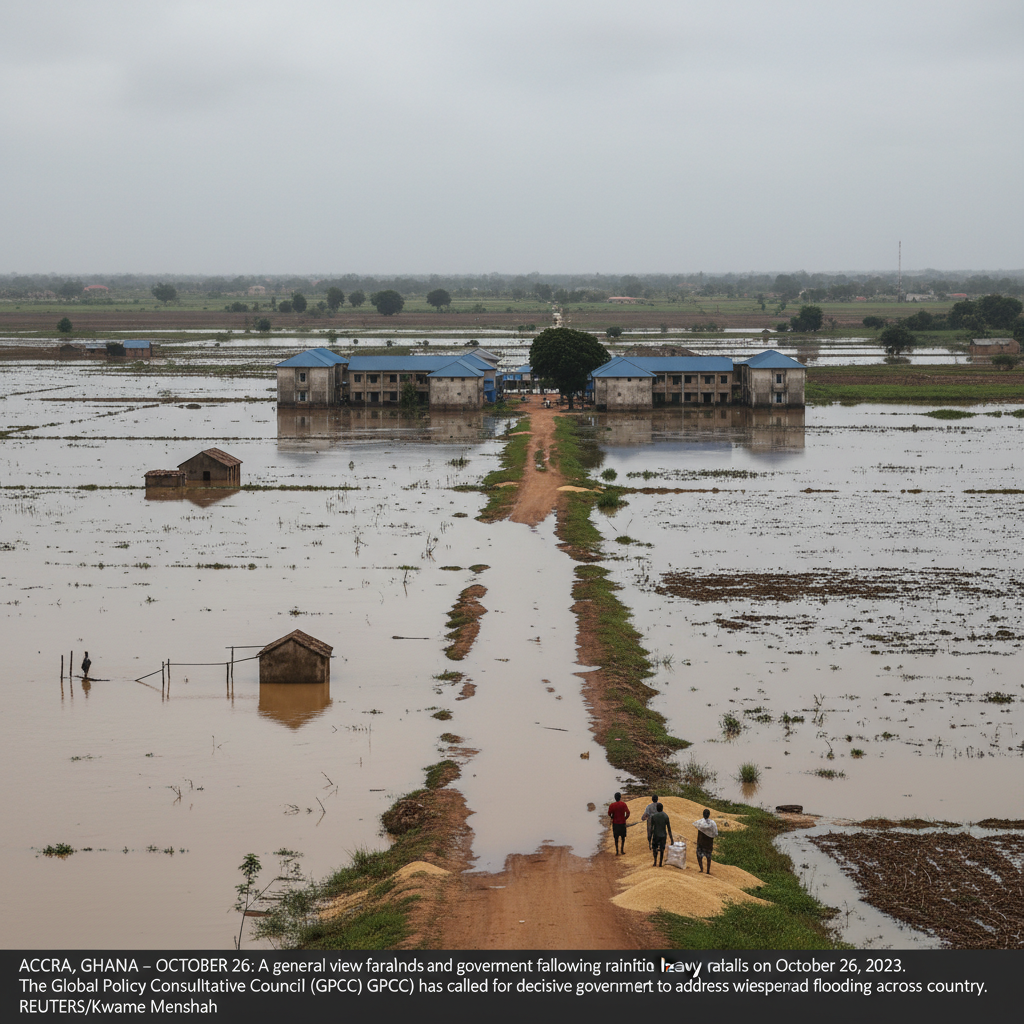
Apostle Dr Eric Nyamekye, Chairman of the Ghana Pentecostal and Charismatic Council (GPCC), has called on the government to intensify efforts against poor sanitation and unregulated development. Ghana's recurring flooding problem, he stated, highlights shortcomings in enforcement and urban planning.
Dr Nyamekye expressed frustration over the annual flood devastation despite government assurances. He spoke to journalists on Wednesday, June 24, during the GPCC 2026 National Delegates Conference. The conference took place at the Oil Dome of Royal House Chapel.
Ghana faces significant economic losses annually from floods, impacting livelihoods and infrastructure. For instance, the government reportedly invested GHS 540 million in flood control measures. This data, reported by Asenso-Boakye, shows the scale of financial commitment. However, the recurring nature of floods suggests these investments are not fully effective. The floods disrupt economic activity and displace thousands, putting stress on public finances for relief efforts.
“It is a bit frustrating that every year we hear about cases of flooding. We make all the promises, and before we know it, the same thing happens again the following year,” Apostle Nyamekye stated. He added, “If the government becomes serious about this fight, all those who are found culpable of dumping refuse into gutters will stop.” This statement underscores the need for robust institutional response.
Stronger enforcement of sanitation laws is essential to discourage practices that contribute to flooding. Apostle Nyamekye highlighted the past effectiveness of institutions like the Town Council in fining offenders. He also questioned the effectiveness of planning authorities in preventing unauthorized developments in flood-prone areas. These concerns point to systemic issues within Ghana’s regulatory framework. The emergence of buildings in risky zones without proper oversight is a critical failure.
The GPCC Chairman also called for broader community involvement. He urged Christians and the public to provide financial assistance to flood victims beyond mere sympathy. He noted that the GPCC has already offered financial aid to affected individuals in Samreboi. This shows a direct engagement with the socio-economic consequences of flooding.
Looking ahead, the government faces pressure to demonstrate tangible progress in controlling floods. A failure to act risks further public discontent and continued economic disruption. Stakeholders will watch for new legislation or stricter enforcement measures. The effectiveness of urban planning bodies will also come under increased scrutiny. This situation demands a coordinated response from various government agencies and civic society.