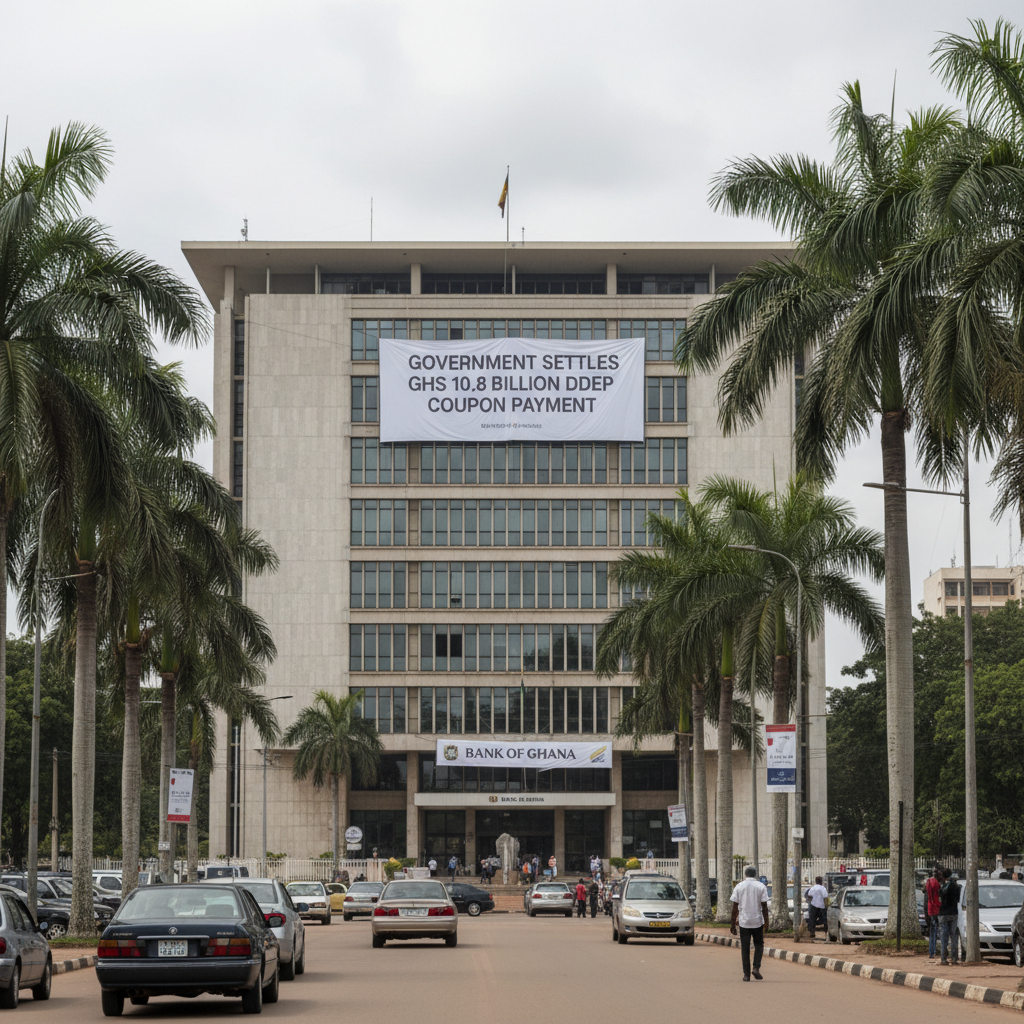
The Government of Ghana has fully paid a GHS 10.8 billion coupon under the Domestic Debt Exchange Programme (DDEP) on schedule. This significant payment demonstrates the government's commitment to its financial obligations to domestic bondholders.
This timely settlement is crucial for restoring investor confidence in Ghana's financial markets. The payment addresses concerns among local investors who participated in the DDEP, a key component of Ghana's broader economic recovery strategy. It also supports the stability of the cedi and the overall banking sector.
The DDEP was a critical measure to restructure Ghana's public debt, which had become unsustainable. This restructuring was a prerequisite for Ghana to secure a GHS 3 billion Extended Credit Facility from the International Monetary Fund (IMF). The successful coupon payment indicates progress in the government's fiscal consolidation efforts and adherence to the IMF programme's conditions. It also reflects ongoing efforts to manage public finances responsibly after a period of economic challenges.
The Bank of Ghana Governor, Dr. Ernest Addison, recently expressed concerns about the inflation outlook when discussing Monetary Policy Committee decisions. Such statements highlight the delicate balance the government and central bank must maintain. Managing debt payments while controlling inflation remains a primary challenge for economic policymakers.
The successful payment of this GHS 10.8 billion DDEP coupon has several implications for Ghana's economy. It is expected to bolster confidence among domestic financial institutions, including banks and pension funds, which hold a substantial portion of government bonds. This renewed confidence could encourage further investment in government securities and other sectors of the economy. Investors will closely watch future coupon payments and the government's broader fiscal performance. The government must continue demonstrating fiscal discipline to maintain this positive momentum. This includes adhering to budget targets and implementing revenue mobilization strategies effectively. The timely payment also sends a positive signal to international creditors and rating agencies. This could potentially improve Ghana's credit rating outlook in the medium term. Such an improvement would make it easier and cheaper for Ghana to borrow on international markets if needed. The government's ability to meet these obligations is vital for its credibility. It also ensures continued access to financial support from multilateral partners. This commitment is essential for Ghana's long-term economic stability and growth prospects. The financial markets will respond positively to consistent adherence to these payment schedules. This reinforces the government's dedication to economic recovery.