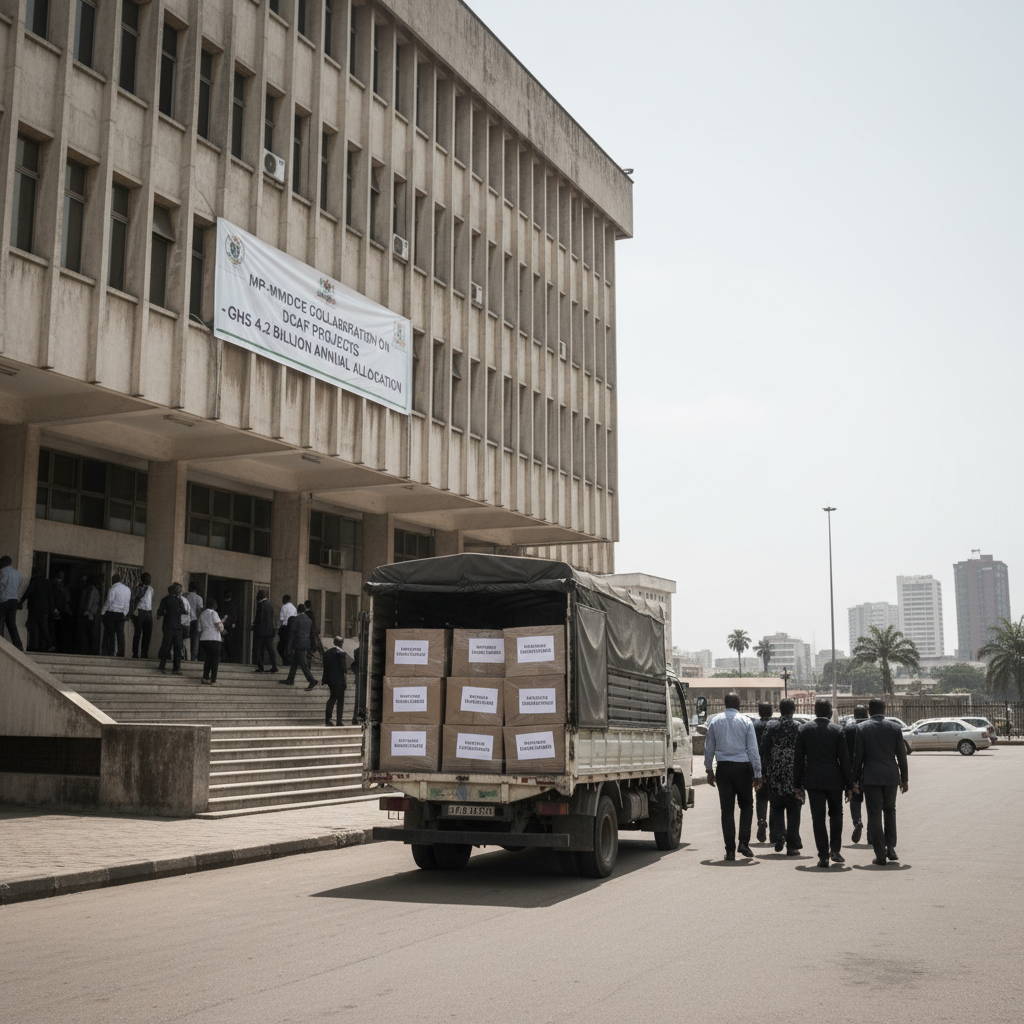
The Ghanaian government has announced stricter protocols to ensure Metropolitan, Municipal, and District Chief Executives (MMDCEs) regularly engage Members of Parliament (MPs) on local development planning and budgeting. This enforcement aims to foster collaboration and improve oversight of projects funded by the District Assemblies Common Fund (DCAF), which receives substantial annual allocations from national revenue.
Mr. Ahmed Ibrahim, the Minister for Local Government, Chieftaincy and Religious Affairs, confirmed this directive on Thursday during a session in Parliament. He cited Section 1(c) of the Local Governance Act, 2016 (Act 936), which mandates the inclusion of MPs in District Assembly activities. This legal framework establishes a formal mechanism for MPs and MMDCEs to work together on planning, budgeting, and monitoring development at the grassroots level.
This initiative aligns with Ghana’s commitment to decentralized governance and efficient public spending. The District Assemblies Common Fund (DCAF), established under Article 252(1) and (2) of the 1992 Constitution, allocates no less than 5% of Ghana’s total annual revenues to District Assemblies. For example, if Ghana’s total revenue for a fiscal year is GHS 84 billion, the DCAF would receive a minimum of GHS 4.2 billion for local development. This ensures significant financial resources are available for community projects across the country.
Professor Kingsley Nyarko, the NPP MP for Kwadaso, had questioned the Minister on strategies to promote productive working relations between MPs and MMDCEs. In response, Mr. Ibrahim, who is also the NDC MP for Banda, emphasized the existing legal mandate for such collaboration. He explained that DCAF funds are distributed based on critical criteria: the specific needs of each Assembly, equality to ensure fair resource allocation, and service pressure in urban areas. These criteria guarantee that funds are directed where they are most required, with MPs providing crucial input during general assembly meetings.
The Ministry is also enhancing financial allocations through DCAF, as stipulated by Section 126 of Act 936, to boost development planning and service delivery. MPs also receive a constituency allocation from a percentage of DCAF, known as the 'MPs Common Fund'. This fund supports small-scale development needs, such as aid for vulnerable persons, agricultural inputs, and community facilities like boreholes. The enhanced collaboration will ensure these funds are used effectively and without duplication.
To prevent overlaps in projects and ensure alignment with medium-term development plans, the Minister stressed the need for MMDCEs to meet regularly with their MPs. These engagements provide a vital platform for discussing pressing local needs and coordinating interventions. The Ministry is actively working to ensure these meetings occur consistently, strengthening the working relationship and improving development efforts at the local level. This coordinated approach seeks to maximize the impact of public funds and deliver tangible benefits to citizens.
The Ministry is further strengthening protocols requiring MMDCEs to brief MPs on key planning, budgeting, and development committee meetings. This ensures constituency priorities are integrated into medium-term development plans and that local projects are jointly monitored. Such joint engagements, exemplified by the recent national orientation session for regional ministers and MMDCEs on the 24-Hour Economy Model Markets, guide implementation and stakeholder coordination. MMDAs are encouraged to involve MPs in local consultations and collaborate with them to support these strategic interventions. This proactive model aims to accelerate local development and improve overall governance.