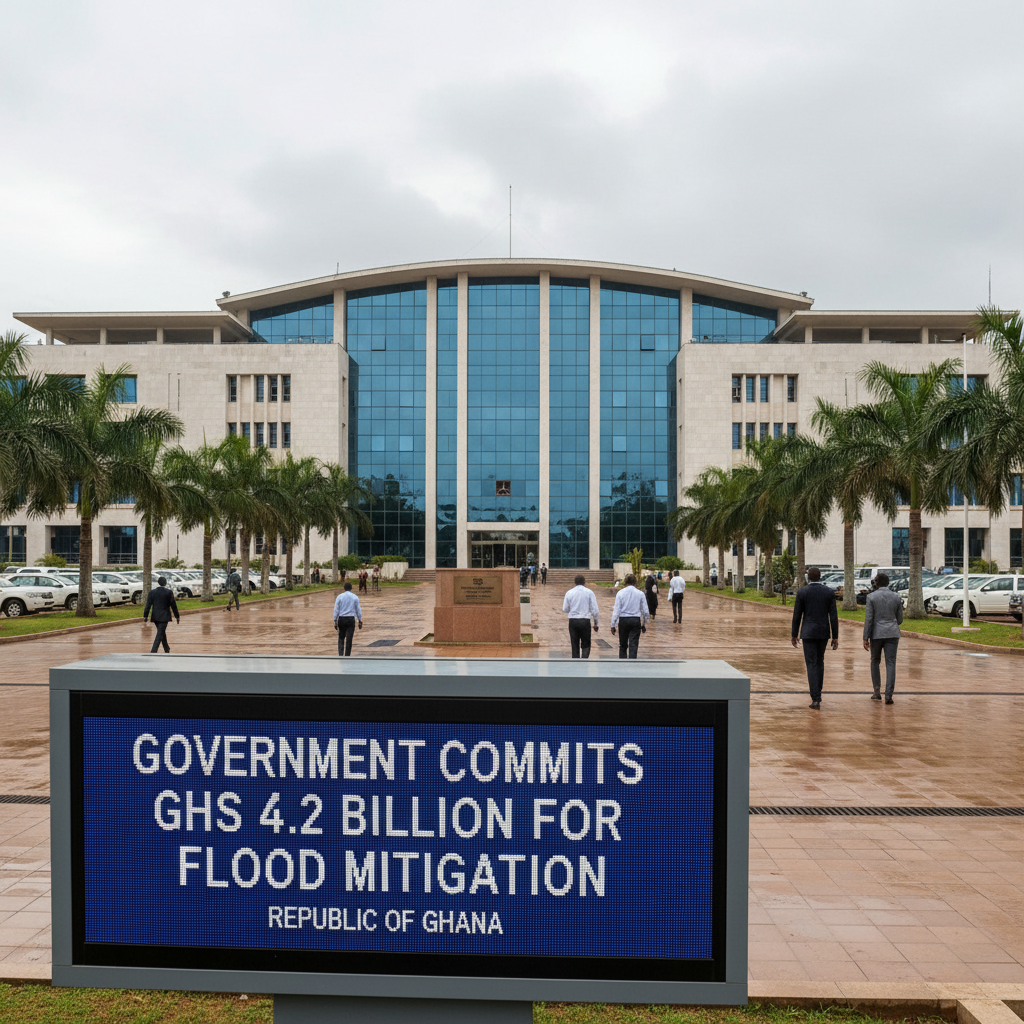
President John Dramani Mahama announced the government is reviewing current flood mitigation measures. This review identifies additional interventions after recent devastating floods affected several communities nationwide. The floods claimed approximately 13 lives and displaced thousands of households.
This initiative aims to improve Ghana's preparedness and response to flooding, which President Mahama highlighted as increasing in severity. This escalation is due to the combined effects of climate change and rapid urbanisation. The Minister for Finance released funds from the contingency fund to finance these additional flood mitigation interventions, with the amount totaling GHS 4.2 billion.
The recurring flood challenge in Ghana has worsened this year, ranking among the most severe in the country's history. The problem links directly to increasingly intense rainfall associated with climate change. Rapid urban expansion, particularly in Accra, also contributes significantly. This growth drives an increasing demand for land, leading to encroachment on waterways and flood retention areas. These areas were originally designed to channel excess water.
President Mahama confirmed this during a National Security meeting that assessed the floods' impact. "We are therefore reviewing the measures taken so far and assessing additional interventions that need to be implemented going forward,” he stated. He added that the Ghana Armed Forces have received directives to support these flood mitigation efforts. The National Disaster Management Organisation (NADMO) and other relevant agencies continue providing relief to affected communities.
The government had established a task force before the floods to undertake preventive measures. These measures included dredging major drains and waterways. However, the volume of rainfall during the recent downpour exceeded the capacity of these existing flood control measures. This highlights the urgent need for enhanced strategies. The focus will now be on implementing both short-term relief and long-term infrastructure improvements. This aims to protect communities from future climate-related disasters. Decision-makers and markets will watch closely for effective deployment of the allocated GHS 4.2 billion.