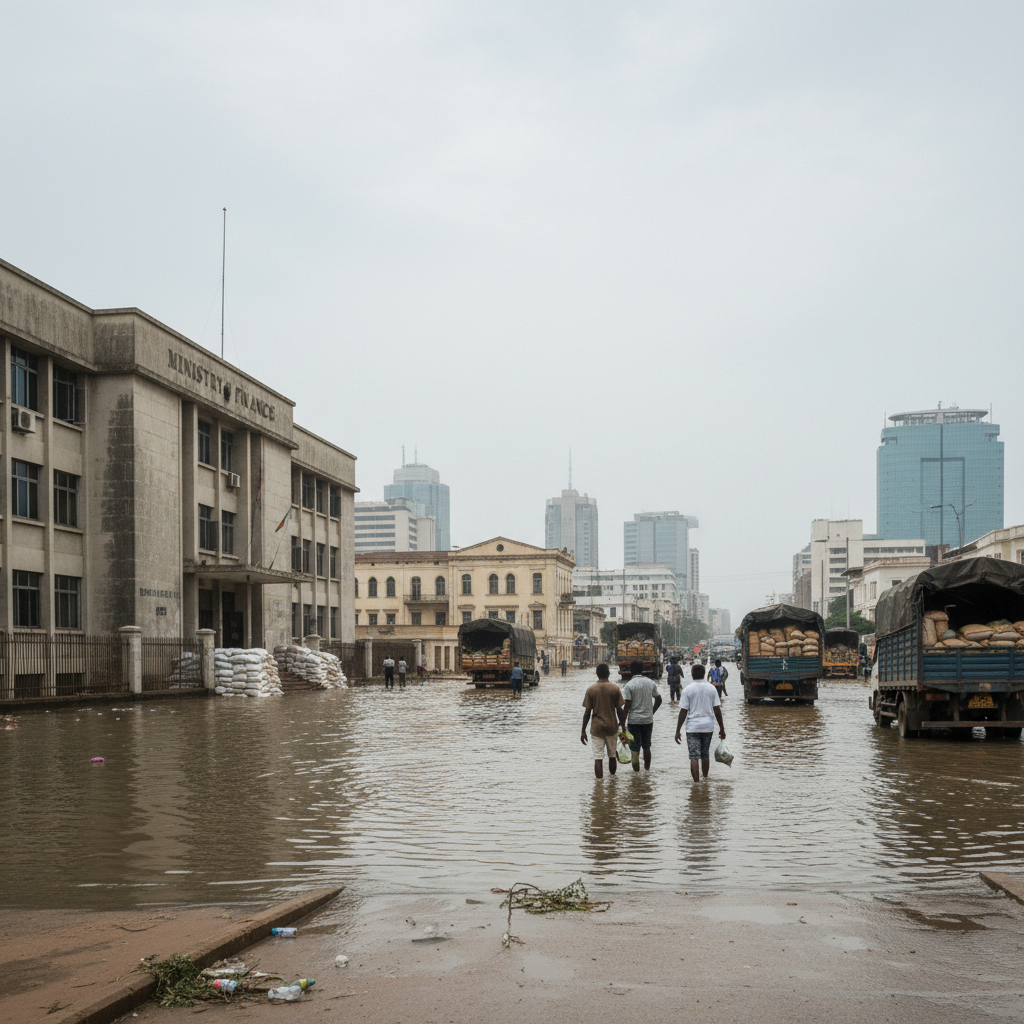
Ghana's government has pledged GHS 350 million for a nationwide post-flood recovery and mitigation exercise. This significant allocation will fund emergency relief, reconstruction, and long-term efforts to prevent future flooding. The Ghana Armed Forces leads this coordinated operation, started on July 3, 2026.
The exercise aims to restore affected communities and boost Ghana's resilience against future floods. It involves collaboration between the Ghana Armed Forces, Metropolitan, Municipal and District Assemblies (MMDAs), other security agencies, and state institutions. Activities include clearing debris, restoring sanitation, enhancing public safety, and reducing water-borne disease risks in flood-hit areas. This comprehensive approach targets immediate recovery and long-term prevention.
Flooding presents a persistent challenge to Ghana's economic stability and public infrastructure. Recurrent floods disrupt daily life, damage property, and strain public resources. This GHS 350 million commitment reflects a broader national imperative to formalise development and fortify against environmental hazards. Previous instances of flooding have spotlighted the urgent need for robust infrastructure and effective urban planning.
Brigadier General Forster Okae-Yeboah, Director General of Joint Operations of the Ghana Armed Forces, specified the exercise's scope. He confirmed that the plan includes enforcement measures against structures in waterways and drainage reservations. These structures pose immediate public safety risks and hinder effective drainage, contributing to flood severity. Brigadier General Okae-Yeboah also thanked private sector organisations for providing heavy equipment and technical expertise.
The allocated GHS 350 million will facilitate immediate relief for those impacted by floods. This funding supports reconstruction efforts for damaged homes and infrastructure. Importantly, it also targets long-term flood mitigation initiatives, including improved drainage systems and stricter building code enforcement. The government's actions will be crucial in restoring stability and preventing further economic losses due to natural disasters.
Going forward, monitoring the effective deployment of the GHS 350 million will be critical. Stakeholders will watch for tangible improvements in flood-prone areas and successful enforcement against illegal structures. The long-term success of this initiative depends on sustained cooperation between government agencies and local communities. This exercise represents a pivotal step in Ghana's ongoing battle against the economic and social impact of floods.