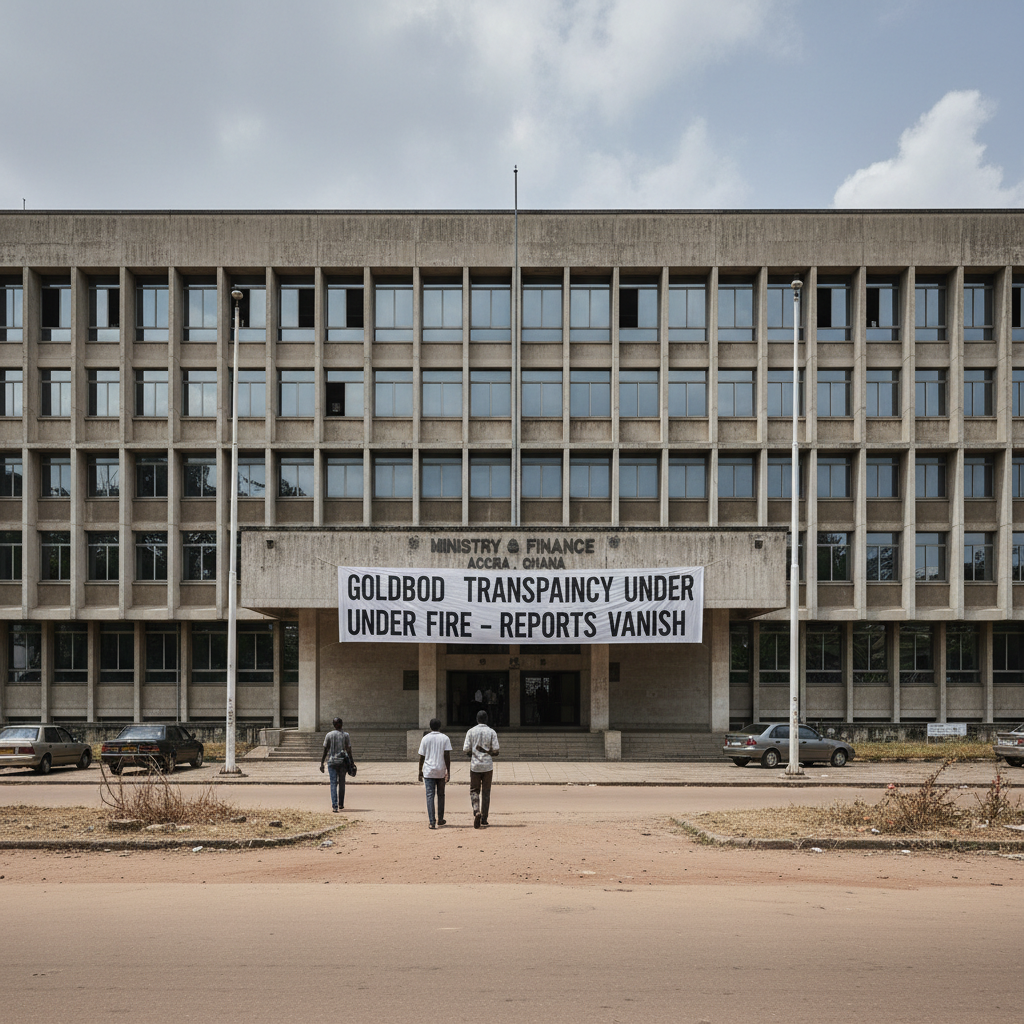
The Institute of Economic Research and Public Policy (IERPP) has demanded immediate answers from the Ghana Gold Board (GoldBod) regarding the disappearance of its quarterly trading reports from the official website. These reports, legally mandated for public access, detail significant transactions within Ghana's gold trade.
IERPP states the removal is more than a simple website issue. It raises serious questions about transparency, accountability, and compliance with the Ghana Gold Board Act, 2025 (Act 1140). The Institute insists GoldBod must explain who authorised the removal, when it occurred, why the reports were taken down, and if any figures were altered.
This incident fits into a broader narrative of increasing scrutiny over Ghana's Domestic Gold Purchase Programme. GoldBod, established in April 2025, manages a significant portion of the nation's gold resources. The public's ability to monitor these operations is crucial for maintaining trust and ensuring proper management of national assets. Previous calls from IERPP for a consolidated financial account of the programme underscore these ongoing concerns.
“If the reports were removed, GoldBod must tell Ghanaians who authorised their removal, when they were removed, why they were removed, and whether any figures were subsequently changed,” the IERPP stated. This direct challenge highlights the Institute's commitment to upholding public oversight.
The disappearance of these reports has significant implications for public finance and market confidence. Without accessible data, citizens and Parliament cannot effectively scrutinise transactions involving Ghana’s gold. This lack of transparency could deter potential investors and undermine the integrity of the gold purchasing programme. Decision-makers will be watching closely for GoldBod's response and the restoration of these vital documents.
Section 42 of the Ghana Gold Board Act, 2025 (Act 1140) specifically requires GoldBod to publish quarterly reports. These reports must cover operations, revenue, contracts, and expenditure. Section 42(2) further mandates that GoldBod ensures continued public access to these published reports. IERPP argues this means the information must remain meaningfully available, not just published once and then removed.
The Institute highlights the irony that GoldBod itself enforces strict reporting obligations on market participants. It questions why the public struggles to access GoldBod's own reports if reporting is so important. This double standard undermines the Board's authority and credibility within the sector.
One report, covering April to June 2025, disclosed GoldBod purchased 26,009.56 kilogrammes of gold. This volume, equivalent to about 780,437.60 ounces, was valued at an estimated US$2.62 billion. Such figures demonstrate the immense financial scale of GoldBod's activities and the public interest in its operations. The report also showed artisanal and small-scale mining gold exports totalled 30,361.64 kilogrammes, valued at approximately US$2.99 billion.
IERPP warns that removing such detailed reports limits the public’s ability to track GoldBod’s performance. It also prevents comparisons of information released over different periods. This makes it difficult to assess the programme's overall effectiveness and financial health.
The Institute has called for the immediate restoration of all previously published quarterly reports. It also demands the establishment of a permanent public archive for these documents. Furthermore, IERPP insists GoldBod explain any deletions, withdrawals, or amendments to reports. If figures have changed, both original and revised versions must be published with clear explanations for material changes. Publication and removal dates for each report are also requested.
IERPP is also pushing for greater disclosure of financial details. This includes off-taker fees, trading margins, discounts, and assay charges. Such transparency would enable independent scrutiny of transaction costs. These demands come as GoldBod implements reforms to Ghana’s gold purchasing and trading framework. The Board recently reported raising nearly US$839 million in advances for gold purchases between March and May 2026. GoldBod has also introduced new pricing regimes, purchase thresholds, and mandatory real-time transaction reporting requirements. IERPP maintains that transparency is a statutory obligation, not a discretionary favour to the Ghanaian public.