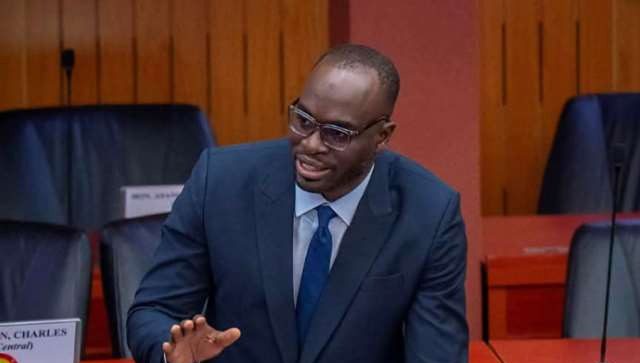
Member of Parliament for Walewale, Dr. Tiah Abdul-Kabiru Mahama, has challenged claims that the Ghana Gold Board (GoldBod) made a surplus in 2025. Dr. Mahama argues that GHS 4.5 billion in government funding was wrongly presented as revenue. This significant amount, representing over 80% of GoldBod's reported total revenue, was state capital, not income from operations.
Dr. Mahama, an economist and member of Parliament’s Finance Committee, highlighted GoldBod’s audited accounts. These accounts recorded total revenue of about GHS 5.5 billion for the year under review. However, GHS 4.5 billion of this figure came directly from the government. He contends that these funds were capital provided by the state to support GoldBod’s operations. Therefore, they should not be treated as revenue generated by the company's business activities.
This reclassification of government funding has significant implications for Ghana's public finance narrative. State-owned enterprises (SOEs) often receive government support, but how this support is accounted for is crucial. Misrepresenting capital injections as operational revenue can mask the true financial performance of SOEs. This practice can also distort the overall picture of government expenditure and revenue collection. Ghana's economy relies on transparent financial reporting to attract investment and maintain fiscal discipline.
Dr. Mahama questioned the classification of the GHS 4.5 billion. He noted that the accounts reportedly described it as “revolving trade capital,” not a grant or subvention. He emphasized that GoldBod is wholly owned by the government. This makes the funds provided by the state essentially owner’s capital. It is not revenue earned through market activities. Dr. Mahama has been a vocal critic of GoldBod’s operations, previously calling for investigations into its conduct.
Without the government funds, GoldBod’s actual revenue would have been around GHS 1 billion. This drastically changes the reported surplus into a potential deficit. Such a scenario would present a very different financial picture for the state-owned entity. It could also raise questions about the viability and self-sufficiency of GoldBod’s operations. The GoldBod Act itself provides for the government’s seed capital to be recovered. This recovery happens through the transfer of any surplus to the Consolidated Fund, similar to dividend payments.
The implications of this challenge are far-reaching for Ghana’s economic governance. It calls for greater scrutiny of financial reporting by state-owned entities. Decision-makers and markets will closely watch how the government and GoldBod respond to these allegations. This situation could trigger a parliamentary inquiry into GoldBod’s accounting practices. It might also lead to revised guidelines for financial reporting by all state-owned enterprises. Ensuring accurate financial statements is vital for investor confidence and national economic planning. This issue underscores the need for robust oversight of public funds and state investments. It also highlights the importance of distinguishing between government support and genuine commercial revenue. The true financial health of GoldBod and other SOEs directly impacts Ghana's fiscal stability.