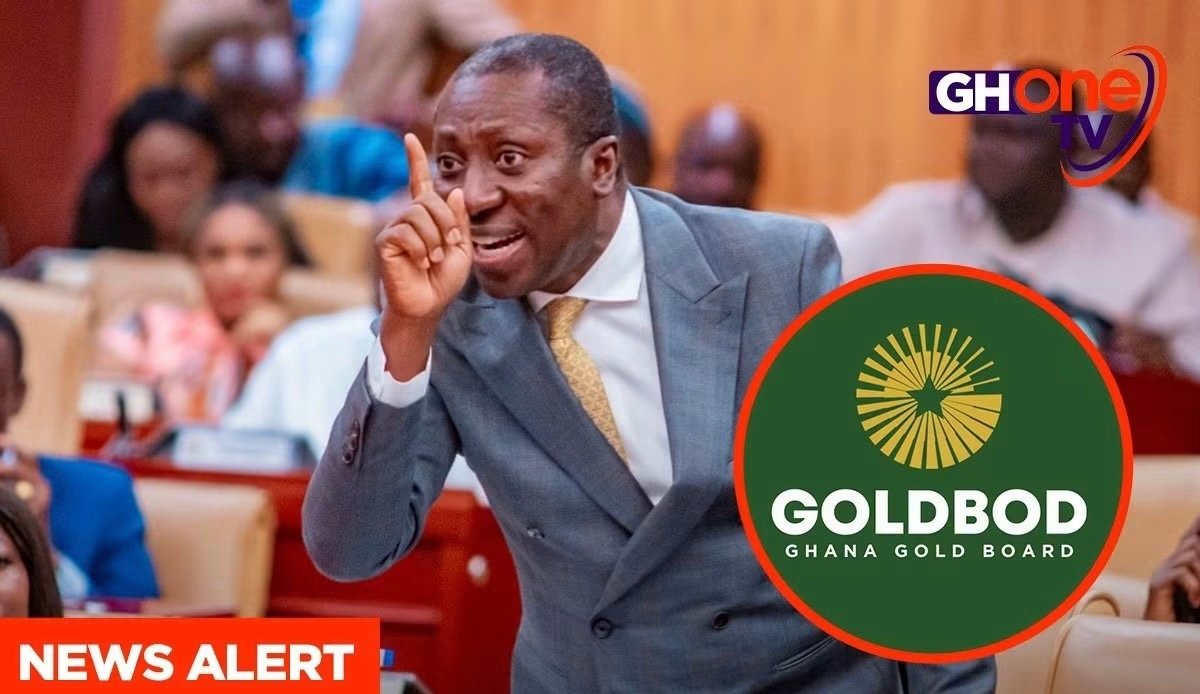
The Institute of Fiscal Policy Governance has firmly rejected claims that the Ghana Gold Board (GoldBod) recorded a loss of GHS 22 billion in 2025. GoldBod's audited financial statements instead show a significant surplus of GHS 5.44 billion for the year. This clarification directly counters assertions made by the Minority Caucus regarding the institution's financial health.
The Institute, in a statement issued on Tuesday, August 18, 2026, highlighted GoldBod's audited accounts. These accounts reveal a total revenue of GHS 5.553 billion for the year ended December 31, 2025. Total expenditure stood at GHS 109.585 million, resulting in the GHS 5.444 billion surplus before exceptional items. This financial performance contradicts the Minority Leader Alexander Afenyo-Markin's claims of a substantial loss.
This dispute over GoldBod's financial figures occurs amid broader discussions about public finance transparency and accountability in Ghana. Recent economic challenges have intensified scrutiny of state-owned enterprises and their financial reporting. The Institute's intervention underscores the importance of relying on verified financial records, like audited statements, to inform public discourse. This situation also highlights the ongoing political tensions surrounding economic management and the use of data in policy debates.
“These are not political estimates,” the Institute stated, emphasizing the reliability of the figures. It further argued that describing the audited surplus as a GHS 22 billion loss was inaccurate. The Institute called for public discussions about GoldBod’s finances to be based on verified financial records. It also accused the Minority of confusing GoldBod's financial position with the Bank of Ghana’s Domestic Gold Purchase Programme.
The Institute stressed that GoldBod and the Bank of Ghana are separate public institutions. They possess distinct statutory functions, accounting records, and reporting obligations. Any loss recorded by the central bank from monetary policy interventions or valuation movements cannot be automatically attributed to GoldBod. The Institute challenged the Minority to produce audited evidence establishing the alleged GHS 22 billion loss. Such evidence would include a transaction-by-transaction reconciliation or an Auditor-General’s finding. Without such proof, the claims lack a credible financial basis.
Furthermore, the Institute addressed the GHS 4.547 billion grant disclosed in GoldBod’s 2025 financial statements. This amount, it clarified, should not be presented as evidence of a trading loss. The grant was allocated in the 2025 national budget and reflected in the Appropriation Act, 2025 (Act 1126). Its existence does not alter GoldBod’s reported financial result or support the claim of a GHS 22 billion loss. This distinction is crucial for understanding the true financial standing of the institution.
The Institute supports parliamentary oversight and scrutiny of GoldBod’s operations. However, it insists that such scrutiny must be grounded in proper accounting principles and evidence. It called on the Minority to either produce audited evidence for the alleged GHS 22 billion loss or cease attributing Bank of Ghana’s costs to GoldBod. The current facts clearly show GoldBod’s audited accounts report a surplus of approximately GHS 5.44 billion, not a loss. This clarity is essential for investor confidence and public trust in Ghana's financial institutions.
Moving forward, stakeholders will closely monitor how the Minority Caucus responds to this challenge. The integrity of financial reporting for state entities remains a key concern for investors and the public. Future debates on GoldBod's performance will likely demand more rigorous adherence to audited figures. This situation underscores the need for clear, evidence-based communication in Ghana's economic policy discussions. The market will watch for any further substantiation or retraction of the claims.