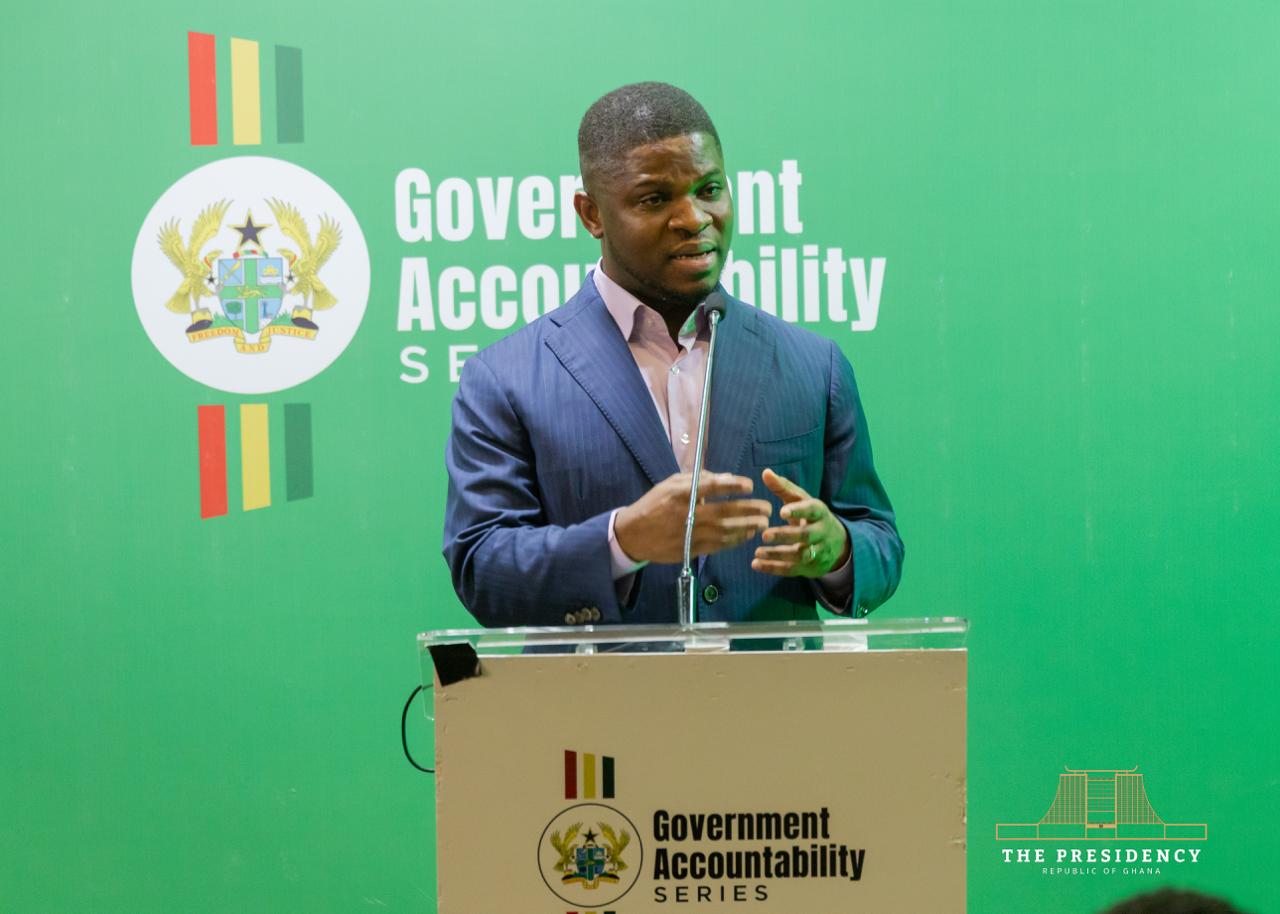
The Ghana Gold Board (GoldBod) recorded an overall surplus exceeding GHS 5.4 billion in 2025, directly contradicting allegations of GHS 22 billion in losses. GoldBod Chief Executive Officer Sammy Gyamfi dismissed these claims as baseless and misleading.
Mr. Gyamfi stated that GoldBod's audited financial statements for the year ended December 31, 2025, show an operational surplus of GHS 907 million. He made these remarks at the Government Accountability Series on Wednesday, August 19, 2026. The CEO emphasized that the Auditor-General prepared and published the audited annual report, which found no adverse findings against GoldBod.
This financial performance comes amidst broader discussions about state-owned enterprises and their contributions to Ghana's economy. The government established GoldBod to streamline gold trading and maximize national revenue from the sector. Its reported surplus indicates a positive financial trajectory, contrasting with some public perceptions of state entities. This development also provides crucial context for the ongoing debate about the Bank of Ghana's financial health and its gold purchasing initiatives.
Sammy Gyamfi directly addressed the allegations, stating, “GoldBod’s audited financial statements for the year ended December 31, 2025, show that the institution recorded an operational surplus of GH¢907 million and an overall surplus of more than GH¢5.4 billion.” This statement underscores the institution's financial health and transparency. He also highlighted that the Auditor-General had full access to all relevant documents during the audit process.
The implications of GoldBod's reported surplus are significant for investor confidence and public finance management. A profitable state-owned enterprise can contribute to national development and reduce reliance on external financing. Decision-makers will likely scrutinize these figures as they assess the effectiveness of government-led initiatives in the mining sector. This positive financial report could also influence future policy decisions regarding gold trading and mineral revenue management.
Mr. Gyamfi also rejected claims that GoldBod was responsible for the US$1.7 billion loss incurred by the Bank of Ghana (BoG) in 2025. He clarified that the International Monetary Fund (IMF) report cited by Mr. Afenyo-Markin did not attribute this loss to GoldBod. GoldBod acted solely as a gold-buying agent for the BoG under its Domestic Gold Purchase Programme (DGPP). This role was a continuation of duties previously performed by the defunct Precious Minerals Marketing Company (PMMC).
GoldBod's responsibility under the DGPP was limited to purchasing and aggregating gold for the central bank. It had no role in the subsequent sale of the gold or determining its selling price. Therefore, Mr. Gyamfi argued that any losses from gold sales could not be attributed to GoldBod. He further explained that GoldBod received an assay fee of 0.258 percent and a service fee of 0.5 percent, totaling 0.758 percent. These fees covered essential services like assaying, transportation, security, and insurance, and were standard charges.
The GoldBod CEO also pointed out that the Bank of Ghana recorded a US$400 million loss under the DGPP in 2024, before GoldBod's establishment. GoldBod only began implementing its own trading model in March 2026, after receiving its revolving seed trade capital on December 30, 2025. This timeline further separates GoldBod's operations from the 2025 DGPP losses. He emphasized that the institution needed time to establish necessary institutional systems before launching its independent trading model.
Regarding funding, Mr. Gyamfi clarified that the Bank of Ghana had not withdrawn financing from GoldBod. From January 2025 to February 2026, GoldBod operated as a buying agent, with funds advanced by BoG used for gold purchases under the central bank's program. After March 2026, GoldBod received funding support for artisanal and small-scale mining purchases through the BoG’s FX Intermediation Programme and a Forex Sale Agreement. GoldBod plans to raise funds independently for these purchases from August 2026, having already conducted a successful pilot.