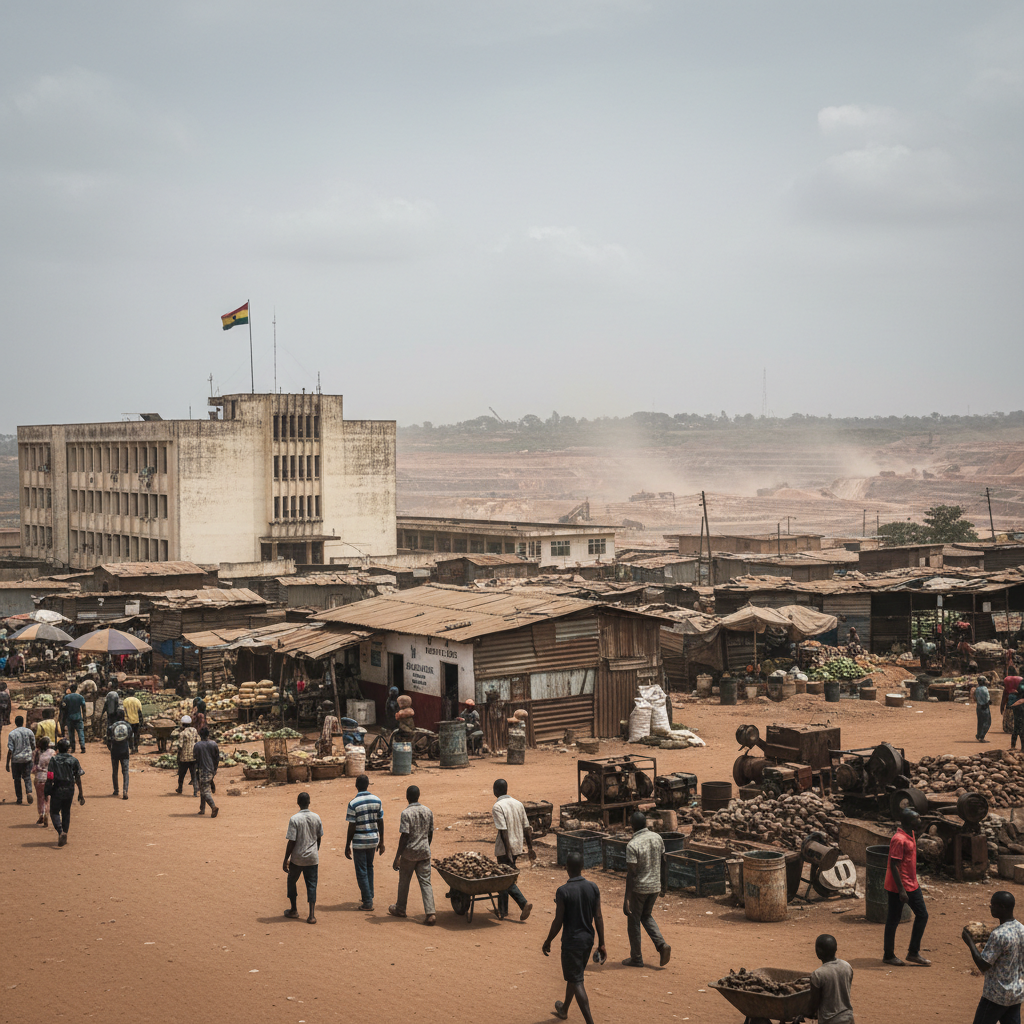
Minority Leader Alexander Afenyo-Markin has raised serious concerns about the Gold Board's inability to account for GHS 22 billion. He stated this financial discrepancy exists while mining communities face a severe health crisis. This crisis stems from widespread pollution caused by illegal mining activities.
Mr. Afenyo-Markin highlighted the devastating health toll on residents in Ghana's mining areas. He noted that these communities experience alarming rates of kidney and lung failure. This health epidemic directly results from extensive pollution of water bodies and air by illegal mining, commonly known as galamsey. The Minority Leader emphasized that the government has not adequately addressed this critical situation.
This issue fits into a broader national conversation about resource management and environmental protection. Ghana, a major gold producer, grapples with balancing economic gains from mining against environmental and social costs. The alleged GHS 22 billion unaccounted for by the Gold Board represents a significant sum. This amount could otherwise support public services or environmental remediation efforts. Previous reports and public discourse have frequently touched on the environmental damage from galamsey. They also discuss the need for greater transparency in the mining sector. The Bank of Ghana's recent monetary policy reports have also noted the impact of commodity prices on the economy. However, the human cost of illegal mining often receives less direct financial quantification.
Speaking during an emergency parliamentary sitting, Mr. Afenyo-Markin stated, “While Gold Board cannot account for 1.7 billion, an equivalent of 22 billion Ghanaian cedis, Ghanaians in our mining communities are paying with their kidneys, their lungs, and in other cases their lives.” He stressed that Parliament owes these affected citizens an answer. This statement underscores the perceived disconnect between financial accountability and public welfare.
The implications of these statements are far-reaching. Decision-makers will face increased pressure to address both financial transparency in state institutions and environmental protection. The alleged GHS 22 billion discrepancy could trigger further parliamentary investigations or public audits. Markets and investors will watch for government responses to these accountability concerns. The ongoing health crisis in mining communities demands urgent policy interventions. These interventions must include stricter enforcement against illegal mining and improved healthcare access. This situation highlights the critical need for sustainable mining practices. It also calls for robust financial oversight to protect both national resources and public health. The government's ability to confront this dual challenge will be a key indicator of its commitment to good governance and citizen welfare. This public outcry could also influence future legislative actions regarding mining sector regulation and environmental protection policies. The long-term economic stability of Ghana depends on responsible resource management. It also depends on transparent financial dealings within key state entities like the Gold Board. The health of the nation's citizens, particularly those in vulnerable mining communities, remains paramount. Addressing these issues effectively will be crucial for Ghana's sustainable development trajectory. The call for accountability extends beyond just financial figures; it encompasses the very well-being of thousands of Ghanaians.