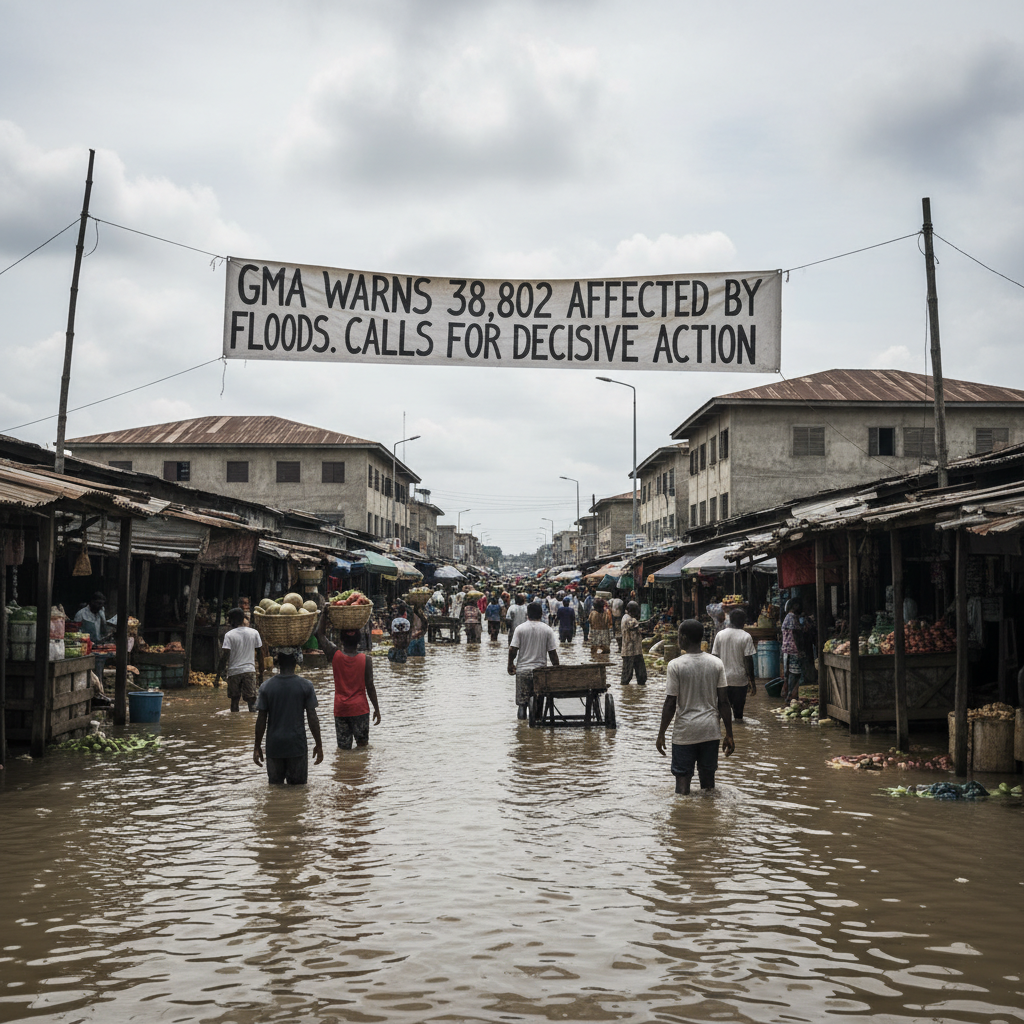
The Ghana Medical Association (GMA) has called for immediate national action to address Ghana's recurring flood crisis. They warn that increasing floods threaten public health, lives, livelihoods, and vital infrastructure. The Association's statement on July 3, 2026, highlighted recent flood devastation, especially in Accra, urging authorities to implement lasting solutions beyond temporary measures.
Initial reports indicate 12 deaths and seven missing persons in the Greater Accra Region. Additionally, 38,802 people and 7,761 households have been affected in the region. The Central Region recorded 18 deaths, including fatalities from building collapses. Approximately 1,200 people were displaced in the Samreboi enclave of the Western Region. About 60 communities in the Volta Region also experienced significant impact.
These recurring floods cause loss of life, displace families, and destroy property. They disrupt transportation systems and interrupt emergency healthcare services. This situation aligns with Ghana's broader struggle against inadequate urban planning and infrastructure challenges. Major flood incidents occurred in Accra in 2010, 2015, and 2021, underscoring a persistent issue. The economic costs include damaged infrastructure and lost productivity, impacting national growth targets.
The GMA attributes the floods to several established challenges. These include poor drainage systems, rapid urbanisation, deforestation, and climate change effects. They also cited poor waste disposal, destruction of natural watercourses, and encroachment on wetlands. Illegal mining, known as 'galamsey', weak enforcement of zoning laws, and political interference exacerbate the problem. Limited public education and infrastructural deficiencies further contribute to the crisis.
The Association noted that illegal developments in flood-prone areas worsen the situation. Inadequate funding for monitoring and enforcement, weak sanctions against offenders, and insufficient logistics for emergency rescue operations compound these issues. The Ministry of the Interior received commendation for its early public risk communication. Emergency response efforts by the National Disaster Management Organisation (NADMO) and the Ministry of Health were also acknowledged.
The GMA calls for a stronger, more coordinated national response. They urge relevant state institutions to sustain and strengthen emergency measures. These include providing food, shelter, and medical care to affected persons. They also advocate for intensified community engagement and comprehensive flood risk assessments. Routine drainage and waste clearance exercises are essential for Metropolitan, Municipal, and District Assemblies. Stronger collaboration with development partners is also crucial.
The Association recommends significant investment in drainage system rehabilitation, expansion, and maintenance. This will improve stormwater management across the country. They also demand strict enforcement of land use regulations. This will prevent construction in flood-prone areas and protect wetlands and natural waterways. Sustained public education campaigns on flood preparedness and environmental sanitation are also vital. Improved urban planning prioritising sustainable development and environmental protection is another key recommendation.
Stronger accountability systems in flood prevention initiatives are necessary to reduce corruption. This will also improve institutional responsibility. The GMA insists on depoliticising flood prevention efforts. They urge a broad national consensus to address the problem effectively. Public officials facilitating non-compliant developments must face accountability. NADMO, the Ghana National Fire Service, hospital emergency departments, and the Department of Social Welfare require adequate resources. This will enable them to respond effectively to flood-related emergencies. The GMA specifically urged President John Dramani Mahama to take bold, decisive actions. These actions should bring lasting solutions to the perennial flood situation in Accra and other communities. Residents in flood-affected areas are advised to adopt proper public health practices to reduce disease outbreaks.