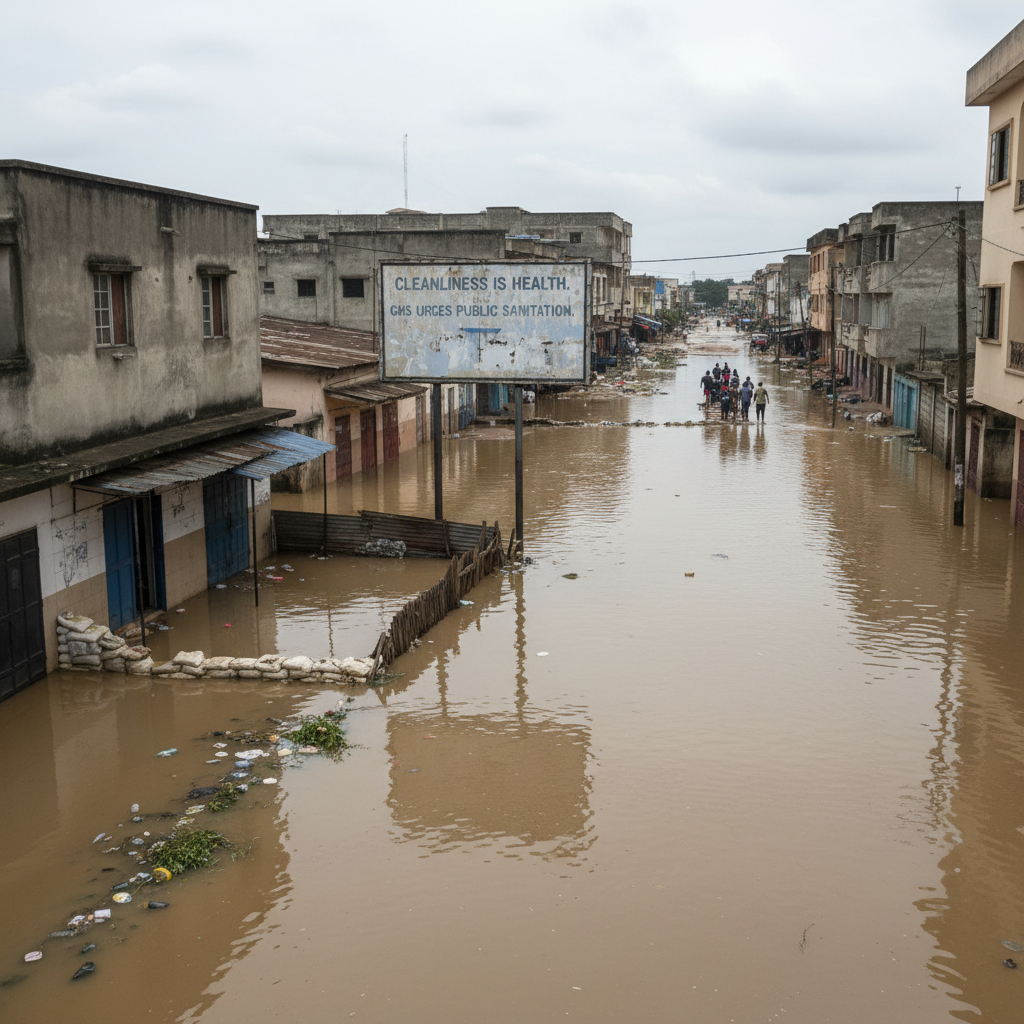
Samuel Kaba Akoriyea, Director-General of the Ghana Health Service (GHS), has called for increased public commitment to sanitation. This call aims to prevent potential disease outbreaks following last week's floods across Ghana's capital, Accra.
This urgent appeal comes as health authorities intensify post-flood sanitation interventions. These efforts began on the second day of a national clean-up exercise. The GHS has started fumigating markets, transport terminals, and other public spaces. This action aims to mitigate health risks in affected parts of Accra.
Flooding in urban areas like Accra significantly burdens public health infrastructure. Past flood events have led to outbreaks of cholera and malaria, impacting productivity and increasing healthcare costs. The emphasis on public cooperation by the GHS reflects a strategy to manage public health risks effectively. This approach complements the government's broader disaster response efforts and promotes community resilience against environmental hazards.
Dr. Akoriyea stressed that state agencies lead disinfection and clean-up operations. However, he stated, "the ultimate success of the exercise depends on the cooperation of the citizenry." He highlighted that public adherence to strict hygiene practices and active participation in keeping communities clean are vital for safeguarding public health during this post-flood period.
The immediate implication is an increased focus on community hygiene and waste management. Local authorities, such as those in Korle Klottey Municipality, are actively managing large heaps of flood-generated waste. This situation has drawn complaints from residents. The Municipal Chief Executive (MCE) for Korle Klottey, Alfred Gaisie, has appealed for patience while sanitation teams work rapidly. Their goal is to clear the accumulated debris by the end of the day. This coordinated response is crucial to prevent secondary crises such as disease epidemics, which can further strain Ghana's public health budget and economic stability.