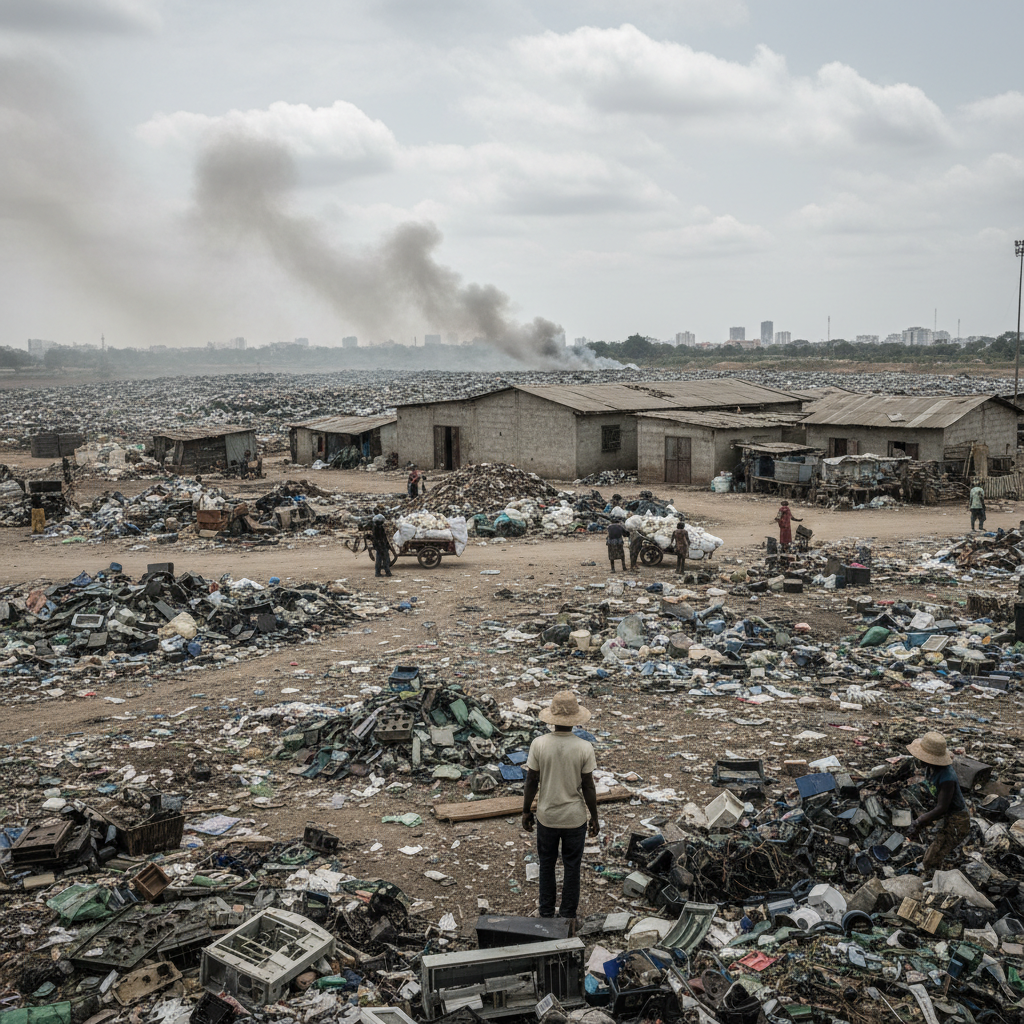
Ghana sends almost all its generated waste directly to overflowing landfill sites, a practice Dr. Ted Yemoh Annang describes as unsustainable. Dr. Annang, a Senior Research Fellow at the Institute for Environment and Sanitation Studies at the University of Ghana, urges the nation to adopt waste diversion strategies.
This critical shift involves separating and treating recyclable and organic materials before they reach landfills. Dr. Annang stresses that waste diversion gives valuable materials an 'extended life' rather than immediate disposal. He pointed out that current practices often fill landfills prematurely, as they receive waste that could be repurposed or recycled.
The unsustainable waste management practices significantly strain Ghana's public finances and environmental health. The constant need for new disposal sites, coupled with potential groundwater contamination and greenhouse gas emissions, creates substantial economic and social burdens. Ghana's rapid urbanisation further exacerbates the waste challenge, demanding more effective, long-term solutions.
Speaking on Joy FM's Super Morning Show on Monday, July 13, Dr. Annang explained, "Waste diversion means that if you look at the treatment portion, treatment before disposal, the treatment is just meant to give the waste material extended life." He added that over three-quarters of Ghana's waste stream consists of degradable materials that go untreated. "What we are not doing is that we are not diverting the waste that can be treated, especially the degradable portions, which form more than three-quarters of the waste stream."
Ghana must focus on managing waste as a valuable resource, not merely something to discard. This approach involves extending the life of plastics, metals, and paper through recycling. Organic waste, which accounts for the largest portion of Ghana's waste, should be composted or converted into energy. Failure to implement these changes means Ghana will continue to struggle with a shortage of disposal sites. Decision-makers must prioritise policies and investments that support waste separation, recycling infrastructure, and organic waste treatment. A shift to a circular economy model would create new industries and job opportunities.
For instance, Dr. Annang highlighted that over 90 per cent of waste generated in markets is organic. This organic material could easily be diverted from landfills. Removing biodegradable and recyclable components would drastically reduce the volume of waste requiring final disposal. Embracing recycling and composting will extend the lifespan of existing landfills and reduce the environmental footprint. Without these interventions, Ghana will continue to struggle with limited waste disposal options.
The government must look beyond simply collecting waste and instead invest in modern waste treatment facilities. This would include setting up material recovery facilities (MRFs) to sort plastics, metals, and paper. Furthermore, establishing composting plants for organic waste would transform a major waste component into valuable soil amendments or biogas. These strategic investments can transform waste from a problem into an economic opportunity. Local assemblies also need increased resources and training to enforce waste separation at source.
Moving forward, Ghana’s policymakers must create a regulatory framework that incentivises recycling and penalises illegal dumping. Public awareness campaigns are also essential to encourage citizens to sort their waste at home. This multi-faceted approach will not only address the immediate waste crisis but also foster a more sustainable and resilient economy. The financial benefits of resource recovery, such as revenue from recycled materials and energy production, can also contribute to the national budget. Abandoning the current linear 'take-make-dispose' model is essential for Ghana's future environmental and economic health.